Togo’s media clampdown: a turning point for press freedom under Gnassingbé
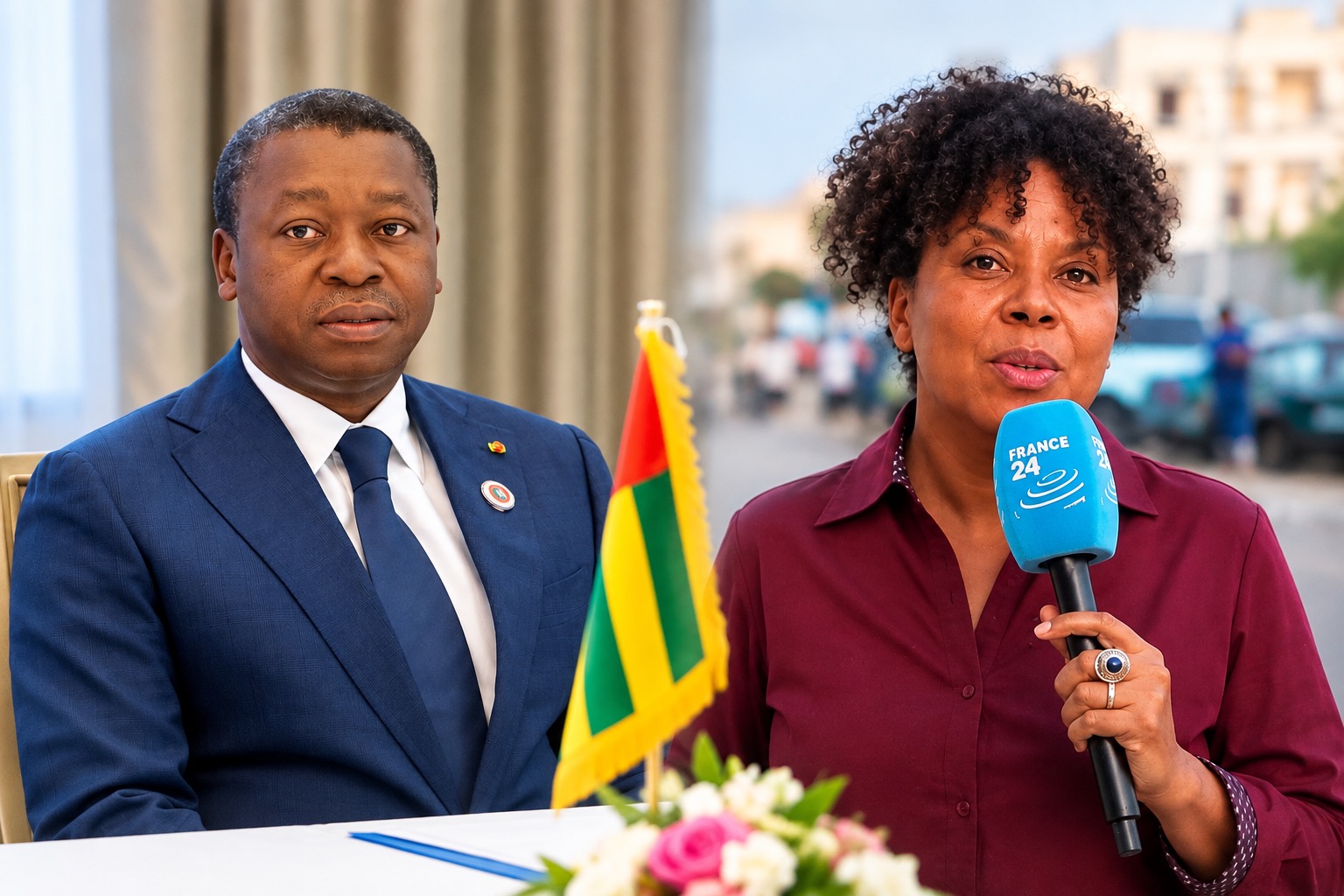
The decision to sanction a journalist for reporting information already in the public domain is not just a matter for newsrooms—it strikes at the heart of democratic values.
The case of Emmanuelle Sodji, a veteran correspondent for France 24 based in Benin, has reignited long-simmering tensions over press freedom in Togo. It is a pivotal moment that forces the nation to confront the boundaries between state authority and journalistic independence.
The disputed sanction and the information that sparked it
On August 18, 2026, Sodji reported on the ongoing detention of two French nationals—filmmakers Gaël Mocaër and Sebastian Perez Pezzani—who had been arrested in northern Togo on July 27, 2026, while researching a documentary. The charges included allegations related to their visa declarations. Both were released on provisional bail on September 1 and allowed to leave the country.
The controversy centers on the timing of official communication. While the information had been circulating in multiple media outlets and on social platforms for days, Togo’s media regulatory body reportedly acknowledged on August 19 that the details were already in the public sphere. This raises a critical question: should a reporter face disciplinary action for relaying widely available facts when no restrictive directive had yet been issued to newsrooms?
The regulator responds: a sanction with far-reaching consequences
The National Union of Journalists of Togo (SNJ-CGT) has condemned the decision, arguing it sets a dangerous precedent. They contend that sanctions applied retroactively—especially when based on information already verified and reported—undermine professional credibility and threaten journalistic autonomy. While the union’s stance reflects broader concerns, it is distinct from the official position of the management at France Médias Monde.
A climate of tightening control
This incident is not isolated. In June 2025, Togo’s High Authority for Broadcasting and Communication (HAAC) suspended transmissions of RFI and France 24 for three months, citing repeated violations of impartiality, factual accuracy, and editorial rigor. Authorities alleged certain programs had aired inaccurate or biased information. The affected outlets defended their journalism, while watchdogs warned that such measures signaled a tightening of the media space amid a politically charged environment.
This broader context elevates the Sodji case from an isolated disciplinary matter to a national debate on press freedom. The core issue is not whether journalists must adhere to professional standards—clearly, they must. The real challenge lies in the clarity, fairness, and transparency of the rules governing those standards, especially when sanctions are applied.
Where to draw the line
In any functioning democracy, governments retain the right to protect sensitive information, particularly when judicial proceedings or national security are at stake. Yet this authority must be governed by pre-established, transparent rules applied consistently and without political interference.
Journalists, for their part, are duty-bound to verify sources, respect legal processes, and avoid sensationalism. However, when information is publicly available across multiple platforms—including social media—and verified by an official body, the grounds for punitive action become questionable. It is this ambiguity that now demands urgent clarification in Togo.
A pivotal moment for Togo’s democracy
The Sodji affair unfolds against a backdrop of heightened political tension. In June 2025, authorities used force to disperse protests in Lomé amid ongoing institutional reforms surrounding the presidency and the Council of Ministers. Each new restriction on media coverage is scrutinized, not as isolated policy, but as part of a broader pattern.
The stakes are clear: can journalists investigate, verify, and publish freely when their reporting touches on sensitive issues or the interests of those in power? The answer should depend not on political affiliation, national origin, or personal connections—but on transparent, equitable, and legally grounded professional standards.
What comes next?
Togo now faces a defining test. Will the government respond with clarity, ensuring that press freedom is protected by law rather than undermined by arbitrary enforcement? Or will the current trajectory of control and retribution continue to erode public trust in both the media and democratic institutions?
Observers, journalists, and civil society will be watching closely. The decisions made in the coming months will determine whether Togo upholds the principle that a free press is not one that operates without rules—but one that operates under rules that are fair, known in advance, and immune to political manipulation.