
Accusations emerged from Bujumbura, where Russia’s Foreign Minister Sergey Lavrov alleged that Ukraine backs the M23 rebellion in the Democratic Republic of the Congo (DRC). The rebel group has seized control of vast areas in North and South Kivu provinces, in eastern DRC.
Kiev fires back with strong rebuttal
Ukraine’s response was swift and unequivocal. The Foreign Ministry dismissed Lavrov’s claims as groundless and accused Moscow of orchestrating disinformation to muddy diplomatic waters in the Great Lakes region. “The assertion that Ukraine supports the M23 is a fabrication with no factual basis. We categorically reject and refute these accusations. The statement is definitive and closes the door to any speculation.”
Russia’s tactics under scrutiny
Kiev went further, turning the tables on Moscow by accusing Russia of meddling in African conflicts. Ukrainian officials highlighted Russia’s pattern of arming rebel groups, violating sanctions, and destabilizing regions—even recruiting African fighters for its war in Ukraine. The contrast in narratives underscores a deliberate strategy of distraction.
Ukraine does not interfere in African conflicts, but Russia does—arming factions, fueling instability, and recruiting fighters from African nations to fight in Ukraine. The double standard is glaring.
According to Heorhii Tykhyi, this tactic is a familiar playbook. He argues that Moscow’s accusations are a smokescreen to divert attention from its own destabilizing actions while undermining mediation efforts, particularly by the United States. “It’s no surprise that Russia accuses others of what it does itself. The goal is clear: to undermine peace efforts in the Great Lakes and obscure its own destructive role in prolonging the conflict.”
The exchange of accusations reflects the growing geopolitical stakes in eastern DRC, where international actors are increasingly shaping the narrative around the conflict’s root causes and external influences.
DRC urges diplomacy at the UN
Amid the diplomatic sparring, the DRC took a stand of its own at the United Nations. As president of the Security Council for the month, Kinshasa condemned the escalation in Ukraine during a session chaired by Zénon Mukongo Ngay on July 9. The DRC emphasized the humanitarian toll of the war and stressed that military solutions are untenable.
In a region scarred by its own conflicts, the DRC called for strict adherence to international law, civilian protection, and a renewed commitment to dialogue, mediation, and diplomacy. It also reaffirmed its support for credible peace initiatives that align with the UN Charter and deliver justice and stability.
Peace efforts stall in eastern DRC
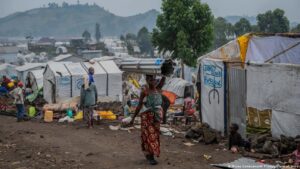
This diplomatic clash unfolds against a backdrop of deepening instability. One year after the Washington Agreement was signed at the ministerial level, its implementation remains stalled due to conflicting interpretations by Kinshasa and Kigali. Meanwhile, the humanitarian and security crisis in eastern DRC worsens, with violence persisting—particularly in areas controlled by the M23.