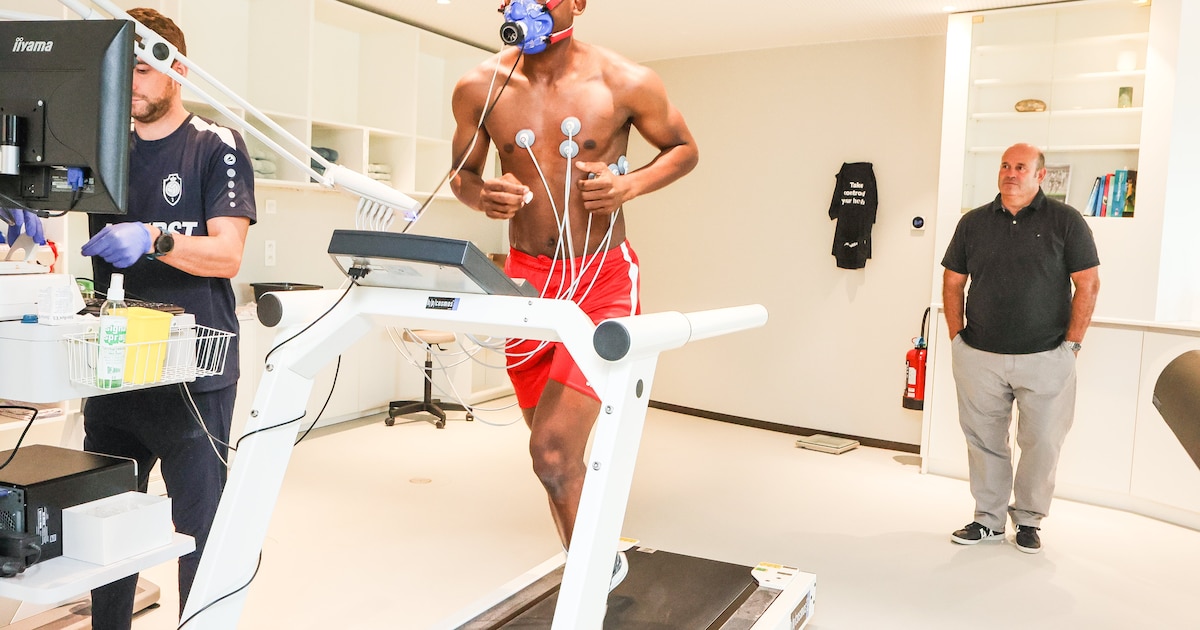

Anan Khalaili’s anticipated transfer to Inter Milan has hit an unexpected roadblock after the Union Saint-Gilloise midfielder failed advanced cardiac examinations in Italy. The player underwent initial medical checks over the weekend, but further specialized tests at Milan’s Humanitas hospital on Monday revealed issues that prevented the deal from moving forward.
The specifics of the failed tests remain undisclosed, as is standard for medical confidentiality. However, the case highlights a key difference in football’s medical protocols: Italian Serie A enforces stricter cardiac screening rules than most other European leagues. This rigorous approach could give Khalaili the chance to secure a contract elsewhere, where regulations are less stringent.
Strict protocols for athletes in Italy
In Italy, every professional athlete—whether signing a new contract or renewing an existing one—must undergo mandatory medical evaluations at an accredited sports medicine center. If any concerns arise, particularly regarding cardiac health, a specialist conducts a deeper assessment. The final decision on a player’s eligibility rests not with the club or the athlete, but with an independent medical body.
This system dates back to 1982, when Italian law mandated designated sports medicine centers for high-level athletes. A 1995 decree further tightened regulations, introducing additional tests such as echocardiograms and stress tests. While our protocols may seem strict, they are a deliberate ethical choice, explains Paolo Zeppilli, a former sports medicine professor and cardiologist who has worked with the Italian Football Federation. We cannot allow an athlete to take the field if there’s even a minimal risk. Other leagues should adopt a similar approach.
Real-life cases: Bove and Eriksen
Two high-profile cases underscore the impact of these rules. Edoardo Bove, an Italian midfielder, suffered a cardiac arrest during a Serie A match and was fitted with a defibrillator. Despite recovering, he was barred from playing in Italy, though he later resumed his career in England, where regulations differ. Similarly, Danish star Christian Eriksen experienced a cardiac arrest during Euro 2021 while playing in Italy’s league. He was also prohibited from returning to Serie A but found success in England—until he suffered another cardiac episode in June.
These incidents illustrate why Italian football prioritizes player safety above all else. While the system may delay or prevent transfers, its primary goal is clear: to ensure no athlete risks their life on the pitch.



