
How social media amplifies the Sahel juntas’ counter-narratives on French urban violence
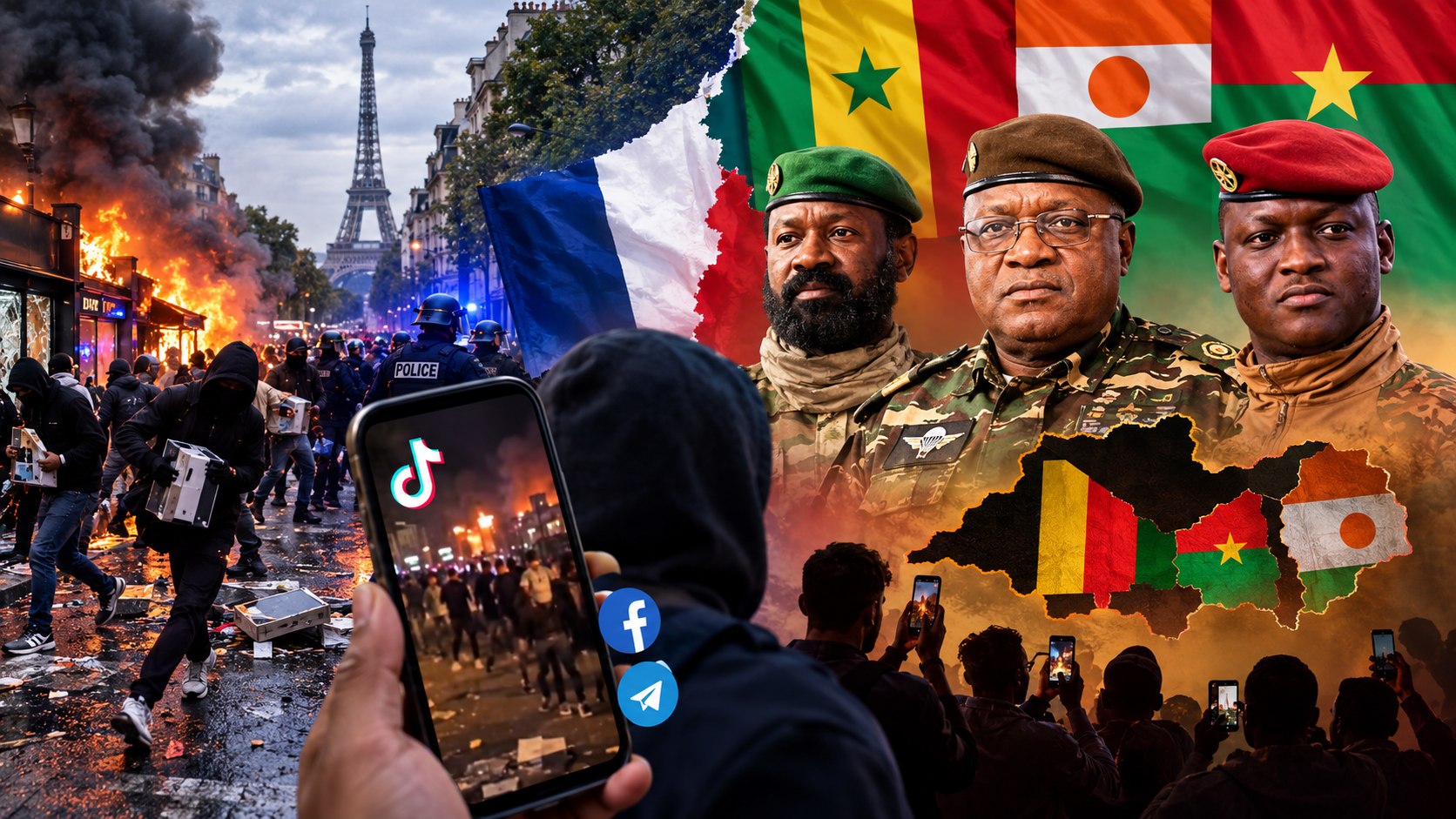
France’s recent urban unrest has transcended domestic boundaries, becoming a focal point for political discourse across Africa particularly in Mali, Burkina Faso, and Niger, where anti-French sentiment has surged following military takeovers. Platforms like TikTok, Facebook, and Telegram have become arenas where images of looting, property damage, and clashes with law enforcement are rapidly repurposed to fuel anti-France narratives among supporters of the Alliance of Sahel States (AES).
For pro-AES audiences, these scenes serve as a rhetorical tool to challenge France’s credibility on democracy, security, and rule of law. The underlying argument is straightforward: if France cannot maintain order within its own borders, how can it justify critiquing Sahel governments? This strategy aims to undermine French influence while reinforcing a narrative of political revenge against its former colonial power.
Legal accountability vs. political weaponization
A deeper examination reveals the complexity of these incidents beyond mere propaganda. Reports indicate that individuals from AES member countries some allegedly in France illegally may have participated in acts of vandalism and theft. Should investigations confirm their involvement, they will face legal consequences under French law, just as any accused individual would. This process involves meticulous evidence collection, witness testimonies, and judicial review to determine individual responsibility.
For foreign nationals, administrative status could compound legal repercussions. If found guilty of criminal activity, they may face prosecution alongside potential administrative actions, such as deportation proceedings for those in irregular situations. However, the fundamental principle remains clear: nationality does not exempt anyone from adhering to the laws of the country they are in.
Why context matters in interpreting viral imagery
The Sahel juntas’ supporters often frame France’s unrest as evidence of systemic collapse a claim that overlooks the nuance of isolated incidents. A viral video of a looted store or a police confrontation does not substantiate a nationwide failure. Similarly, it does not validate the Sahel regimes’ claims of superior governance or security outcomes. Distinguishing between anecdotal evidence and verifiable facts requires scrutiny of sources, timestamps, and metadata to prevent the spread of misleading narratives.
Previous fact-checking efforts on misleading content linked to AES-aligned digital ecosystems underscore the need for caution. While coordinated disinformation campaigns cannot be ruled out, establishing their existence demands rigorous analysis of account activity, cross-platform dissemination, and thematic consistency not superficial impressions.
Individual responsibility versus collective blame
The discourse often conflates legal accountability with political accusations. It is critical to recognize that the vast majority of African immigrants in France are law-abiding individuals who should not be tarred by the actions of a minority. Nationality alone is neither evidence of guilt nor an indicator of political affiliation. Justice systems exist to evaluate individual conduct, not to assign collective punishment based on origin.
At the same time, political actors and media outlets that exploit these events must maintain consistency. Criticizing AES governments for human rights abuses while ignoring legal violations committed by their citizens abroad undermines both credibility and fairness. Responsibility must be attached to actions, not nationality.
Judicial rigor in an era of digital propaganda
France’s judicial institutions remain the arbiters of legal outcomes in these cases. Investigations will proceed based on evidence, while judicial decisions will determine guilt or innocence. Public discourse, no matter how vocal, cannot substitute for due process. The challenge lies in separating legitimate scrutiny from opportunistic manipulation a task that demands both journalistic rigor and public discernment.
The Sahel juntas’ narratives thrive in the absence of factual clarity. Yet, the truth is not shaped by viral videos or inflammatory commentary. It is forged in courtrooms, where evidence dictates consequences, and in the careful work of verifying claims before they are weaponized.
By Moussa Samuel Coulibaly — Journalist