
Unpacking the double threat facing Mali’s civilians
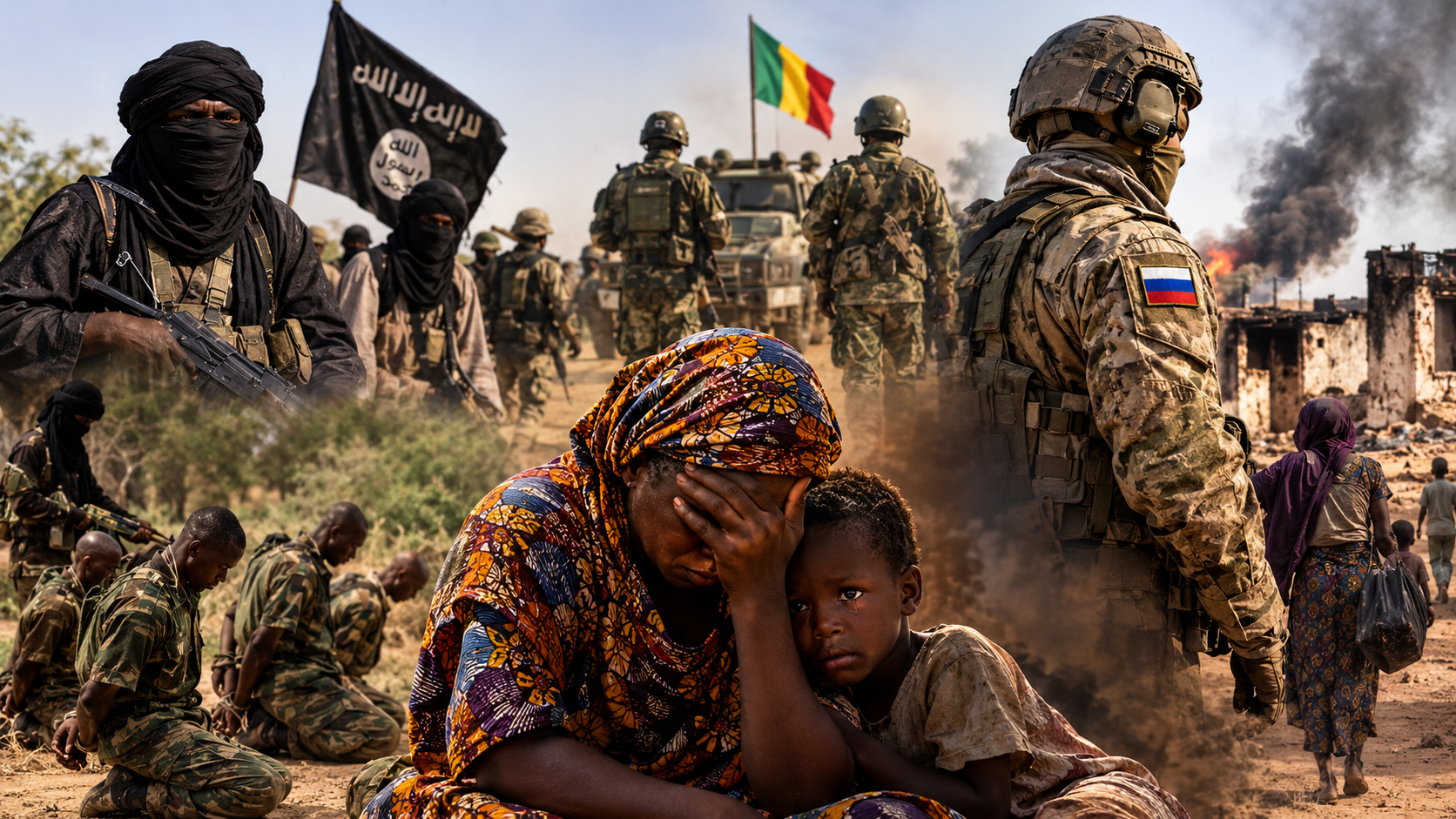
Mali’s security crisis reveals a troubling paradox: while soldiers are being slaughtered in brazen jihadist ambushes, civilians face a different kind of violence one perpetrated by the very forces supposed to protect them. This dual dynamic, shaped by Africa Corps’ involvement in joint operations, has pushed communities to the brink, where survival often means navigating two fronts of terror.
At the heart of this dilemma lies the stark reality that Mali’s armed forces, stretched thin by relentless attacks from the Group for the Support of Islam and Muslims (JNIM), are struggling to maintain both combat effectiveness and civilian protection obligations. The result? A grim cycle where military pressure on insurgents inadvertently escalates collateral harm under the watch of foreign allies.
How military losses fuel unintended consequences
Recent high-profile ambushes have left Malian troops decimated, with entire units wiped out in coordinated strikes. These attacks, though devastating for morale and operational capacity, have triggered a heavier-handed response from government forces one that increasingly blurs the line between counterterrorism and civilian targeting.
Footage and testimonies from conflict zones suggest that in the aftermath of such losses, security protocols may be bypassed in favor of swift retaliation. Villages near known JNIM hideouts often bear the brunt of these operations, with reports of indiscriminate raids, forced displacements, and extrajudicial violence escalating in their wake.
The Africa Corps factor: strategic gains and human costs
Since Bamako deepened its military ties with Moscow, Africa Corps forces have become an integral part of Mali’s security architecture. While their involvement has bolstered tactical capabilities including training, intelligence-sharing, and logistical support concerns persist about the human rights impact of joint operations.
Africa Corps’ role, though framed in terms of mutual defense, has not insulated Mali from accusations of civilian harm. International observers note that operations conducted with Russian-backed elements often exhibit patterns of disproportionate force, particularly in areas with dense civilian populations. The absence of transparent accountability mechanisms further complicates efforts to address these violations.
Accountability gaps: why the cycle of violence persists
The core issue isn’t just the tactics used by Malian forces or their foreign allies it’s the systemic failure to address abuses when they occur. Investigations into civilian casualties are rare, and when they do happen, findings are frequently shelved under the pretext of national security. This culture of impunity not only emboldens abusive behavior but also erodes public trust in state institutions.
Meanwhile, JNIM’s brutal tactics including the targeted execution of captured soldiers continue unabated, fueling a narrative that pits one atrocity against another. The result is a narrative of violence where civilians are trapped between two equally destructive forces, with no clear path to justice or protection.
Redefining security: what Mali truly needs
A sustainable solution requires more than military posturing or foreign partnerships. It demands a shift toward a security model that prioritizes civilian safety as a non-negotiable objective not an afterthought. This includes:
Independent oversight: Establishing a neutral body to investigate claims of civilian harm, with mandatory reporting and sanctions for proven abuses.
Community-based protection: Integrating local leaders and civil society into security planning to prevent misidentification and collateral harm.
Targeted, proportionate operations: Ensuring military responses align with international humanitarian law, even in high-pressure situations.
Transparent engagement: Holding foreign partners, including Africa Corps, accountable for their role in joint operations that result in civilian harm.
The cost of inaction: a nation caught in the crossfire
Mali’s path forward hinges on whether its leaders can reconcile the need for military efficiency with the moral imperative of protecting civilians. So far, the balance has tipped dangerously toward the former, leaving communities to navigate a landscape where safety is a luxury few can afford.
The real measure of success won’t be found in the number of villages
By Moussa Samuel Coulibaly — Journalist