Wadagni’s first Kigali visit: the breakthrough moment for Benin-Rwanda ties
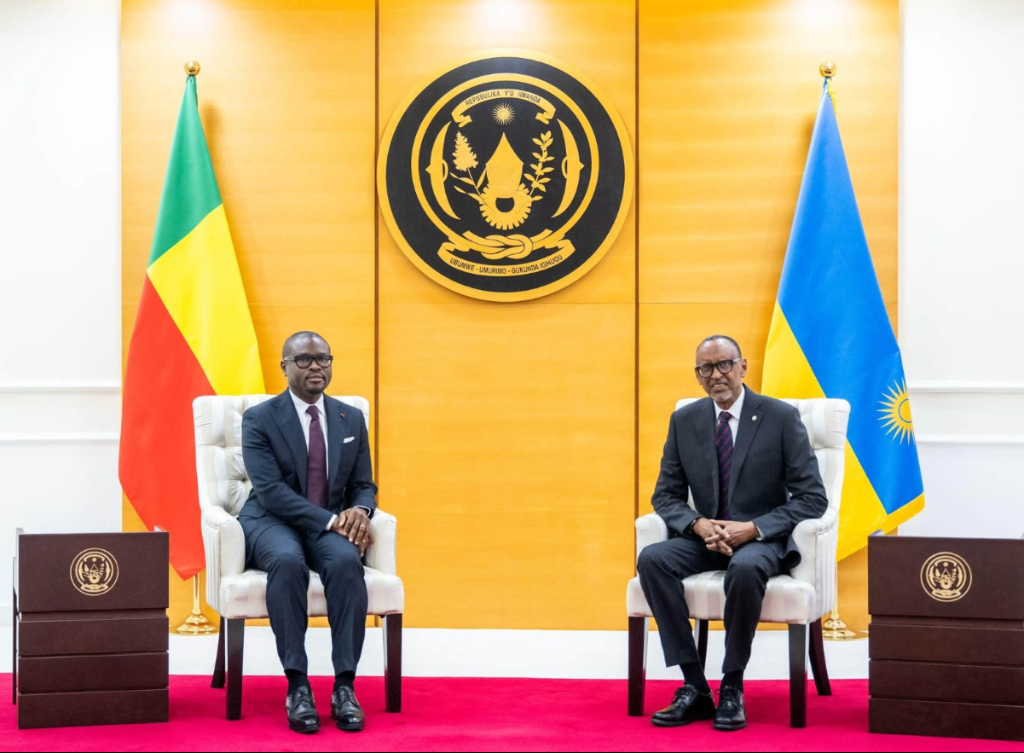
KIGALI — Benin’s President Romuald Wadagni opened a two-day official visit to Rwanda on Wednesday, 16 September 2026, a trip that marks a decisive turn in relations between Cotonou and Kigali. It is the first diplomatic engagement of its kind since he took office in May, and it carried the Beninese head of state into the heart of the Rwandan capital, where his counterpart Paul Kagame received him. High on the agenda stands a solemn halt at the Kigali Genocide Memorial in Gisozi, in tribute to the victims of the 1994 genocide against the Tutsi.
A decisive first step for Benin’s new presidency
Wadagni and the delegation travelling with him arrived to a warm reception, with crowds turning out to salute the new Beninese president’s first official visit to Rwanda. From there, the programme led to Urugwiro village, the seat of the Rwandan presidency, where Paul Kagame welcomed his guest.
That encounter formed the centrepiece of the opening day. It came as both governments look to widen cooperation across sectors where frameworks already exist: information and communication technologies, the modernisation of public services, urban planning, agriculture, and peace and security.
Gisozi: the memorial halt that gives this trip its meaning
Beyond the political and institutional exchanges, the visit carries a distinct memorial dimension. Wadagni is due to walk through the Kigali Genocide Memorial in the Gisozi district, the resting place of the remains of more than 250,000 victims of the genocide against the Tutsi. The site serves at once as a place of contemplation, an education centre and a space where memory is preserved.
A site built to preserve and transmit
The memorial opened in 2004. Its halls hold exhibitions devoted to the genocide, archives, testimonies from survivors and a dedicated space for the children who died. Hundreds of thousands of people are buried there.
Kwibuka and the weight of remembrance
More than one million people were killed in roughly one hundred days in 1994, a toll counted by Rwandan authorities. Since then, the annual commemorations known as Kwibuka have become a central fixture of national life, keeping the memory of the victims alive, passing the history on to younger generations and drawing lessons from the tragedy.
For the Beninese president, the tribute at Gisozi fits into the protocol that shapes high-level official visits to Rwanda, while lending a human dimension to the diplomatic mission.
Wadagni and Kagame: a summit with roots in an earlier dialogue
The meeting between Kagame and Wadagni comes only months after the Beninese president’s inauguration. Rwanda sent its Prime Minister, Justin Nsengiyumva, to that ceremony — a gesture Kigali presented as a sign of how much it values the relationship, at a moment when it was already describing its ties with Benin as steadily growing.
The visit therefore allows both leaders to pick up a conversation already under way at institutional level. Discussions are expected to focus on ways of deepening bilateral cooperation and opening the door to fresh partnerships.
What momentum could deliver next for both economies
The wider African context may add range to the exchanges. Rwanda and Benin are each pursuing economic transformation, administrative modernisation and infrastructure development in their own way. Kigali places particular emphasis on investment, entrepreneurship and digital technologies among the pillars of its development policy.
The decision to put Gisozi on the itinerary colours the entire trip. In contemporary Rwanda, memorial sites are not only about remembering victims: they also carry out historical education and raise awareness of where discrimination and mass violence can lead. Gisozi keeps testimonies, documents and archives linked to the genocide, and the Genocide Archive of Rwanda housed at the memorial gathers material from survivors and partner organisations.
For Kigali, the memory of the genocide remains bound up with national unity, reconciliation and the prevention of mass violence. For foreign visitors, the passage through Gisozi is traditionally a solemn moment, marked by quiet reflection before the tombs and the accounts preserved on the site.
Wadagni’s visit thus sits at the intersection of two things: strengthening ties between Benin and Rwanda, and acknowledging the memory of a tragedy that still shapes Rwandan society deeply.
After an opening day given over largely to the official welcome and exchanges with Kagame, the rest of the stay should allow the Beninese president to continue his discussions with Rwandan officials. The two-day visit looks set to lay the groundwork for a new sequence in Cotonou-Kigali relations, with a stated ambition to consolidate political ties and cooperation between the two states.