
The Republic of Senegal stands as a regional model of democratic progress, yet its political landscape remains marked by significant gender disparities. Recent legislative elections revealed a striking gap: women now hold just 41% of parliamentary seats, down from 44.2% previously. Even more concerning, only 13% of electoral list leaders were women. At the local level, the figures tell an equally sobering story—only 18 women serve as mayors across 558 communes, while just three preside over departmental councils out of 43 nationwide.
structural barriers and cultural resistance
These statistics are not mere numbers—they reflect deep-rooted structural challenges, persistent cultural biases, and systemic inequities in political financing, media visibility, and decision-making spaces. Despite constitutional guarantees of gender equality since 2001, and the landmark 2010 parity law, women continue to face obstacles in accessing leadership roles. As one prominent advocate noted, “The question is no longer whether women are capable of governance—it is why political systems continue to restrict their leadership potential.”
a regional initiative for change
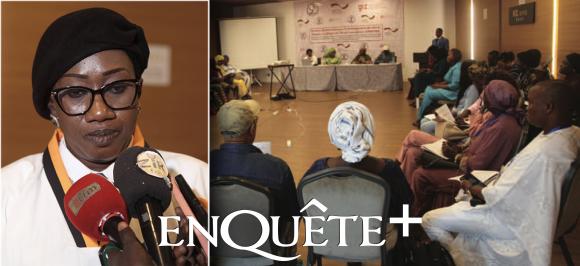
In response to these challenges, Senegal is hosting a two-day high-level seminar focused on strengthening women’s political participation. Organized by the Réseau des femmes leaders pour le développement (RFLD), the event brings together 30 women leaders—including parliamentarians, party heads, local officials, activists, and civil society leaders—representing diverse political and social backgrounds. Their shared mission: to develop strategies that will reshape women’s role in Senegalese democracy.
The initiative is part of a broader Afrofeminist Initiative for Human Rights Development in Francophone West Africa, supported by the German Federal Ministry for Economic Cooperation and Development (BMZ) and implemented with GIZ. The RFLD, recognized as an observer at the African Commission on Human and Peoples’ Rights and certified as a public charity in the United States, has established itself as a leading force in advocating for gender equality, sexual and reproductive health rights, civic space, and climate justice across Africa.
building confidence and professional skills
Beyond institutional barriers, advocates highlight the critical need to strengthen women’s self-confidence and professional competencies. Many women possess the necessary skills and legitimacy but hesitate to fully engage in leadership due to societal pressures, entrenched stereotypes, and a lack of structured support. Training programs in leadership, political communication, public governance, public speaking, and strategic management are essential to prepare women for the demands of public office.
Access to decision-making processes also requires enhanced technical skills—policy analysis, project management, digital literacy, community mobilization, and monitoring and evaluation. These capabilities are now fundamental for credible and influential leadership. However, significant disparities persist in access to training, particularly for women in rural and vulnerable areas, where opportunities are often concentrated in urban centers.
mentorship and intergenerational solidarity
Another key focus is mentorship and intergenerational support. Young women need role models, safe spaces for dialogue, and networks that provide guidance and encouragement. Promoting a culture of excellence, civic engagement, and economic empowerment is equally vital. Sustainable political participation requires financial autonomy, professional stability, and the ability to balance public, family, and social responsibilities. As one official emphasized, “Women’s empowerment is not just a goal—it is the foundation of inclusive governance.”
The government’s Family Affairs Directorate has launched several initiatives to address these needs, including leadership training for women and adolescents, citizenship education, human rights advocacy, and psychosocial support for vulnerable groups. These efforts aim to strengthen women’s resilience and participation in economic, social, and political life while supporting community-led initiatives against child marriage, gender-based violence, and school dropout rates among girls.
Working alongside technical partners, local authorities, and community organizations, the Directorate is working to create a more enabling environment for women and girls to thrive. As one leading voice stated, “True democracy cannot be achieved without the full, free, and effective participation of women. This requires continuous social transformation, community awareness, and investment in women’s leadership from an early age.”