
Africa Corps shifts tactics in Mali: focus on capital and air power
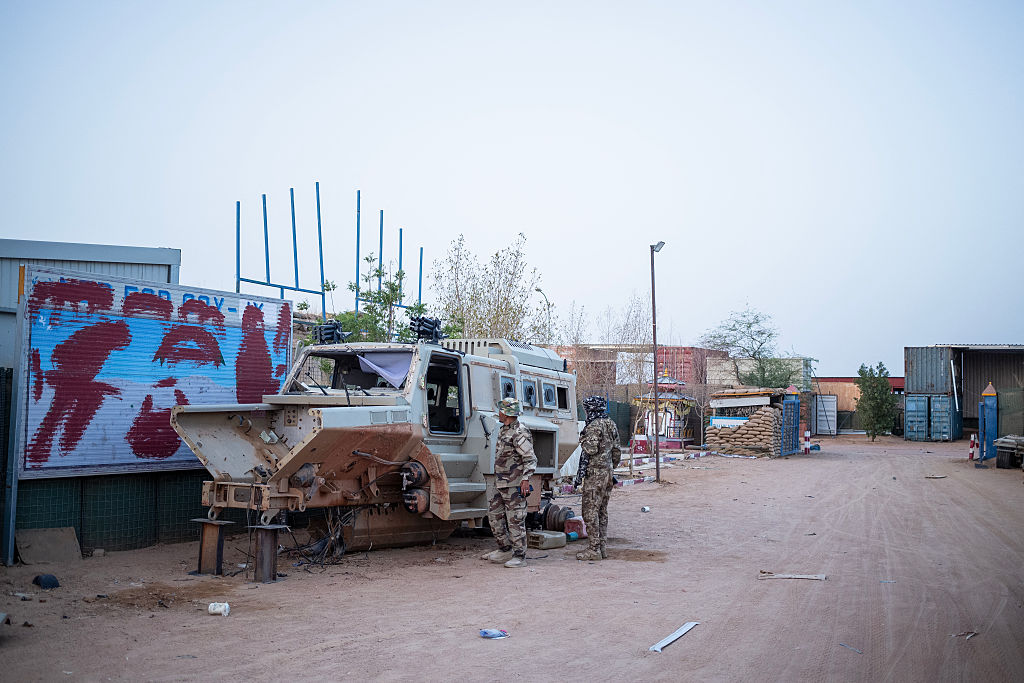
The Russian Africa Corps is repositioning its fighters away from northern Mali to safeguard the capital and the ruling junta, while providing aerial support and intelligence to Malian soldiers on the ground.
Overall, they are taking on a more secondary role, according to Benedict Manzin, chief analyst for the Middle East and Africa at the British intelligence firm Sybiline. He added that they are doing everything possible to avoid sending more people to the slaughterhouse, trying to minimize personnel exposure while maximizing the damage they can inflict.
The Africa Corps replaced the notorious Wagner mercenaries around mid-2024. This shift followed the loss of several dozen Wagner fighters in an ambush by the Azawad Liberation Front (FLA) against Wagner and Malian troops near Tin Zaouatine, close to the Algerian border.
The Africa Corps, a unit of the Russian Ministry of Defence, has about 2,000 personnel in the field, including many former Wagner mercenaries. This contingent is significantly smaller than Wagner’s force, roughly half the size of the French Barkhane counter-terrorism operation that the Malian junta expelled in 2022.
The loss of Kidal in northern Mali to the FLA and the Support Group for Islam and Muslims (GSIM) at the end of April appears to have been a key factor in the Africa Corps’ decision to stay near its main base in Bamako.
The Africa Corps launched retaliatory airstrikes on Kidal that destroyed infrastructure and forced residents to flee. These strikes were conducted in support of the Malian army (FAMa), which has become the main ground force in the north.
We are seeing them rely on air resources, said Manzin. This has recently included dropping Russian-made cluster bombs on communities in the Kidal region, violating Mali’s commitment under the international convention banning the use of cluster munitions.
They have fewer resources to waste, Manzin said of the Africa Corps. They do not want to scatter them in small northern communities where they can be eliminated.
An analysis of recent Africa Corps social media posts shows how the group has shifted its focus to central and southern Mali, conducting most of its operations near Bamako, according to analyst Jacob Boswall. After leaving Kidal, the Africa Corps intensified its propaganda campaign with over 500 articles on Telegram and other channels in the weeks following the defeat.
In addition to airstrikes, the Africa Corps has also tried to bypass economic blockades imposed by GSIM in Mali. Fighters and air support from the Africa Corps have started escorting truck convoys entering this landlocked country from Côte d’Ivoire, Guinea, and Senegal, protecting them from GSIM attacks.
Even as the Africa Corps tries to reduce its battlefield exposure, GSIM is using drones to bomb Russian fighters at their bases. Recently posted GSIM videos on social media show drone footage of Russian fighters being killed and Russian aircraft damaged by bombs dropped from drones over their Sévaré base.
The Africa Corps has launched its own armed drone strikes against GSIM positions in recent weeks, including one on a GSIM fuel depot in the Timbuktu region, according to analysts.
Mali has spent nearly one billion dollars on Wagner and Africa Corps fighters since late 2021. During this period, the government and its Russian allies have lost control of the north, and GSIM has expanded its reach in the Sahel, partly due to the brutal tactics used by the Russians and FAMa against northern civilians, Manzin observed.
The strategy adopted by the Malian state is futile, and in the long run, state stability is at risk. Unfortunately, the result is the strengthening of GSIM as communities are pushed into its arms.