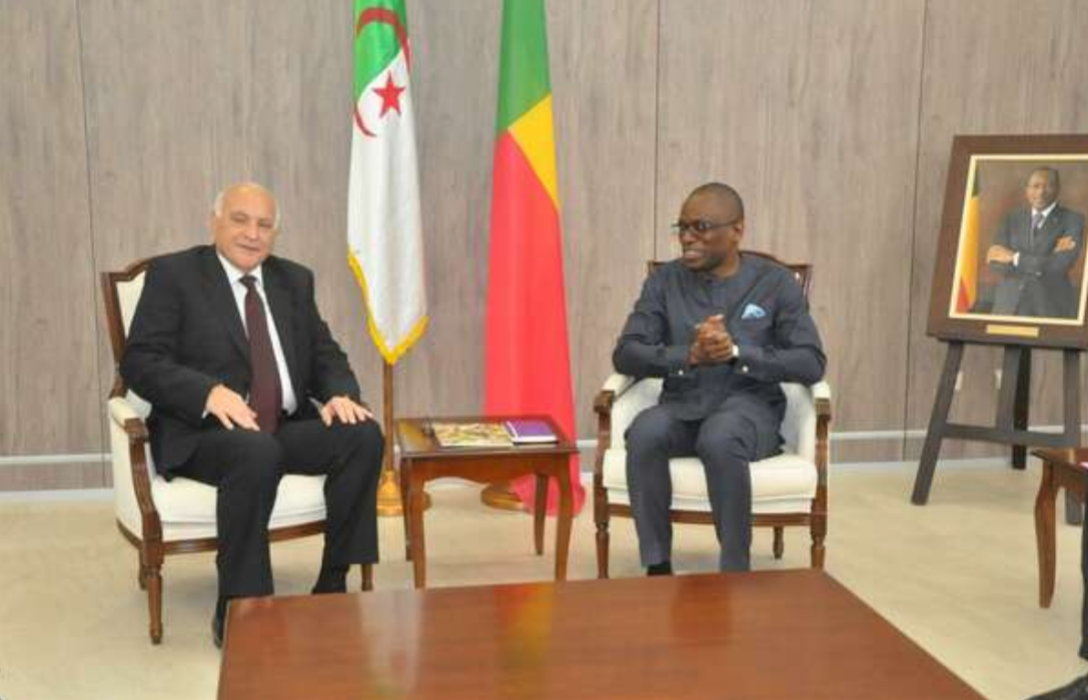

In a decisive shift toward economic engagement across the continent, Algeria dispatched a high-powered delegation to the Benin Deal Room 2026 in Cotonou this September, signaling a strategic pivot from political rhetoric to actionable market entry across West Africa. The move underscores a clear turning point in Algeria’s African strategy, as it seeks to transition from traditional export relationships to long-term industrial partnerships that span healthcare, energy, and infrastructure.
Cotonou’s Deal Room: a three-day marketplace for Africa’s next industrial chapter
For three days in mid-September, Cotonou transformed into a hub for investment in West African growth. Organized by the Beninese government, the Benin Deal Room 2026 brought together more than 20 bankable projects valued between $2 billion and $3 billion, targeting sectors from agro-industry and manufacturing to energy, logistics, and transportation. What set this event apart was its focus on bridging investors with ready-to-finance projects—moving beyond dialogue toward concrete deals.
Algeria’s presence was not ceremonial. A multi-sector delegation led by top executives from pharmaceutical manufacturer Saidal and Sonelgaz subsidiary SAIEG participated actively, reflecting a clear intention: to secure industrial footholds, forge cross-border alliances, and embed Algerian businesses in the region’s supply chains.
From diplomacy to industrial alliances: redefining Algeria’s Africa strategy
This moment at Cotonou marks a shift in Algeria’s African policy—one that prioritizes economic integration over state visits and security coordination. After decades of diplomatic and military focus, Algeria is now leveraging its industrial strengths to become a key partner in Africa’s industrialization.
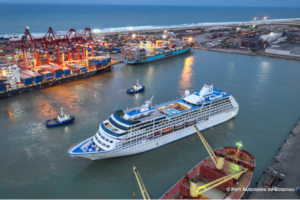
The timing is strategic. Benin is accelerating its industrial base, leveraging the Port of Cotonou and the Glo-Djigbé industrial zone to boost local processing, logistics, and value-added trade. For Algeria, this opens doors in pharmaceuticals, energy, and renewable energy—sectors where it has proven expertise.
The pharmaceutical industry, in particular, offers fertile ground for collaboration. Algeria’s state-owned Saidal Group, with its long-standing production capabilities, can export finished medicines, build local production units, and transfer technology across West Africa—meeting a critical need for quality healthcare access.
In energy, Sonelgaz’s experience in power generation, transmission, and distribution aligns perfectly with West Africa’s energy deficit. Renewable energy projects, especially solar initiatives in the Sahel, present high-impact opportunities for joint ventures and co-financing.
Algeria is no longer content to sell goods; it wants to produce, invest, and build with its African partners.
The Niger-Benin paradox: can South-South cooperation thrive with closed borders?
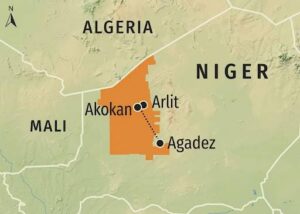
Yet this momentum faces a stark contradiction. Just hundreds of kilometers away, the border between Niger and Benin remains closed—nearly three years after the July 2023 coup in Niamey. Despite recent diplomatic efforts in 2026, no firm reopening date has been set. For Algeria, which has deepened ties with Niger—launching the Trans-Saharan Gas Pipeline project and starting oil drilling in the Kafra block with Sonatrach—this closure creates a paradox: how can regional integration advance when one of its key corridors remains shut?
Niger relies on Benin’s port for imports. The closure forces goods to take longer, costlier routes, raising logistics costs and delaying trade. For Algeria, which is betting on regional corridors like the Algiers-Lagos highway and the Trans-Saharan Gas Pipeline to connect North and West Africa, the message is clear: infrastructure alone is not enough. Functional borders and predictable transit are essential.
Can South-South cooperation outgrow its political limits?
The Algeria-Benin-Niger triangle illustrates a deeper question: Can South-South cooperation truly succeed without free movement of goods, people, and capital? The closure isn’t just a bilateral issue—it weakens regional supply chains, inflates consumer prices, and reduces investors’ ability to scale across multiple markets.
Algeria’s response could be transformative. By investing in cross-border projects and supporting the reopening of corridors, Algiers can turn constraints into opportunities. The Trans-Saharan Gas Pipeline, for example, could become a catalyst for integrated energy markets—connecting Europe, Algeria, Niger, and beyond—only if transport networks remain open and secure.
The Cotonou forum sent a strong signal: African capital is now looking within the continent for growth. But for that capital to fuel real transformation, the continent must remove the barriers—both physical and political—that still divide it.
Algeria’s Africa moment: turning presence into partnership
The choice is now clear for Algeria: treat Africa not as an export market, but as a strategic theater for industrial collaboration. The Benin Deal Room was a test—and the results matter beyond Cotonou. Success will be measured not in handshakes, but in signed contracts, shared factories, and locally trained teams.
Benin offers a gateway. Niger provides a corridor. The Sahel holds untapped potential. But none of these advantages can be fully realized without trust, coordination, and open borders. Algeria has made a strategic move. Africa must now follow through.