
Uranium at a turning point: Niamey’s bold gamble post-Orano
The July 2023 coup d’état in Niger marked the beginning of a seismic shift in the country’s uranium sector. With the nationalization of Somaïr in June 2025, the expulsion of Orano—the French firm that had dominated uranium extraction for over 50 years—and the embrace of new partners like Russia and China, Niamey is rewriting the rules of its resource economy. But the critical question lingers: are these new alliances delivering better returns than the old French partnership—or are they simply trading one dependency for another?
From Orano to new players: sovereignty gained, but at what cost?
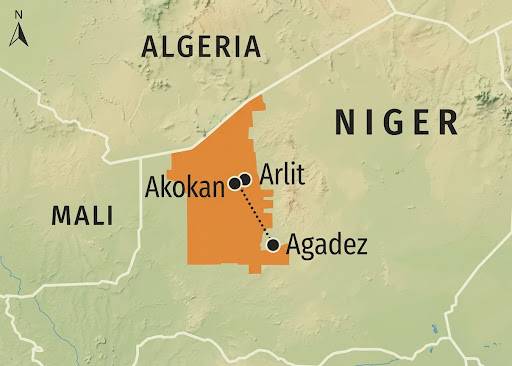
The break with Orano wasn’t just about politics. It was a full-scale industrial transformation. The French company lost control of its operations in December 2024, and by mid-2025, the Somaïr mine—historically Orano’s flagship project in Arlit—was under full Nigerien ownership. Yet reclaiming a mine doesn’t equate to commanding a market. The country’s uranium output has plummeted from 4,116 tons in 2015 to only 962 in 2024, leaving just one active mine despite untapped potential elsewhere.
The dilemma is clear: Niger has gained sovereignty over its resources, but the industrial and commercial machinery to monetize them efficiently is still catching up. Without a robust production capacity, advanced infrastructure, and trusted buyers, even the best price offers may not translate into tangible gains for the state.
Uranium pricing: the myth of the “better deal” under Orano
It’s tempting to frame the post-Orano era as a shift from exploitation to empowerment. Headlines often suggest Niger now sells uranium at higher prices than before—but the reality is far more nuanced. Uranium isn’t traded like oil on a single global exchange. Prices are set through private contracts between producers and buyers, with formulas that blend spot market rates and long-term agreements. There’s no universal benchmark to compare “what Niger earned from Orano” versus “what it earns now.”
Looking back: in 2020, Orano’s payments to Niger translated to roughly €83.75 per kg of uranium extracted from Somaïr. While recent spot prices (late 2026) have soared to $89.63 per pound—up from $53.59 in 2024—most utility buyers still secure long-term contracts at lower rates, averaging about $54.70 per pound. The environment is favorable, but that doesn’t guarantee every deal aligns with these peaks.
The fog over high-profile uranium deals
In late 2025, reports surfaced of a Niger–Russia agreement involving 1,000 tons of yellowcake for $170 million—approximately $77 per pound. While the physical transfer of material from Arlit to the capital occurred under heavy military escort in November 2025, neither Niger’s government nor Rosatom has confirmed the deal. The ambiguity extends further: Iranian negotiations for 300 tons, valued at $56 million, were reportedly abandoned, though officials deny any sale took place.
These episodes highlight a pattern: robust negotiations, physical movements, and even dollar figures are documented—but definitive, publicly verifiable contracts remain elusive. The truth lies in the gaps between intent and execution, between market access and actual revenue.
Russia, China, and the West: a multi-polar uranium market?
Niger isn’t just replacing one partner with another—it’s diversifying its alliances to boost its bargaining power. In December 2025, the newly formed Timersoi National Uranium Company inked a deal with Russia’s Uranium One Group to explore and develop new mines. Meanwhile, China has entered talks over potential purchases from Arlit’s stockpiles, though no formal agreement has been confirmed.
The geopolitical shift is undeniable. But economic leverage requires more than political realignment. To secure higher prices, Niger must stabilize production, ensure reliable logistics, and enforce legally sound contracts—especially in the shadow of ongoing disputes with Orano and the International Centre for Settlement of Investment Disputes (ICSID), which in September 2025 barred the sale or transfer of disputed Somaïr uranium.
Is the gamble paying off? The verdict isn’t in yet
Three factors now favor Niger in uranium negotiations: soaring global prices, a diversified client base, and direct control over key mining assets. Yet three bottlenecks persist: declining output, logistical vulnerabilities, and regulatory uncertainty driven by legal battles with Orano. The paradox is stark: sovereignty alone doesn’t create a solvent market.
In a bid to address this, Niger launched the Teloua Safeguarding Uranium Mining Company in 2026 to oversee the renamed and restructured uranium sector. Meanwhile, Western investors are cautiously returning—most notably with the approval of a $414 million U.S. loan for the Dasa project, spearheaded by Canadian firm Global Atomic. These steps signal a turning point, but the final outcome hinges on execution: whether new contracts actually capture higher prices than before and whether a greater share of uranium’s value stays within the country.
The real challenge: transparency and trust
Until Niger can prove—with verifiable contracts, audited payments, and public accountability—that its uranium is fetching competitive prices, skepticism remains justified. Are the new partnerships delivering better returns? Today’s prices are higher, and negotiation options have expanded—but the hard evidence of improved net gains for the state is still missing. The next chapter in Niger’s uranium story won’t be written by political declarations or silent shipments. It will be forged in courtrooms, boardrooms, and markets, where every ton sold must earn its true value.