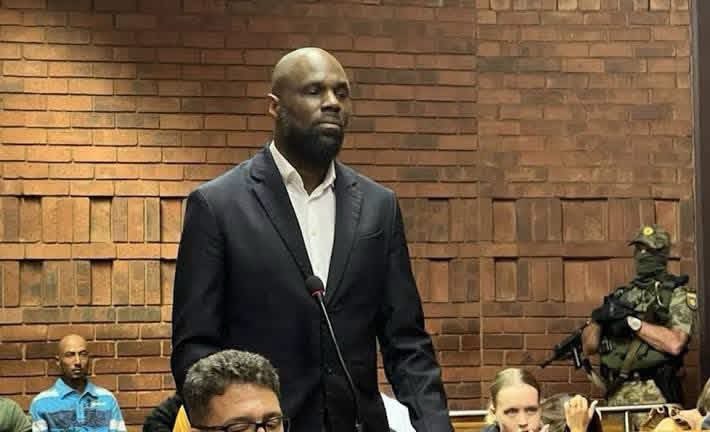

Judicial decision highlights systemic risks in alleged escape network
The rejection of Kémi Séba’s bail application marks a critical turning point in an investigation now exposing what appears to be a meticulously organized international exfiltration plot. Court documents reveal that prosecutors uncovered evidence suggesting that preparations were underway to facilitate Séba’s organized departure from the country, prompting immediate judicial concern.
This development underscores the complexity of the situation, where alleged coordination between multiple actors including foreign intermediaries and financial networks raises serious questions about the depth of the operation and the individuals involved.
The central figure in the initial contacts
At the center of the investigation is Héry Djehuty, coordinator of Urgences Panafricanistes and a close associate of Kémi Séba. Authorities now scrutinize his role after determining that he initiated the first contacts with foreign intermediaries allegedly involved in the escape scheme. These early exchanges provide critical insight into how the network may have been structured and who facilitated the introduction of key participants.
The immediate questions emerging are clear: What instructions, if any, did Djehuty receive before embarking on these contacts? Did he act independently or under direct guidance from Séba’s inner circle? The answers to these questions could reveal the extent of organizational involvement and the true scale of the alleged plot.
Financial flows under examination
Another critical dimension of this case involves the fundraising campaigns organized by Héry Djehuty under the pretext of supporting Séba’s legal defense. With suspicions now focusing on whether these funds were diverted to finance logistical arrangements for an exfiltration, financial transparency has become a central investigative priority.
Investigators are now pursuing two key lines of inquiry: the origin of the collected funds and their ultimate use. Did contributions from supporters serve solely Séba’s judicial defense, or were portions redirected to cover travel arrangements, communications, or other operational costs? The absence of detailed financial records raises concerns about accountability and misuse of public or private donations.
Tracing the international connection
One of the most sensitive aspects of the investigation involves the alleged involvement of foreign nationals, including Russian citizens and individuals identified as South African rangers. These parties are suspected of playing roles in facilitating clandestine travel or providing logistical support for Séba’s potential departure.
Following Djehuty’s initial outreach, authorities are now working to map the connections between these intermediaries. How were the Russians identified? What communication channels were used to establish their roles? And crucially, were these efforts coordinated with the South African individuals also flagged in the investigation?
The sophistication of an international exfiltration operation requires more than casual coordination. It demands secure transportation, reliable safehouses, and reliable communication channels resources that likely demanded substantial financial backing and logistical planning. Identifying the source of these funds and the individuals responsible for their management remains a top investigative priority.
Role of South African intelligence: A gap in oversight?
The possible involvement of South African intelligence services adds another layer of complexity. Authorities must determine whether these agencies had prior knowledge of the alleged contacts or were actively monitoring the suspects identified in the case.
Did intelligence operatives track the movements of key individuals linked to Séba’s circle? Were any local or international networks already under surveillance? The answers could reveal systemic failures in monitoring cross-border activities or, conversely, proactive efforts to disrupt the alleged plot before its execution.
The judicial rationale behind the bail denial
The court’s decision to deny bail reflects deep institutional concerns over the risk of flight. Prosecutors successfully argued that the presence of an international network capable of aiding Séba’s exfiltration posed an unprecedented risk to judicial proceedings. This judicial stance highlights a growing recognition that such cases are no longer isolated incidents but part of a broader pattern of transnational legal evasion strategies.
While the exact legal reasoning remains under review, the decision sets a precedent for future cases involving high-profile defendants suspected of orchestrating international escape plans. It also emphasizes the need for courts to assess not only the defendant’s personal circumstances but also the structural risks posed by organized support networks.
Accountability and unresolved questions
Beyond the immediate legal proceedings, several unanswered questions demand resolution to fully understand the scope of this alleged operation:
Who directed Héry Djehuty’s initial outreach to foreign intermediaries? Was this part of a broader strategy coordinated at the highest level of Séba’s entourage?
What was the scope of collaboration between Russian intermediaries and the South African rangers? Did their roles overlap, and were they aware of each other’s participation?
Which entities or individuals were responsible for funding travel and logistical arrangements? Were external sponsors involved, and if so, where did the financial resources originate?
Did South African authorities have prior intelligence on these individuals or their activities? If so, why was the alleged plot not preemptively disrupted?
Did Kémi Séba have knowledge of his associates’ efforts to organize his exfiltration? If confirmed, this would significantly alter the assessment of his personal intent and level of involvement.
A case with far-reaching implications
This case transcends the individual circumstances of Kémi Séba’s arrest and bail denial. It exposes a potential model of international legal evasion that leverages transnational networks, financial opacity, and strategic coordination. The investigation now seeks to dismantle this alleged network by identifying the architects of the operation, tracing financial flows, and clarifying the roles of every participant.
Héry Djehuty’s central position within Urgences Panafricanistes places him at the heart of this inquiry. As prosecutors sift through evidence of international contacts, fundraising irregularities, and possible intelligence gaps, the broader question remains: Who initiated the search for foreign facilitators, and what role did Séba’s inner circle play in enabling or concealing these arrangements?
The answers will determine not only the legal outcome for Séba but also the efficacy of cross-border judicial cooperation in combating sophisticated escape schemes.
By Idriss MAMADOU — Journalist