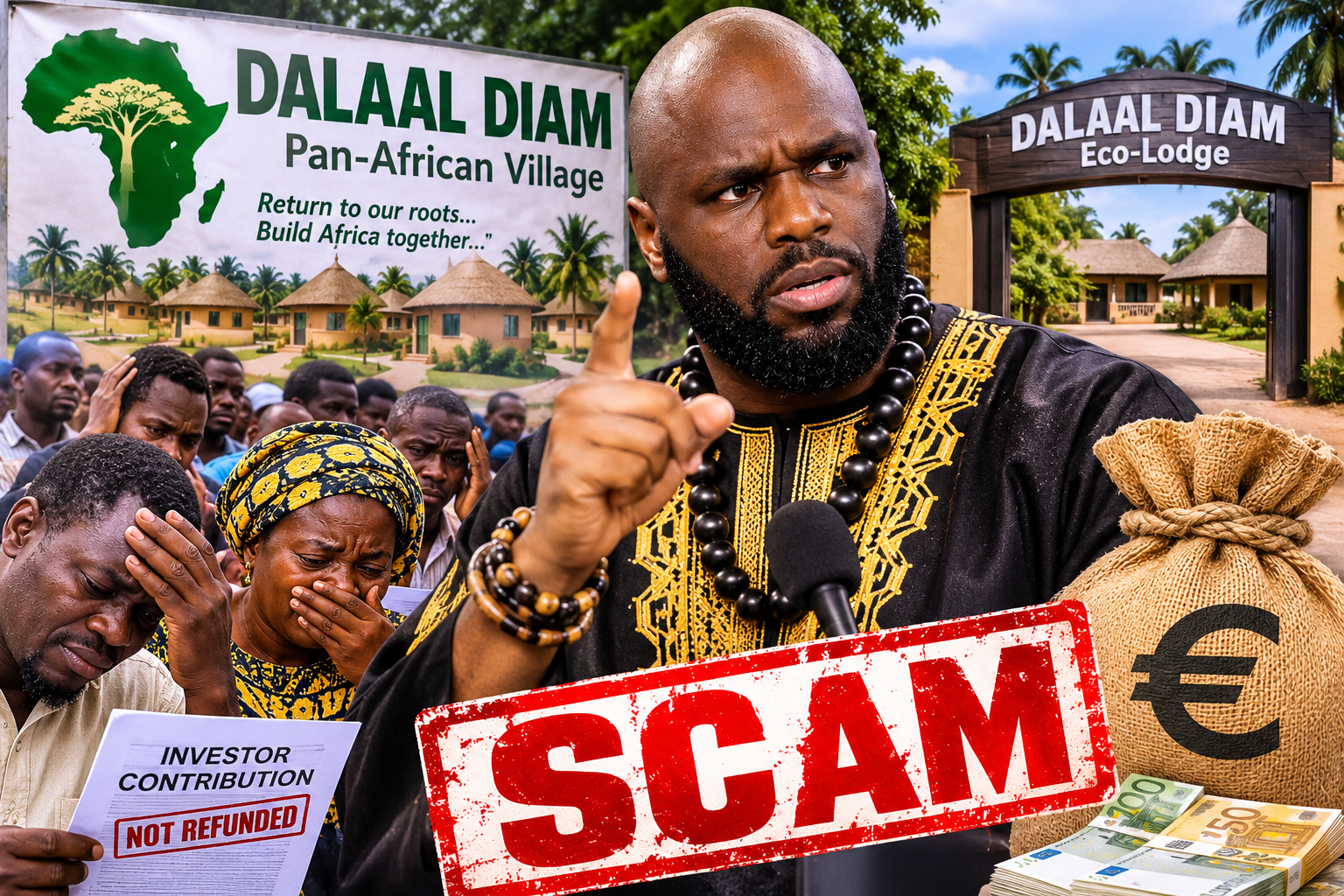

In 2011, activist Kémi Séba born Stellio Capo Chichi championed an ambitious initiative under the banner of Pan-Africanism: Dalaal Diam, a proposed panafrican village in Senegal spearheaded by the enterprise Afrikan Mosaïque. His role was framed as that of a national representative, advocating for a vision rooted in Marcus Garvey’s ideals of economic self-reliance and collective resurgence among Afro-descendants.
The project’s high-profile pitch included an eight-hectare plot of land and an announced budget of €360,000, positioning it as a tangible step toward bringing the discourse of return and diasporic reunion into reality. Supporters were invited to participate financially in what was presented as a historic movement one where symbolic calls to action would translate into concrete development.
What went wrong behind the scenes of a bold Pan-African vision
As the project unfolded, internal documents and investor testimonials reveal a series of critical missteps. By 2012 and 2013, initial milestones had stalled, with multiple planned components abandoned and the concept dramatically scaled back. The focus shifted to a modest eco-lodge, slated to open in January 2014 a far cry from the grand vision of a self-sustaining Pan-African village that had been promoted.
But the most alarming aspect emerged in the experiences of the earliest subscribers. Despite the abandonment of the project’s original objectives, many contributors reported never receiving refunds for their investments. These individuals, who had entrusted both their money and their hope in a movement rooted in solidarity and African empowerment, remain unpaid years later.
The rebranding of failure: from vision to vocabulary
Another troubling dimension surfaced upon closer examination of the project’s legacy. The phrase “Dalaal Diam” meaning “may peace be with you” in Wolof was not only the name of the initiative but also adopted by Kémi Séba as a personal catchphrase in public statements. This raises a fundamental question: how can a symbol of failed ambition continue to be used in personal branding, while those who believed in the project’s promise still await restitution?
Unanswered questions and unmet obligations
Kémi Séba’s involvement raises several unresolved queries. What was his exact role in soliciting funds from supporters? Who managed the incoming contributions, and how were they allocated? Most critically, why have subscribers not received reimbursement despite the withdrawal of the project’s intended scope?
This case underscores a contradiction at the heart of Pan-African discourse. While rhetoric about economic sovereignty and diasporic reunion flourishes, the lived experience of contributors reveals gaps between promise and practice. Investing in African-led initiatives must be grounded in accountability not only in ideology.
The Dalaal Diam saga serves as a cautionary tale: ambition without transparency, vision without execution, and altruism without follow-through cannot sustain the trust of those who choose to believe.
By Idriss MAMADOU — Journalist