Behind the scenes of the leaked letter from Juan Branco to Ousmane Sonko
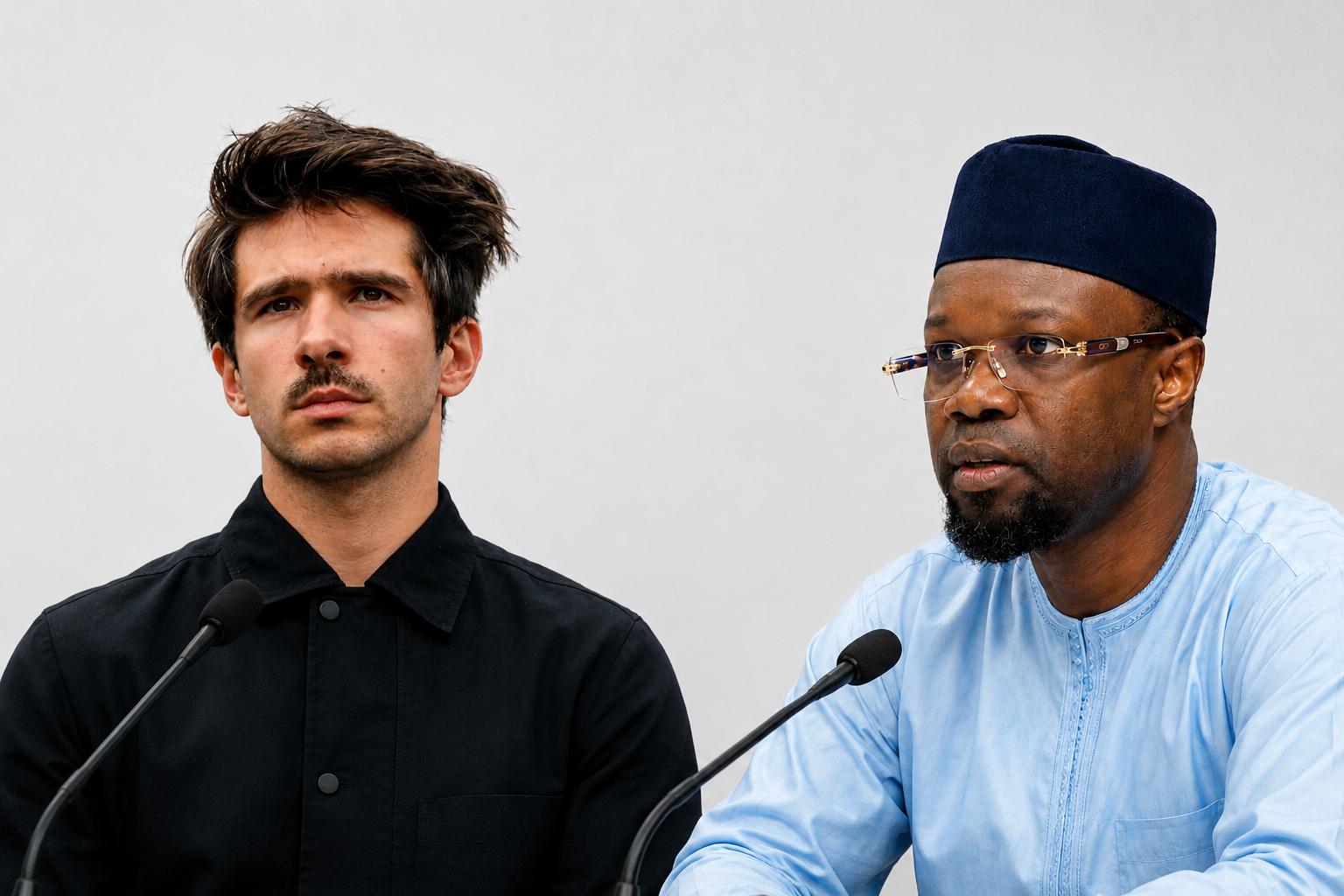
A deep controversy has emerged following the leak of a letter sent by Juan Branco, the essayist and lawyer for Kemi Seba, to the Prime Minister of Sénégal, Ousmane Sonko. The document, dated February 4, 2025, outlines five specific areas where the lawyer seeks direct intervention from his associate, now at the head of the Senegalese government.
Pressure on the judiciary and sovereignty concerns
Regarding a rogatory commission issued by a Spanish magistrate concerning his abduction in Mauritanie, Juan Branco suggests that Ousmane Sonko should exert influence over the Senegalese judicial authorities to ensure their cooperation. To justify this request, he questions the sovereignty of the Senegalese state, alleging that French interests are manipulating the handling of the case.
Requests for classified intelligence
Juan Branco has also requested access to sensitive files and intelligence reports from the previous administration under Macky Sall, specifically those involving French secret services. The lawyer claims to be the target of a powerful smear campaign in France that is fueling legal and disciplinary actions against him. He points to a “Kompromat” attempt in October 2023, allegedly involving a Senegalese agent, just before a major hearing in Sénégal. However, seeking such documents could be interpreted as an incitation to violate national defense secrets and professional confidentiality, both of which are strictly regulated under the Senegalese Penal Code.
Financial support for international litigation
In his correspondence, the lawyer urges Ousmane Sonko to take direct action, particularly regarding the financial aspects of the France-ICC legal proceedings against former President Sall for crimes against humanity. This request places both men in a precarious legal position. Asking a Prime Minister to bypass judicial requisitions to provide intelligence files or to use public or party funds (PASTEF) for private legal battles in France carries significant risks. Such actions could be characterized as embezzlement of public funds or the illegal receipt of state secrets, potentially undermining the integrity of international justice for the sake of political proximity.
Ambitions for nationality and official roles
The letter reveals that Juan Branco had hoped to represent the Republic of Sénégal at the United Nations in New York as early as May 2024. He argues that such an appointment would have served as a powerful symbol of the new regime’s “sovereigntist and pan-Africanist” stance. Having seen another diplomat appointed to the role, he has shifted his request toward obtaining Senegalese nationality through exceptional presidential powers. This naturalization would allow him to join the Bar association and teach at the Université Cheikh Anta Diop (UCAD) in Dakar. These demands appear to bypass standard institutional procedures and the principle of equality before the law. It highlights a shift in his relationship with Ousmane Sonko, where the lawyer seems to be leveraging his past detention and activism to secure administrative favors and political influence.
The financial accounting of an alliance
Finally, Juan Branco provides a breakdown of the funds he has received, totaling 15,000 euros between 2023 and 2025. This includes 2,000 euros for expenses provided by his colleague, Maître Bamba Cissé, during a trip to Dakar. Branco maintains that these sums do not adequately compensate for his work, his kidnapping, his imprisonment, or the ongoing legal battles he faces in France. This disclosure points to an informal and opaque financial arrangement. Without a legal contract with the State of Sénégal, these payments raise questions regarding public procurement rules and the transparency of capital flows. It marks a transition from what was presented as a selfless ideological partnership into a purely transactional and mercantile relationship.