Benin accelerates local food processing to achieve food sovereignty
The Minister of Agriculture, Livestock and Fisheries, Adin Yeton Bloukounon Goubalan, has just completed a three-day national tour. From central to northern regions, the executive’s message is clear: Bénin must stop exporting raw materials and process its production locally to ensure food security and generate wealth.
The Beninese government has set itself a true race against time to modernize agriculture. Between June 11 and 13, Minister Goubalan visited several major agricultural hubs, including Paouignan, Glazoué and Parakou. The goal of this journey was to verify on the ground that the head of state’s vision—a definitive break with the export of raw products—becomes an industrial reality.
Rice and cassava: food independence underway
The first major relief comes from the rice sector. In Glazoué, the agro-industrial group Premium, already firmly established in paddy rice processing, announced a major acceleration of its investments. A third processing unit is currently under construction in Dangbo. This new industrial tool will enable the group to increase its overall capacity from 300,000 to 500,000 tons of rice per year. This is a breath of fresh air to reduce the country’s dependence on Asian rice imports.
In Paouignan, it is the white gold of the soil—cassava—that is in the spotlight. Work on the new local processing plant is nearing completion. This industrial complex will produce gari, tapioca, and especially bread-making flour, a valuable alternative to reduce wheat imports. The major innovation here lies in its management model: unprecedented co-management between the private sector and local producer groups, designed to distribute profits equitably and secure rural jobs.
Cashew: crackdown on smuggling
While processing advances, it faces a major challenge: the availability of raw materials. In the cashew nut sector, local processors are sounding the alarm over the leakage of raw nuts to neighboring countries.
Minister Goubalan showed great firmness on this issue. The government commits to strengthen border controls and prioritize securing stocks for factories located on national territory. For the executive, letting raw nuts leave is equivalent to exporting the jobs of young Beninese.
Cotton: target of 700,000 tons with bonus incentives
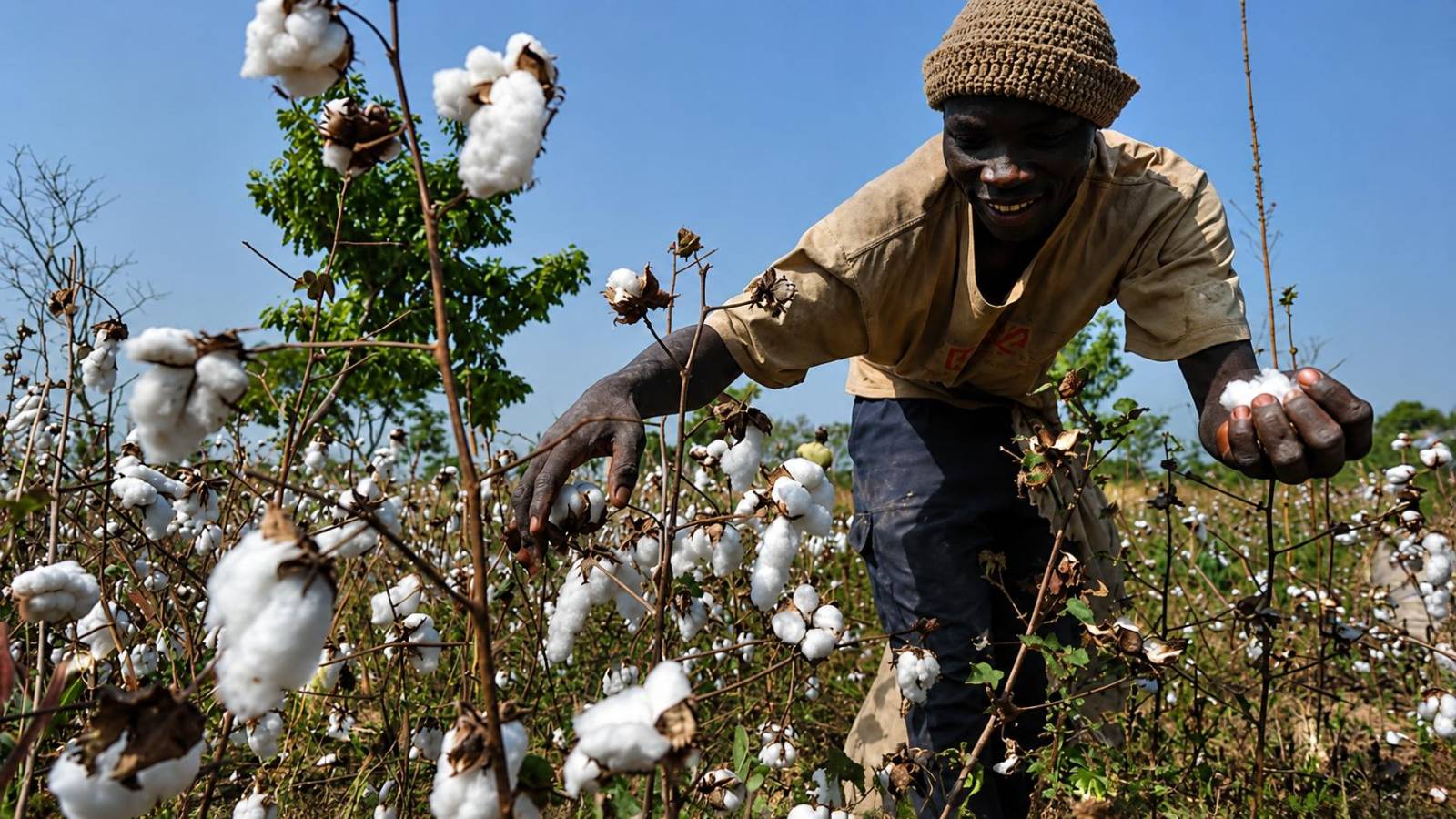
The tour ended with the most sensitive aspect of Bénin’s agricultural economy: cotton. After three successive campaigns marked by a slowdown in production, the government wants to sound the revolt. The target is set at 700,000 tons for the 2026-2027 campaign.
To remotivate the troops and support producers’ purchasing power amid high input costs, the President of the Republic has introduced an incentive: an exceptional bonus of 10 FCFA per kilogram of cotton produced, which will be paid as soon as the national threshold of 700,000 tons is reached.
Between firmness on smuggling, financial bonuses for producers, and large-scale industrial projects, Bénin is shaping a more resilient agricultural economy. The challenge now is logistical and climatic, but the political will appears firmly anchored.