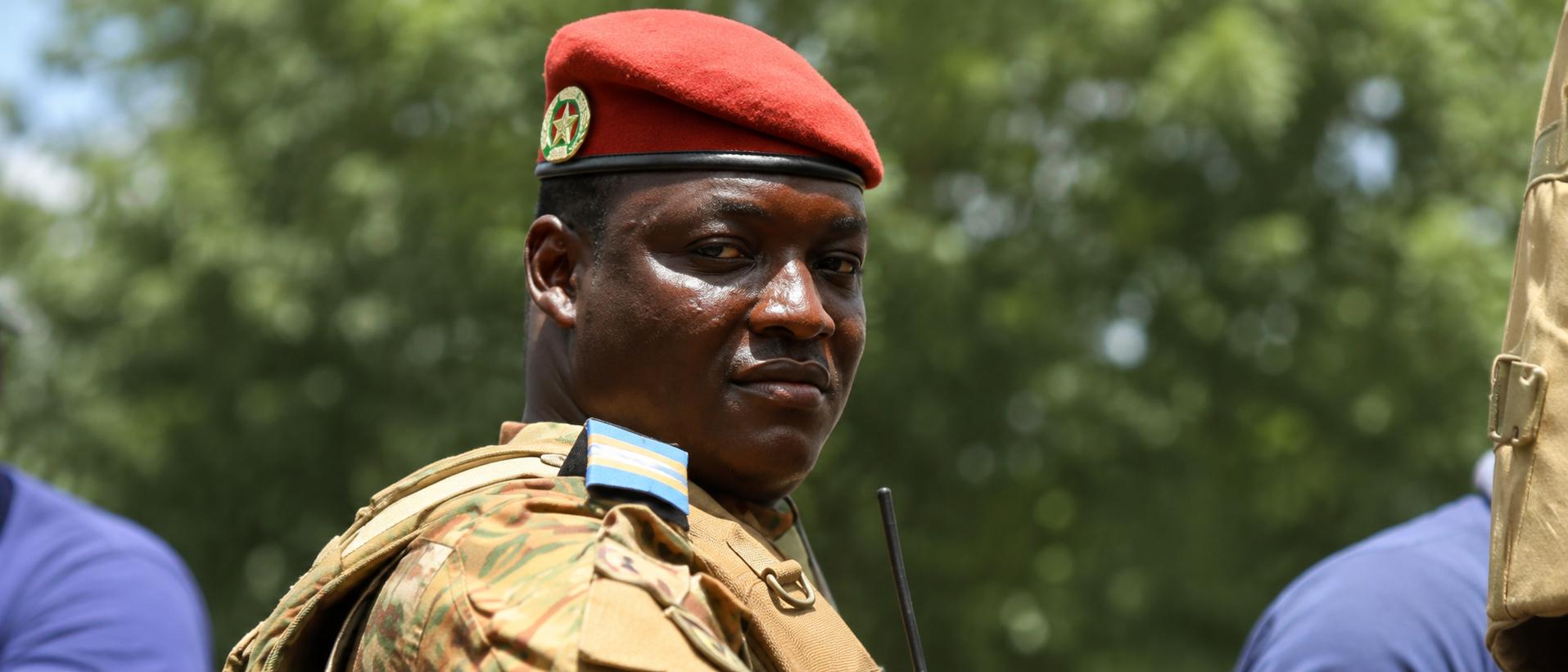

In a decisive move that signals a new era of hardline governance in Ouagadougou, Burkina Faso’s transitional military government under Captain Ibrahim Traoré has steered through a unanimous vote in the legislative assembly to reinstate the death penalty. Marketed under the chilling slogan “Sentimentalism is over,” this legislative overhaul—reversing a 2018 abolition—frames itself as a bold assertion of national sovereignty and a tool to combat treason. Yet beneath the rhetoric of resolve lies a stark truth: this reform appears meticulously crafted to neutralize political adversaries, with former transitional leader Lieutenant Colonel Paul-Henri Sandaogo Damiba squarely in the regime’s crosshairs.
Why restoring the death penalty now could target Burkina Faso’s former leader
The timing of this legal shift is no coincidence. By reintroducing capital punishment, Ibrahim Traoré’s administration is laying the groundwork for a potential death sentence against Paul-Henri Sandaogo Damiba, who faces charges of high treason and conspiracy against state security. The removal of clemency options under the banner of rejecting “sentimentalism” sends a clear message: the regime is willing to go to extremes to eliminate perceived threats.
For political analysts, this maneuver is less about justice and more about intimidation—sending a signal to both internal dissenters within the military and the broader opposition. Damiba, once a powerful figure in Burkina Faso’s political landscape, now stands as the most prominent target of this retroactive legal weaponry.
The irony: From Damiba to Traoré, the cycle of power and betrayal
There’s a bitter irony in how Burkina Faso’s political landscape has shifted. The very tactics used by Damiba to seize power in January 2022—toppling President Roch Marc Christian Kaboré—are now the same ones being weaponized against him by Traoré’s regime. This hypocrisy reveals a harsh truth about the country’s recurring instability:
- Same playbook, different victim: In 2022, Damiba’s coup was framed by supporters as a “patriotic awakening,” a necessary intervention to save the nation. Today, the same military-led tactics used to oust Kaboré are being reclassified as “high treason” when Traoré employs them against Damiba.
- A legal trap for rivals: By reinstating the death penalty, the Traoré administration is not only pursuing Damiba but also setting a precedent—one that could be used against others who challenge its authority in the future.
The cost of weaponizing justice in Burkina Faso’s political crisis
Traoré’s gambit risks plunging the country deeper into a cycle of retribution and instability. Using criminal justice as a political cudgel and reviving capital punishment to settle scores at the highest levels of the military does more than silence opponents—it entrenches a culture of fear and vengeance. History has shown that those who wield the sword of justice today may one day find themselves on the wrong side of it.
For a nation already scarred by multiple coups, this latest move underscores a dangerous truth: when justice becomes a tool of the state, there are no true winners—only an endless spiral of confrontation and distrust.
The bigger picture: Will capital punishment deepen or resolve Burkina Faso’s crisis?
As Burkina Faso grapples with the fallout of this legislative shift, the question remains: is the death penalty a step toward stability, or just another symptom of a leadership desperate to cling to power? The answer may well determine whether the country’s political future is forged in justice—or buried in vengeance.