
Burkina Faso’s military doctors train in the US amid AES tensions
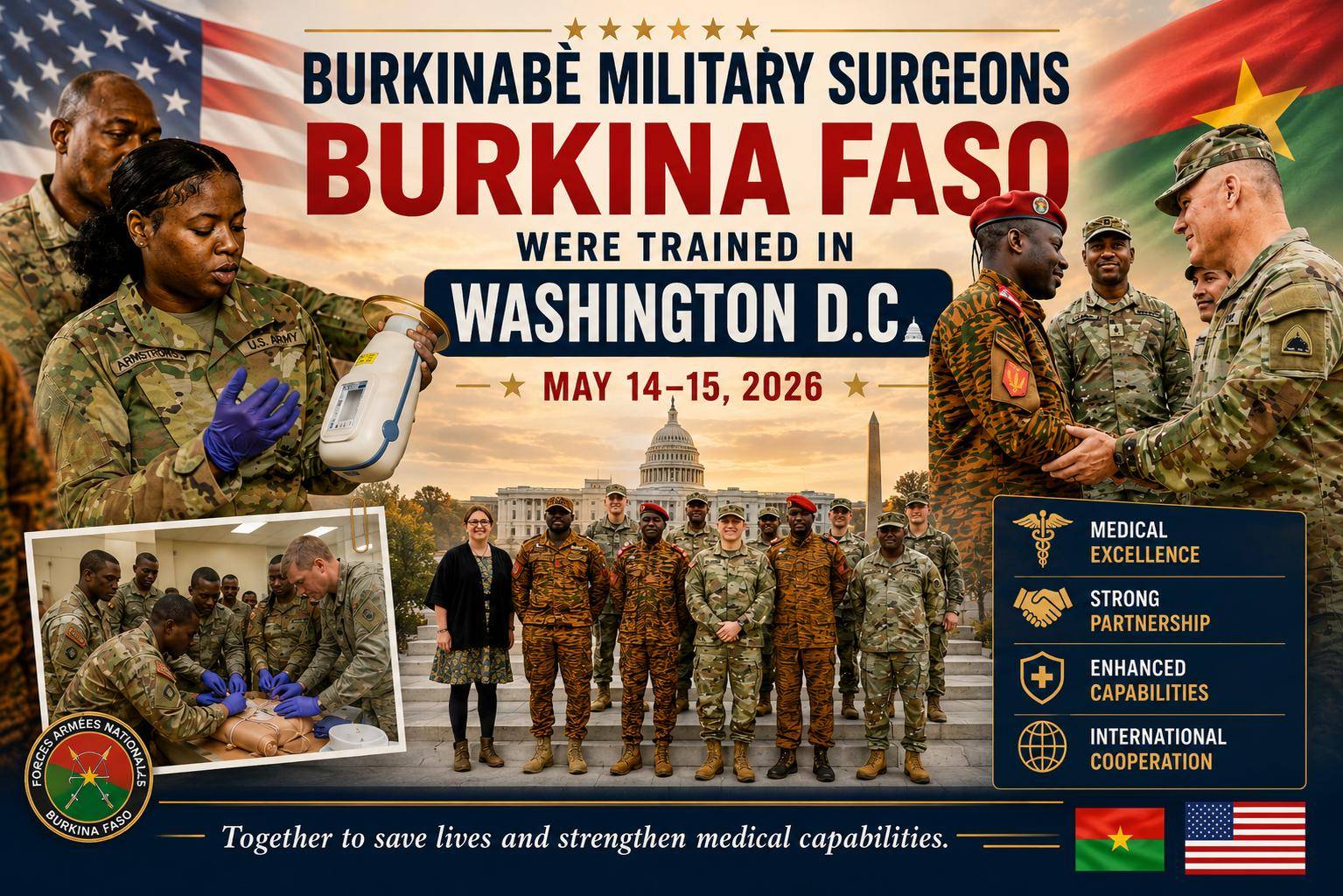
In a surprising twist amid growing Sahel tensions, Burkinabè military surgeons recently completed a high-level training session in Washington, D.C., under the State Partnership Program (SPP). The two-day event, held in mid-May 2026 and disclosed on June 6, highlights a nuanced approach to international cooperation that contrasts sharply with public rhetoric.
Strategic medical cooperation behind closed doors
The announcement came via a concise statement from the U.S. Embassy in Ouagadougou, revealing that a delegation of Burkina Faso‘s top military surgeons had traveled to the American capital for an intensive exchange. The focus? Advancing combat trauma care, emergency surgical response, and battlefield wound management—skills critical to preserving lives in a country grappling with relentless asymmetric warfare.
This mission wasn’t just symbolic. It was a direct transfer of lifesaving expertise, tailored to the harsh realities faced by Burkinabè troops on the front lines. In an era where medical innovation can mean the difference between life and death, such partnerships offer more than training—they provide a tactical edge.
Alliance of States of the Sahel: A gap between words and actions
The timing of this cooperation raises questions. Within the Alliance of States of the Sahel (AES)—comprising Burkina Faso, Mali, and Niger—public statements have increasingly distanced the bloc from Western powers. Accusations of complacency or indirect support for terrorist groups have been leveled at former allies, particularly France, creating a climate of mistrust.
Yet, behind the scenes, channels of technical cooperation remain open—and active. How can Burkinabè officials participate in U.S.-led military medical programs while publicly denouncing Western influence? The answer lies in a pragmatic calculation: when survival is at stake, operational effectiveness often outweighs ideological alignment.
Why the U.S. model beats Russia’s in battlefield medicine
Since severing ties with France, Burkina Faso has deepened its partnership with Russia, securing combat equipment, aerial support, and tactical training. So why not rely on Moscow for advanced surgical training?
The distinction comes down to specialization. The U.S. military’s SPP program brings decades of battlefield medical experience, grounded in academic rigor and real-world deployment. Burkinabè military doctors, trained in Western medical protocols, find greater compatibility with American systems—from evacuation procedures to equipment standards. Russian support, while valuable in other areas, has not yet matched the depth of U.S. expertise in high-stakes trauma care.
For a nation under siege by extremist violence, the choice isn’t ideological—it’s practical. The ability to save lives on the battlefield demands precision, adaptability, and continuity—areas where Western medical frameworks still lead.
A quiet diplomacy with tangible benefits
For Washington, this program is a strategic lifeline. As U.S. influence in the Sahel wanes—evidenced by forced troop withdrawals in neighboring Niger—medical diplomacy offers a discreet but potent way to maintain influence without provoking public backlash. For Burkina Faso’s military leadership, including Captain Ibrahim Traoré, the collaboration reinforces operational independence while avoiding total isolation from global partners.
Sovereignty with flexible boundaries
This Washington training session underscores a hard truth: Sahel geopolitics isn’t dictated by slogans or protest signs. Beneath the noise of geopolitical posturing lies a stark reality—the survival of Burkina Faso’s armed forces and its citizens depends on access to the best tools and training, regardless of origin.
By sending its surgeons to the U.S., Burkina Faso chose medical excellence over political purity. It’s a paradox worth embracing when lives are on the line—and a reminder that in war, pragmatism often trumps ideology.