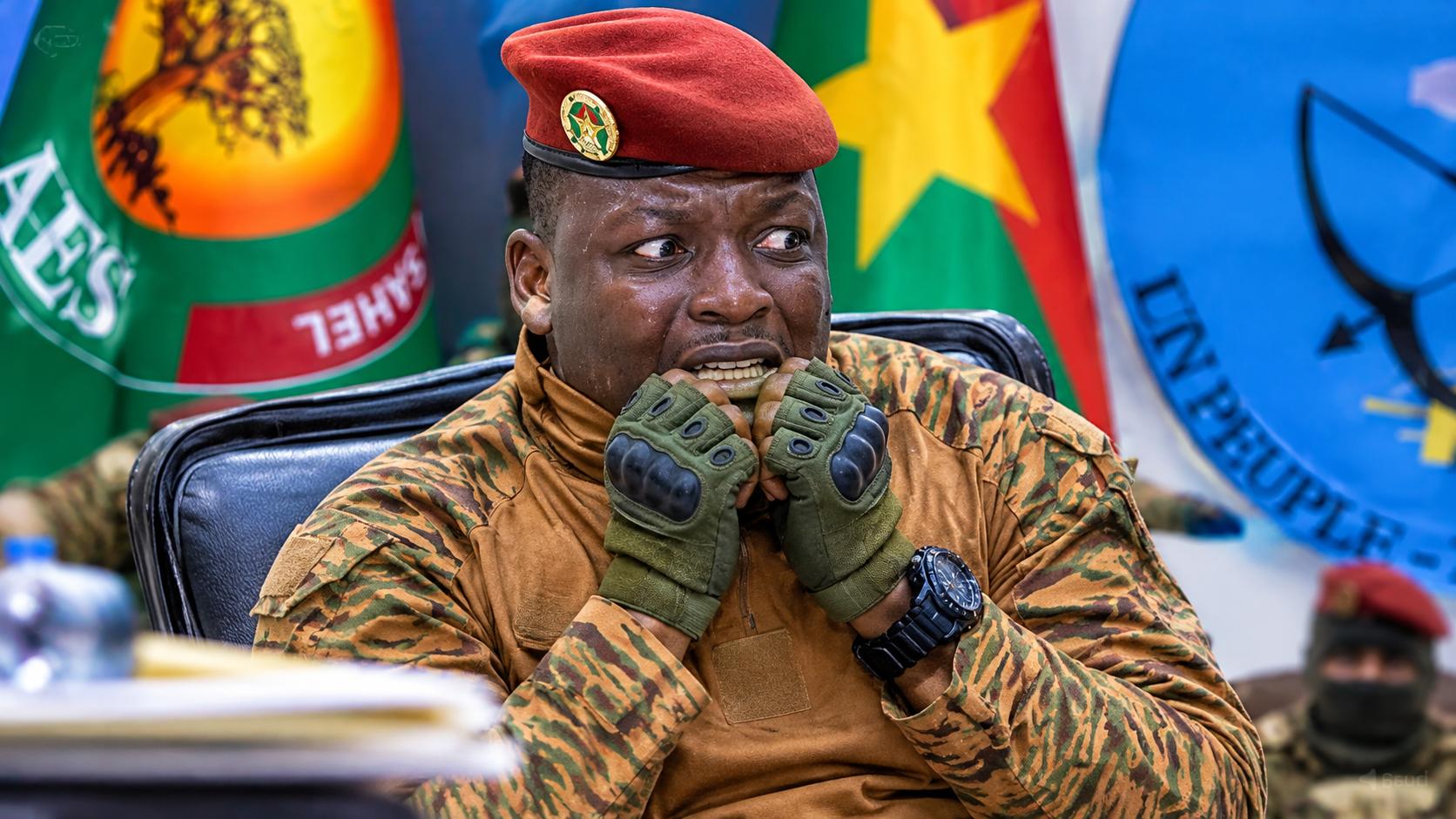

The Burkina Faso junta’s bold pivot toward Moscow has been a defining feature of Ibrahim Traoré’s leadership, yet his sudden absence from the Russia-Africa Summit raises pressing questions about the fragility of his internal alliances. While the Kremlin has emerged as a key partner in Ouagadougou’s quest for geopolitical independence, the postponement of Traoré’s participation suggests deeper anxieties about his hold on power. Could the man who has staked his legitimacy on defiance toward Western partners now be facing a threat from within his own ranks?
From diplomatic showmanship to potential vulnerability
The Burkina Faso leader’s public embrace of Vladimir Putin has been more than symbolic it has been a calculated strategy to project strength and sovereignty. By positioning himself as a bold challenger to traditional alliances, Traoré has cultivated an image of uncompromising resolve. Yet, behind the carefully staged displays of solidarity with Moscow, insiders report that the absence stems not from a mere scheduling conflict, but from credible concerns that a trusted advisor could exploit his trip abroad to orchestrate a power grab.
The dual-edged sword of propaganda
Traoré’s rise to power was accompanied by a relentless propaganda campaign, painting him as a fearless defender of national dignity. Social media became a battleground for narratives celebrating his resistance to foreign influence and his pledge to restore Burkina Faso’s sovereignty. However, the same communications apparatus that once consolidated his support may now be contributing to his isolation. If the regime’s carefully constructed image of control fails to match the realities of governance, even allies within the military and political elite may begin to question the sustainability of his leadership.
Critics of the junta argue that the obsession with image over substance has created a dangerous disconnect. While Traoré projects resolve on the global stage, domestic challenges particularly in security and humanitarian conditions persist. The risk is clear: when a leader’s legitimacy hinges on perpetual public relations victories, internal fractures can form when expectations outpace deliverables.
Loyalty under scrutiny: the fragility of Burkina Faso’s power base
In military-led regimes, power is rarely a solo endeavor. The individuals who helped Traoré seize control in 2022 occupy critical positions in state security, logistics, and intelligence. Over time, however, personal loyalties can erode, especially when personal ambitions or ideological differences emerge. Reports from trusted sources suggest that Traoré’s absence may reflect a calculated precaution one born not of recklessness, but of a clear-eyed assessment of his inner circle’s reliability.
Yet, the absence of concrete evidence makes it premature to conclude that a coup is imminent. Rivalries among elites do not automatically translate into actionable threats. The junta has weathered internal tensions before, and Traoré’s survival thus far suggests that his control, while tested, remains intact. Still, the fact that such rumors even circulate underscores a critical vulnerability: in the absence of transparent governance, speculation flourishes, and the regime’s narrative of invincibility begins to unravel.
Diplomacy, security, or survival?
The Russia-Africa Summit represents more than a diplomatic engagement it is a test of Traoré’s ability to maintain his international credibility while managing domestic instability. If his absence was driven by security concerns, it would signal that the junta’s grip on power is more precarious than its public posturing suggests. Conversely, if the explanation is merely bureaucratic or logistical, it could reinforce perceptions of an administration struggling to balance global ambitions with internal coherence.
The questions raised by this episode extend beyond Burkina Faso. They touch on a broader dilemma facing coup-born regimes across the Sahel: can a leader who rose to power on the promise of radical change survive the contradictions of power when the expectations of both allies and adversaries collide? Traoré’s challenge is no longer just about defying Western influence it is about surviving the centrifugal forces within his own movement.
What we know and what remains unclear
The Burkina Faso leader’s absence from the Russia-Africa Summit has fueled speculation about internal instability.
Reports suggest concerns over a potential power grab by a close ally during his absence.
The junta’s reliance on propaganda to project strength may be masking underlying vulnerabilities.
Without independent verification, claims of a looming coup remain speculative.
The episode highlights the broader challenge of maintaining cohesion in military-led governments.
The broader stakes: sovereignty versus stability
Traoré’s diplomatic overtures toward Moscow were intended to signal Burkina Faso’s break from historical dependencies. Yet, the durability of this strategy depends on more than international alliances it hinges on the ability of his regime to govern effectively at home. If the absence in Moscow reflects genuine insecurity, it would expose a paradox at the heart of his leadership: the man who sought to project invincibility may now be forced to confront the fragility of his own position. In the coming weeks, the junta’s next moves public or otherwise will reveal whether this was a momentary precaution or the first tremor of a deeper political crisis.
By Moussa Samuel Coulibaly — Journalist