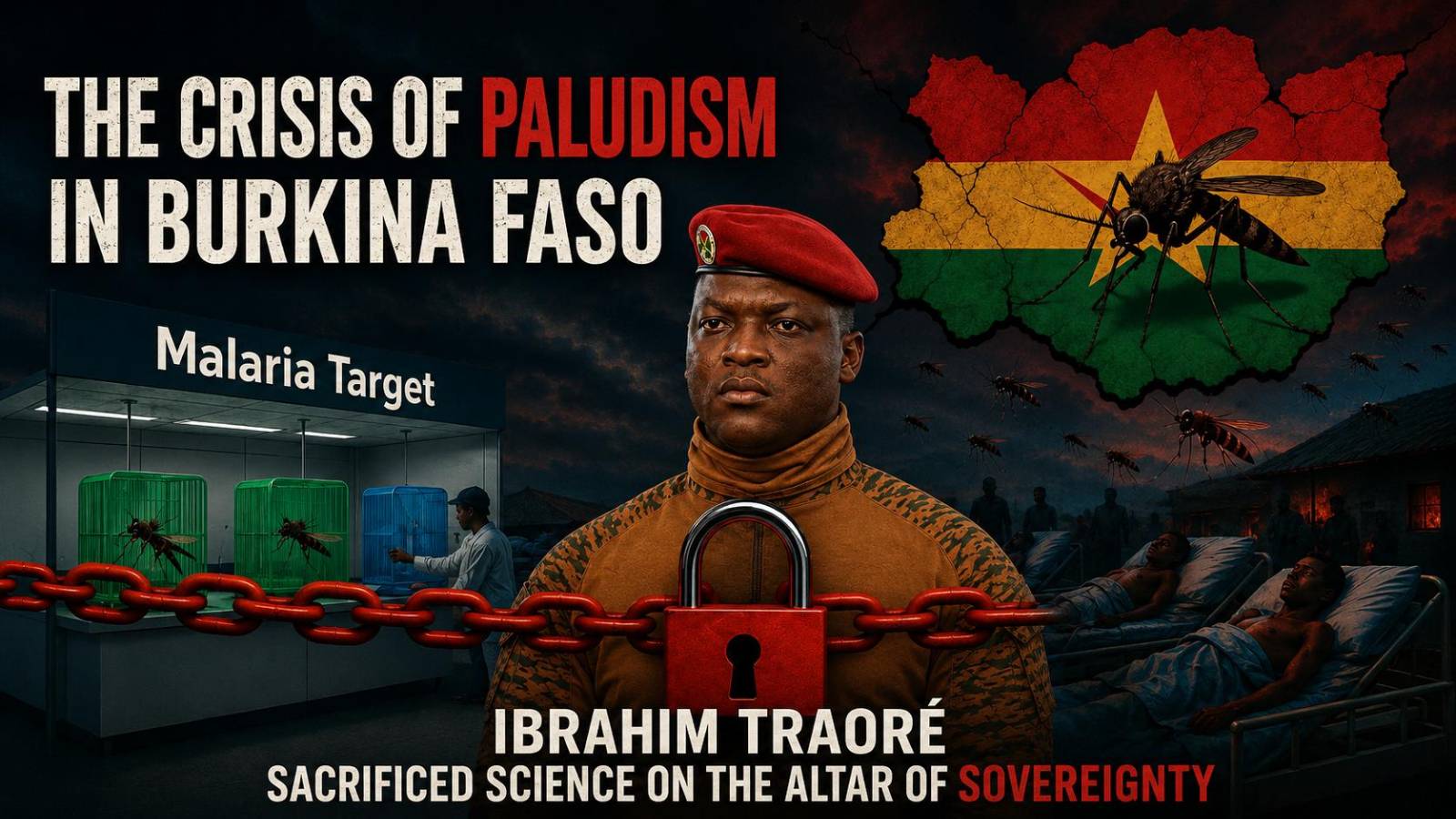

The administration led by Captain Ibrahim Traoré has escalated its sovereignty-focused discourse by issuing a directive for the permanent closure of the Target Malaria project’s laboratories and the eradication of its genetically modified mosquito specimens. While presented as a political declaration of ‘national self-control,’ this drastic action raises profound concerns regarding the trajectory of medical research across the Sahel region and the financial repercussions of scientific isolation.
This move sends a powerful, almost dramatic, message to both international collaborators and global scientific consortia. By definitively sealing the research facilities of the Target Malaria initiative, largely funded by the Bill & Melinda Gates Foundation, and mandating the complete destruction of all genetically modified mosquito samples, Ouagadougou has abruptly concluded a scientific and political narrative spanning ten years. This development is significant for those following Sahel news English.
While a previously announced suspension of activities slated for August 2025 hinted at an irreversible turning point, the Burkinabè state apparatus has now transformed this preliminary step into a definitive ideological severance.
Is scientific advancement being sacrificed for symbolism?
Despite facing some controversy, the Target Malaria project stood as one of the most ambitious research avenues aimed at eradicating malaria, a disease that persistently devastates sub-Saharan populations, particularly children under the age of five. Its proponents championed an innovative technological methodology centered on gene drive technology to diminish the reproductive capacity of vector mosquitoes, a key area for Burkina Faso malaria research.
By characterizing Burkina Faso as an ‘open-air experimentation laboratory,’ the military regime aligns itself with the concerns voiced by various local NGOs and civil society groups that previously highlighted ecological uncertainties. Nevertheless, the assertion of ‘health sovereignty’ championed by Captain Ibrahim Traoré struggles to obscure a more troubling underlying reality:
- Stifling Local Innovation: This initiative involved prominent Burkinabè researchers, including those from the IRSS. Its abrupt termination deprives the domestic scientific community of vital funding streams and access to advanced infrastructure.
- Brain Drain Risk: By effectively discouraging international collaborative research, the current administration sends a deterrent signal to national academics and investigators, potentially leading to an exodus of talent.
A geopolitical tremor: shifting risk perceptions
Beyond its immediate public health implications, this decision fundamentally alters the operating environment for institutional investors, credit rating agencies, and non-governmental organizations. It starkly exemplifies the erosion of overall confidence in Sahelian markets, marked by three significant discontinuities:
- Contractual Stability Erosion: Contractual security has undergone a radical transformation. Prior to the 2022 transition, state agreements were generally honored, and predictability was considered moderate. Now, the nation has entered an era of unilateral abrogations driven by political imperatives. For funding partners, this translates directly into an immediate freeze on long-term investments, impacting Mali Niger Burkina reporting and regional stability.
- Regulatory Framework Opacity: The regulatory environment has become significantly less transparent. The former predictability, underpinned by regional and international standards, has been supplanted by arbitrary governance through sudden decrees and decisions. The direct consequence of this legal volatility is a discernible flight of capital towards regions perceived as more stable and institutionally robust.
- Paradigm Shift in R&D Cooperation: Research and Development (R&D) collaboration has experienced a fundamental paradigm shift. International programs, once championed as critical drivers of development through North-South partnerships, are now viewed with suspicion by authorities, often accused of interference or espionage. This pervasive atmosphere of distrust condemns the nation to an alarming state of technological and scientific isolation, a key issue in Sahel current affairs.
The snare of health autarky
By asserting its intent to safeguard its ‘biological heritage’ from the purported interference of foreign consortia, Burkina Faso endeavors to delineate a path toward national self-sufficiency. However, does it possess the requisite resources to achieve such ambitious goals? The eradication of malaria demands billions of dollars in investment and sustained cross-border collaboration, given that mosquitoes are oblivious to national boundaries.
Understanding this geopolitical signal is crucial for any entity operating within West Africa. The trajectory from a misconstrued interpretation of sovereignty towards technological autarky risks permanently disengaging the Sahel from major global capital flows and therapeutic innovations. The critical question remains whether the local populations, who are the primary victims of malaria, will ultimately be marginalized by this assertive political stance of disengagement, a concern for any Sahel Reporter.



