
The Unspoken Trade-Off Behind Burkina Faso’s Russian Training Initiative
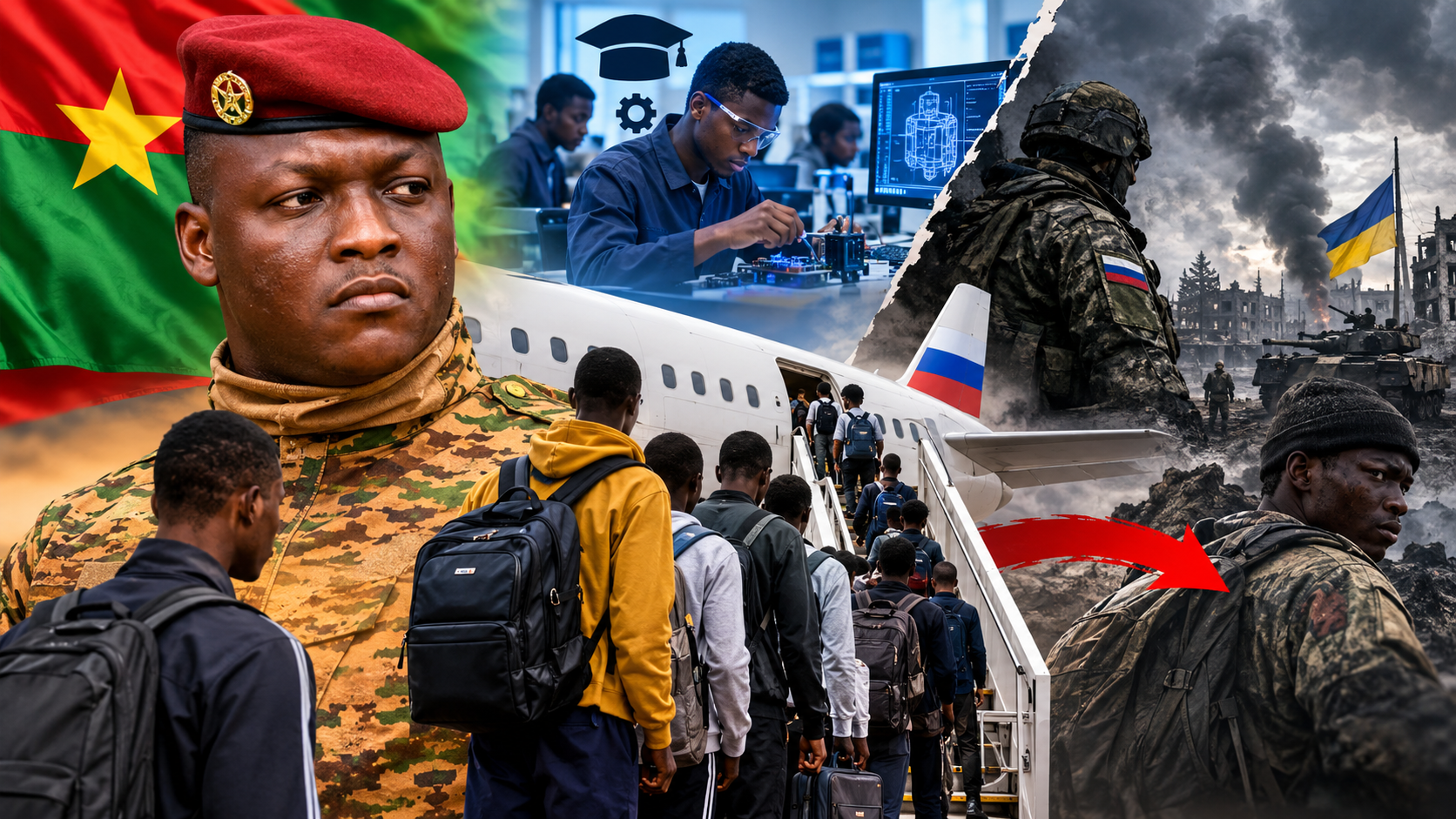
Behind the glossy promise of cutting-edge technical training lies a troubling question: what fate awaits the Burkinabè youth that Captain Ibrahim Traoré intends to send to Russia? Is this truly about equipping them with skills to drive Burkina Faso’s development, or are these young people being steered toward far more dangerous realities in a country deeply embroiled in war?
This initiative raises pressing concerns, especially since it appears to contradict Ibrahim Traoré’s earlier stance. The military leader had once emphasized the importance of training Burkina Faso’s youth domestically, advocating for educational and technological sovereignty. If capacity-building was a priority at home, why are these young individuals now being sent abroad?
From Technological Promise to Geopolitical Uncertainty
The appeal of advanced training in Russia is undeniable scientific and industrial progress underpins any nation’s future. However, Russia’s current role as a major combatant in the conflict in Ukraine complicates the narrative. Reports from other African countries have already highlighted cases where foreign recruits, promised employment or education, ended up on the front lines instead.
This history of misleading recruitment practices demands rigorous scrutiny. What safeguards can Burkina Faso’s government provide to ensure these young people will not be drawn into a war they did not choose?
The Missing Details: What Families Need to Know
To avoid repeating past mistakes, the Burkinabè authorities must address several critical gaps in this plan:
Scale of the program: How many young people will be affected?
Training institutions: Which Russian establishments will oversee their education?
Accreditation and diplomas: What qualifications will they receive, and will they be recognized in Burkina Faso?
Legal safeguards: What treaties or agreements will protect them from forced military involvement?
Return guarantees: What assurances exist that participants can safely return home upon completion of training?
Without transparent answers, families are left in the dark vulnerable to exploitation in a geopolitical chess game they never signed up for.
The Paradox of Sovereignty: Training at Home or Training Abroad?
Perhaps the most puzzling aspect of this initiative is its departure from Ibrahim Traoré’s own earlier vision. If the goal was to cultivate national talent, why invest resources in a foreign system instead of strengthening Burkina Faso’s own universities, technical schools, and research centers? A government that champions self-reliance should logically prioritize homegrown solutions.
The contradiction is not merely rhetorical. It calls into question the long-term strategy behind this policy. Are these young people being sent to Russia to gain genuinely transferable skills, or has the urgency of geopolitical alliances taken precedence over their safety?
The Moral Imperative: Protecting Youth in a World at War
Ibrahim Traoré’s government faces a moral duty: to nurture, not endanger, the future leaders of Burkina Faso. These young individuals are not expendable pawns in a distant conflict they are the sons and daughters of families who trust their government to act in their best interest.
The burden of proof now lies with Burkina Faso’s leadership. Concrete guarantees, clear policies, and open dialogue are essential to dispel fears. Otherwise, the promise of technological progress risks becoming a tragedy in disguise one where the price of cooperation is paid in the blood of an unwitting generation.
By Idriss MAMADOU — Journalist