
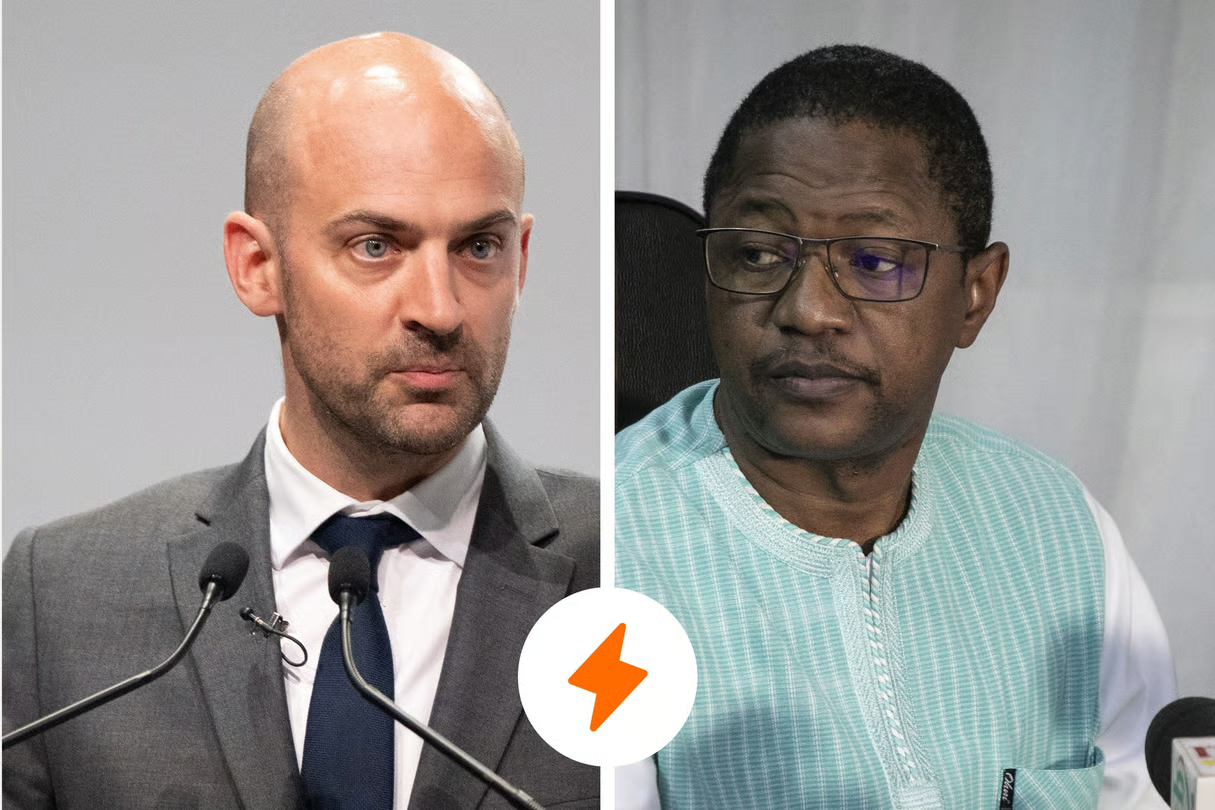
The latest escalation in the prolonged tension between Burkina Faso and France reached its peak during a high-profile meeting between the two nations’ foreign ministers. This pivotal encounter, featuring Karamoko Jean-Marie Traoré for Burkina Faso and Jean-Noël Barrot for France, underscored the deepening rift in their bilateral relations. The confrontation, captured in the image above, symbolizes the broader challenges facing the Sahel region as diplomatic alliances shift and geopolitical pressures mount.
key moments in the diplomatic standoff
The meeting between Traoré and Barrot marked a critical juncture in a relationship already strained by years of political and economic disagreements. Several key issues dominated the discussions:
- Military cooperation: France’s continued military presence in Burkina Faso has become a contentious issue, with Burkinabe officials demanding full sovereignty over their security operations.
- Economic partnerships: Trade imbalances and France’s dominant role in Burkina Faso’s economy have fueled resentment, prompting calls for greater economic independence.
- Political sovereignty: Burkina Faso’s recent pivot toward alternative alliances, including partnerships with non-Western nations, reflects a broader rejection of France’s historical influence in the region.
regional implications of the feud
The fallout from this diplomatic showdown extends far beyond the borders of Burkina Faso and France. The Sahel region, already grappling with instability and insurgency, faces heightened uncertainty as traditional alliances are reassessed. The emergence of the Alliance des États du Sahel signals a collective effort among regional states to forge new partnerships while reducing dependence on former colonial powers.
For observers of African geopolitics, this confrontation highlights the evolving dynamics of power in the Sahel. As Burkina Faso strengthens ties with other global players, France finds itself navigating a rapidly changing landscape where its once-unquestioned influence is increasingly challenged.
what’s next for Burkina Faso and France?
With both sides dug into their positions, the path forward remains uncertain. Burkina Faso’s leadership has made it clear that sovereignty and self-determination are non-negotiable, while France continues to emphasize the importance of maintaining strategic partnerships in the region. The coming months will be critical in determining whether dialogue can prevail or if further escalation is inevitable.
One thing is certain: the outcome of this standoff will have lasting repercussions not only for Burkina Faso and France but for the entire Sahel region. As other nations in the area watch closely, the decisions made in the coming weeks could redefine the balance of power in West Africa.