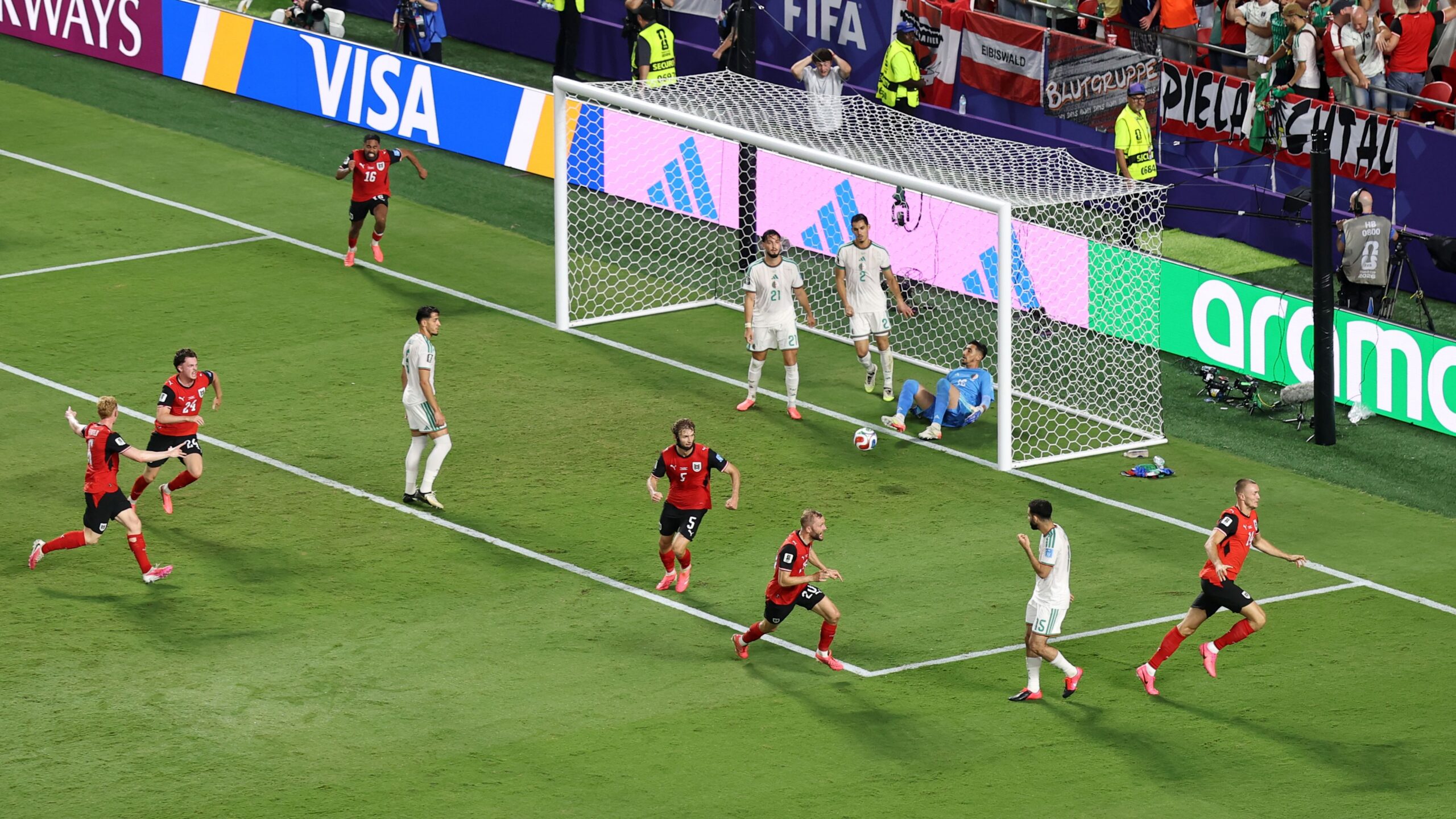

FIFA dismisses match-fixing allegations in Algeria-Austria World Cup clash
The International Federation of Association Football (FIFA) has made its definitive ruling: no investigation will be initiated into the alleged match manipulation involving Austria and Algeria during the recent World Cup. This decision comes despite lingering suspicions that the match result might have been predetermined to mutually benefit both national teams.
Reports had circulated suggesting that the two sides had reached an understanding to share the points in their ultimate group stage fixture, thereby ensuring their dual progression to the Round of 16.
The highly contested encounter ultimately concluded with a 3-3 draw. Austria secured their equalizer in the 96th minute, a mere three minutes after Riyad Mahrez had given Algeria the lead.
Mahrez’s goal, which capped a remarkable five-minute sequence featuring 110 consecutive passes, could have potentially eliminated Austria from the tournament, sending them home.
The tension on the field was palpable and nearly escalated, with Marco Arnautović visibly expressing his frustration towards the Algerian bench, gesticulating angrily.
Ultimately, Ralf Rangnick’s Austrian squad claimed second place in their group, while Algeria, finishing third, also advanced to the subsequent knockout stage.
Speculation quickly mounted among some observers, who posited that the outcome was indeed orchestrated, with Algeria reportedly allowing their opponents to equalize in the dying moments of the game.
However, FIFA has unequivocally rejected these claims, asserting that it harbors no concerns regarding any manipulation of the match result by either team.
Coach Rangnick vehemently denied the notion of a fixed match. Yet, Riyad Mahrez did little to quell the mounting speculation surrounding the perceived irregularity, admitting that the game’s final moments felt peculiar and suspicious.
The former Manchester City star, Riyad Mahrez, remarked on the situation, stating, “It felt a bit strange, to be honest. We were playing wide, and they were sitting deep, but in the final minute, one of their players made a pass, turned, and I had to react. I must respect football. The ball came in front of the goalkeeper, and I should have scored; I have to try and score. I know the situation is strange, but this is football, and I must respect it. For Austria, the main thing is that they scored and secured their qualification. We both advanced, and that’s what truly matters.”
Looking ahead, Austria anticipates a formidable challenge in the knockout phase, where they are scheduled to face European champions Spain. Should they achieve an upset, their path could lead them to confront either Portugal or Croatia.
Meanwhile, Algeria is set to take on Switzerland. If both teams maintain their current momentum, Algeria could potentially meet Argentina in the quarterfinals.