
This initiative signals a profound desire from both France and Morocco to craft an enduring agreement rooted in long-term strategic interests. The shared ambition is to establish, in essence, a pact akin to the Franco-German Élysée Treaty, famously signed in 1963 by General de Gaulle and Chancellor Konrad Adenauer.
The dedicated commission tasked with this endeavor will not directly negotiate the treaty, as that remains the prerogative of the two respective governments. Instead, its mandate is to formulate comprehensive proposals. These proposals will encompass the guiding principles of the partnership, strategic priorities extending to 2035-2040, frameworks for political dialogue, and key areas for economic, security, military, academic, and cultural cooperation.
A fundamental question naturally arises: why a new friendship treaty? This forthcoming agreement is intended to supersede the 1955 La Celle-Saint-Cloud accord, signed in France on November 6. That original agreement laid the groundwork for Morocco’s return to independence and the official end of the protectorate on March 2, 1956. It was also the framework under which Paris sanctioned the return of Mohammed V to the Throne, following his deportation on August 20, 1953.
The current objective is, undoubtedly, to reinforce the achievements of an already privileged, even exceptional, cooperation. Simultaneously, it aims to establish a strategic foundation for a relationship built on equality, designed to thrive for decades into the future.
Four principal pillars stand out as central to this new accord. The first focuses on economic collaboration: Paris commits to making substantial investments across key Moroccan industrial sectors, including automotive, rail, defense, and maritime transport. This commitment also involves supporting their modernization with state-of-the-art technologies.
Rabat’s reciprocal engagement centers on several crucial areas. These include granting preferential access to French companies for major infrastructure projects and offering attractive fiscal incentives.
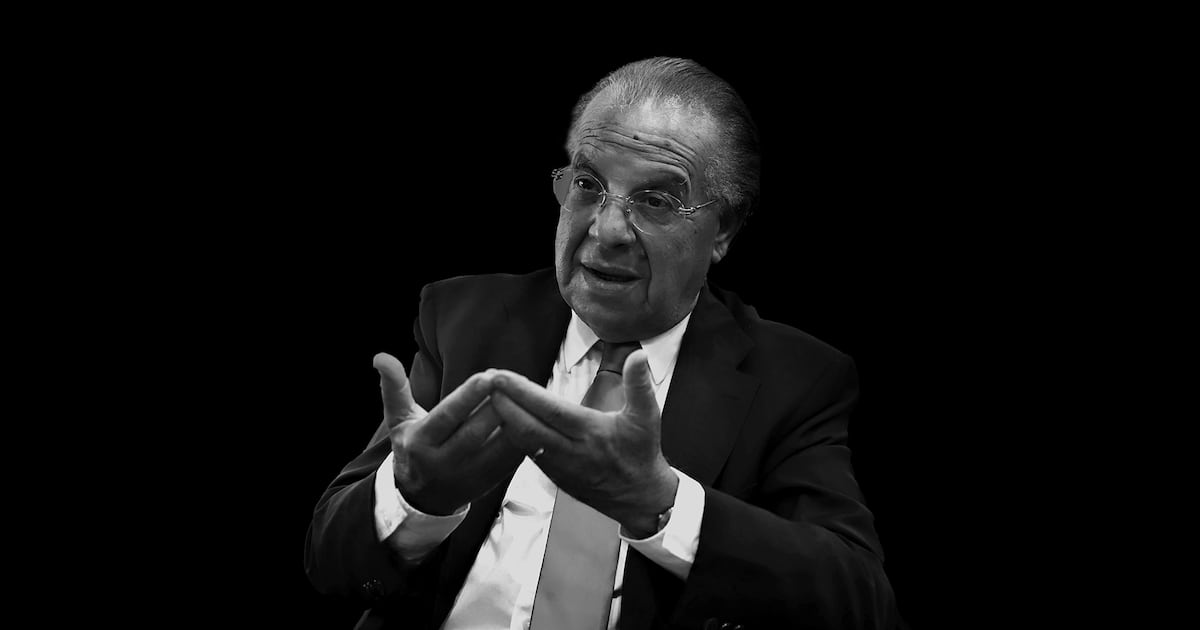
“This friendship treaty would connect France with a state outside the European Union, a notable achievement considering Algeria has failed to finalize a similar agreement for over two decades, despite numerous attempts under Presidents Jacques Chirac and Abdelaziz Bouteflika, and later Emmanuel Macron and Abdelmadjid Tebboune.”
— Mustapha Sehimi
The second pillar emphasizes security and defense industry cooperation. This involves the transfer of military technologies, with the long-term goal of positioning Morocco as a regional production hub for both light and heavy equipment, encompassing aviation, munitions, military vehicles, and armored systems. Furthermore, it seeks to expand joint training programs and strengthen security and intelligence coordination to address pressing regional security challenges, particularly those impacting the Sahel.
Culture forms the third, and equally significant, pillar. Key aspects include upholding the privileged status of the French language within the educational system and promoting Francophonie, ensuring it complements rather than hinders the Kingdom’s embrace of international business languages such as English. The treaty also aims to facilitate access for Moroccan students to French universities—a population already exceeding 42,000—and to expand the existing network of twelve French cultural institutes, alongside opening new educational institutions, especially within the Southern Provinces.
The final pillar centers on geopolitics and strategy. This entails Paris’s unwavering support for Morocco’s paramount interests. Specifically, it involves backing the autonomy plan for the Sahara, a proposal affirmed by the Security Council within the framework of the negotiated settlement process (Resolution 2797 of October 31, 2025). Furthermore, France pledges support within European Union institutions and the defense of Moroccan interests in critical sectors like agriculture and fishing, as well as across various bilateral and multilateral cooperation frameworks.
Beyond these specifics, France anticipates Morocco’s participation, in various capacities, in new strategic alliances across West Africa. This comes as France has observed a gradual decline in its influence within the region over the past decade. The overarching goal is to leverage the Kingdom’s established position as a pivotal regional hub.
Ultimately, this treaty carries immense symbolic and diplomatic weight. It will forge a binding relationship between France and a non-European Union member state, a distinction made even more significant by Algeria’s inability to finalize a similar agreement over two decades, despite numerous efforts under Presidents Jacques Chirac and Abdelaziz Bouteflika, and subsequently Emmanuel Macron and Abdelmadjid Tebboune.
Morocco has unequivocally asserted itself as a regional power, an economic hub, and a leading player in energy, logistics, and security matters. Consequently, this treaty could serve as a demonstrative and exemplary model, offering a blueprint for re-articulating novel forms of cooperation between Europe and Africa.