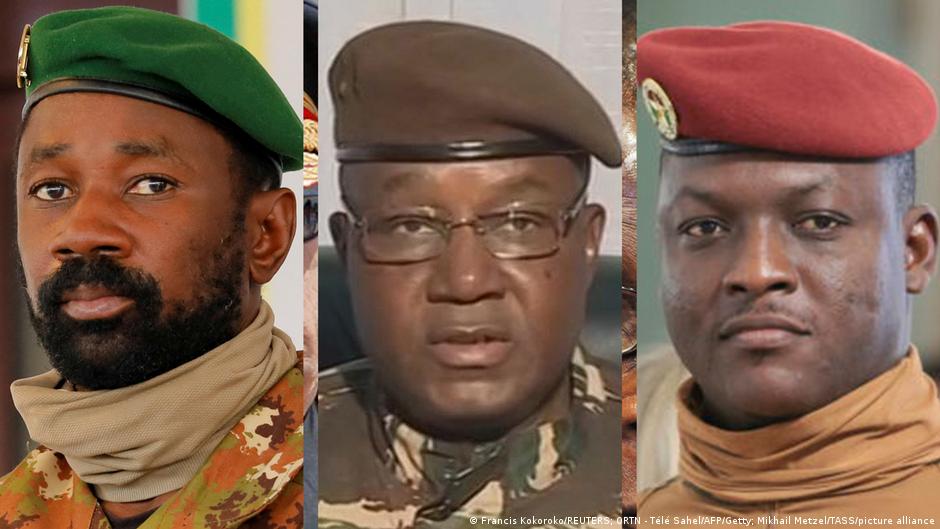

The Alliance of Sahel States (AES), comprising Burkina Faso, Mali, and Niger, faces a critical juncture as its military-led governments navigate the path to democracy. These nations, governed by juntas since between 2020 and 2023, share a common challenge: restoring stability amid persistent terrorism and armed group threats that have plagued their 2.8 million square kilometer expanse for years.
military rule and democratic regression
The juntas justify their rule by citing the fight against terrorism and insecurity, a stance that resonates with populations weary of ineffective governments. However, as transition periods drag on, skepticism grows about the military’s commitment to restoring rule of law and democracy. In Mali, national consultations led by the junta recommended dissolving political parties and elevating the military leader, General Assimi Goïta, to the presidency for renewable five-year terms—despite lacking electoral legitimacy or democratic mandate.
Burkina Faso and Niger, both AES members, mirror Mali’s trajectory. National consultations in these countries were boycotted by major political parties, highlighting a broader crisis: the erosion of democratic values under military rule. While Africa’s democratic norms were established in the 1990s through national conferences, the AES’s recent coups suggest a rejection of these frameworks in favor of alternative governance models.
searching for sovereignty and local governance
Critics argue that the AES’s rejection of Western-style democracy stems from a desire to break free from neocolonial structures. Voices in the region increasingly advocate for models rooted in African values, emphasizing autonomy and self-determination. This sentiment is exemplified by the juntas’ rhetoric, such as Captain Ibrahim Traoré’s claim that no country has developed under democracy—a statement countered by experts like Togolese former Interior Minister François Akila-Esso Boko, who underscores the failures of authoritarian systems.
International bodies like the Economic Community of West African States (ECOWAS) have imposed sanctions to pressure the AES juntas into restoring democracy. Yet, these measures are often perceived as Western interference, further fueling anti-democratic narratives in the region.
the role of political parties and dissent
Political parties in the AES operate under severe restrictions. In Guinea, which is not part of the AES, the military junta has banned over 50 political formations, citing non-compliance with evaluation criteria. Similarly, the juntas in Mali, Niger, and Burkina Faso suppress opposition voices, stifling dissent and undermining democratic pluralism. The upcoming constitutional referendum in Guinea—presented as a step toward restoring constitutional order—is widely viewed as a tool to consolidate military power rather than foster democracy.
Experts emphasize the need for robust political education and institutional strengthening to counterbalance authoritarian tendencies. Jean Didier Boukongou, a law professor at Cameroon’s Catholic University of Central Africa, stresses that opposition parties must evolve to challenge entrenched regimes effectively.
democracy’s uncertain future in the Sahel
The AES’s struggle reflects broader tensions between sovereignty, security, and democracy in the Sahel. While the juntas claim to prioritize stability and local governance, their actions often contradict these goals, replacing democratic institutions with military rule. The question remains: Can the AES reconcile its quest for autonomy with the restoration of democratic governance—or is it charting a path toward permanent authoritarianism?
As the juntas consolidate power, the international community watches closely. Yet, the real test lies with the Sahelian people, who must navigate the delicate balance between security, sovereignty, and the enduring ideals of democracy.