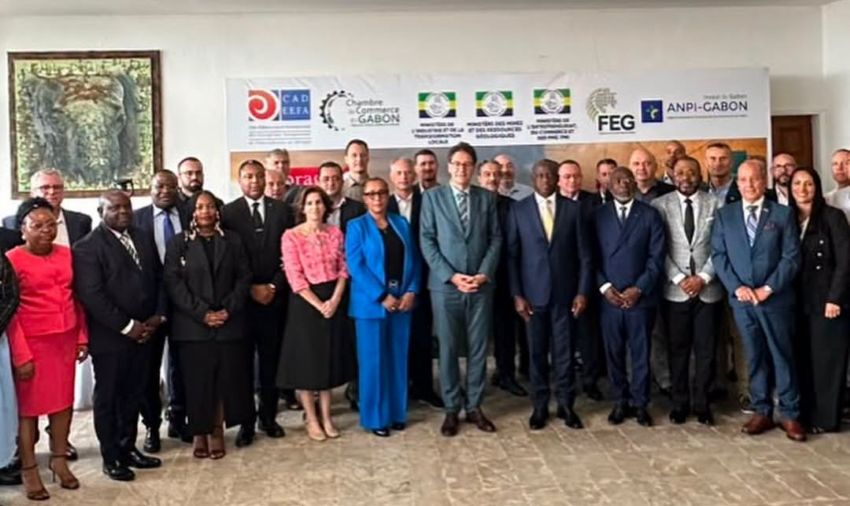

Libreville recently hosted a significant economic gathering as Gabon seeks to redefine its global standing. Long recognized as a major exporter of crude oil, manganese, and raw timber, the nation is now aggressively pursuing a new identity as an industrial power.
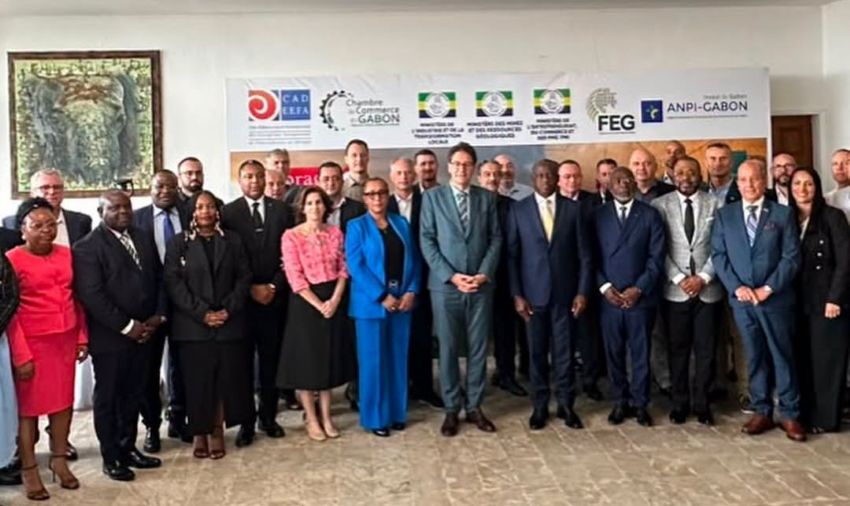
The launch of the Gabon Industry Meetings in Libreville, presided over by Vice-President Hermann Immongault, represents a critical milestone in a national strategy designed to make the local processing of natural resources the primary engine for the country’s next economic chapter.
This event serves as a clear signal to international markets. By bringing together roughly twenty European investors, government officials, and industrial leaders, Libreville is demonstrating its commitment to moving beyond the role of a mere raw material supplier. The goal is to establish the country as a center for production and value-added manufacturing.
This ambition addresses a fundamental challenge facing many African nations: how to convert natural resource wealth into sustainable industrial strength.
A necessary economic evolution
Vice-President Hermann Immongault emphasized that industrialization is no longer a choice but a strategic imperative for Gabon’s future. This perspective reflects a growing consensus across the continent. For decades, resource-rich nations have exported raw goods only to buy back expensive finished products, a cycle that limits local economic benefits and stifles job creation.
Gabon possesses significant advantages to support this shift. It holds some of Central Africa’s largest mineral reserves, a world-class forestry sector, and a robust energy foundation that serves as a regional pillar. The current challenge is to integrate these natural assets into industrial value chains that keep wealth within the country.
To support this, the High Council for Investment is identifying barriers to production. Authorities are pledging concrete reforms to improve legal security, enhance the business climate, and simplify the establishment of new factories.
Attracting capital for national growth
The Minister of Industry, Lubin Ntoumtoume, outlined a roadmap focused on several key areas: modernizing regulations, cutting administrative red tape, improving energy access, and upgrading logistics. Furthermore, there is a strong focus on developing local talent to meet industrial demands.
This initiative coincides with a global shift in supply chains, as investors seek new manufacturing hubs closer to emerging markets. The presence of European investors in Libreville suggests a rising interest in Gabon’s potential. Fabrice Mauriès, the French Ambassador to Gabon, highlighted the importance of an economic relationship based on co-development rather than traditional extraction.
Organizers hope to create a cohesive ecosystem by bridging the gap between the state, private enterprises, and vocational training centers. Modern industry requires not just hardware, but high-quality human capital and innovation.
From vision to implementation
These meetings come at a decisive moment. Gabon has already seen success in its timber sector, where a ban on raw log exports led to a flourishing local processing industry that creates more jobs and revenue. The government now aims to replicate this success in mining, metallurgy, and agribusiness.
Planned site visits to Port-Gentil, Moanda, and the Grand Libreville area are intended to showcase existing infrastructure and upcoming projects to potential partners. However, the ultimate success of this strategy will depend on execution. While many ambitious industrial plans in Africa have historically struggled with bureaucratic or financial hurdles, Gabon is positioning itself to be a different story.
This gathering is a test of credibility for a nation looking to redefine its role in the global economy. If successful, Gabon could become a leading example of how a resource-rich nation can successfully transition into an industrial powerhouse.