
Gabon and EU deepen strategic partnership with focus on reforms and sustainability
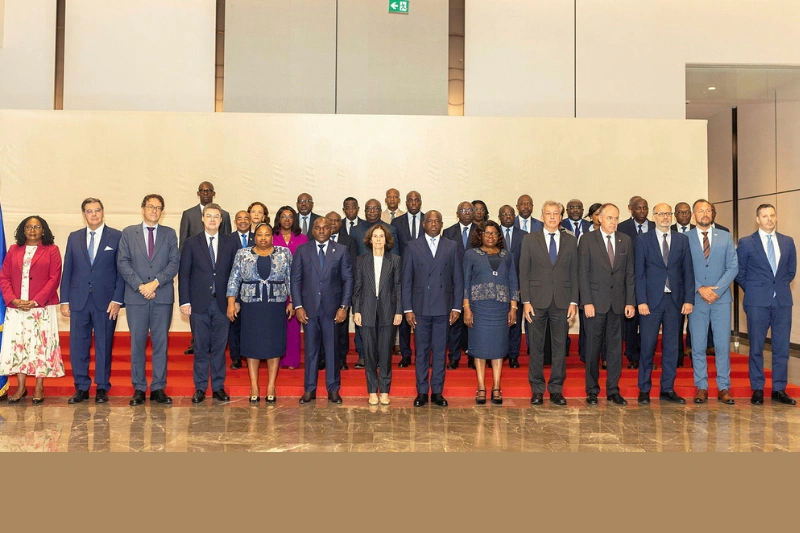
Yesterday, Gabon and the European Union (EU) convened for their second high-level strategic partnership dialogue at the Omar Bongo Ondimba Congress Palace in the Cité de la Démocratie. Co-chaired by Gabon’s Vice-President of the Government, Hermann Immongault, and the EU Ambassador to Gabon, Cécile Abadie, the meeting built on the first round of talks held in October 2024.
Speaking at the opening, Immongault emphasized that the discussions align with the Samoa Agreement, the foundational legal framework governing EU relations with African, Caribbean, and Pacific (ACP) nations. He highlighted the agreement’s emphasis on “a more balanced, operational, and impact-driven partnership,” where public policies and investments yield tangible results.
Key discussion areas
The day-long deliberations covered four critical pillars: political reforms and governance, economic outlook, environmental sustainability and natural resource management, and multilateral and regional cooperation.
Governance and human rights
At the close of the session, both sides commended Gabon’s institutional reforms during its transition period while exchanging perspectives on human rights and fundamental freedoms. Immongault stressed that “no topic was off-limits,” adding that the dialogue helped “clear misconceptions and foster clarity.”
Economic progress and investment
Economic discussions centered on Gabon’s ongoing structural reforms, efforts to enhance the business climate, and strategies to attract foreign investment. The EU’s Global Gateway initiative also featured prominently in the talks.
Environmental priorities
Environmental concerns took center stage as both parties reaffirmed their alignment on sustainable forest management. They also explored cooperative avenues in sustainable fishing, renewable energy, and waste management.
Regional and global cooperation
The partners underscored their commitment to multilateralism, highlighting shared positions on regional and international challenges—particularly maritime security and economic integration.
Looking ahead, Gabon and the EU agreed to further strengthen their ties, continuing consultations on jointly identified priorities in an atmosphere of openness and mutual trust.