
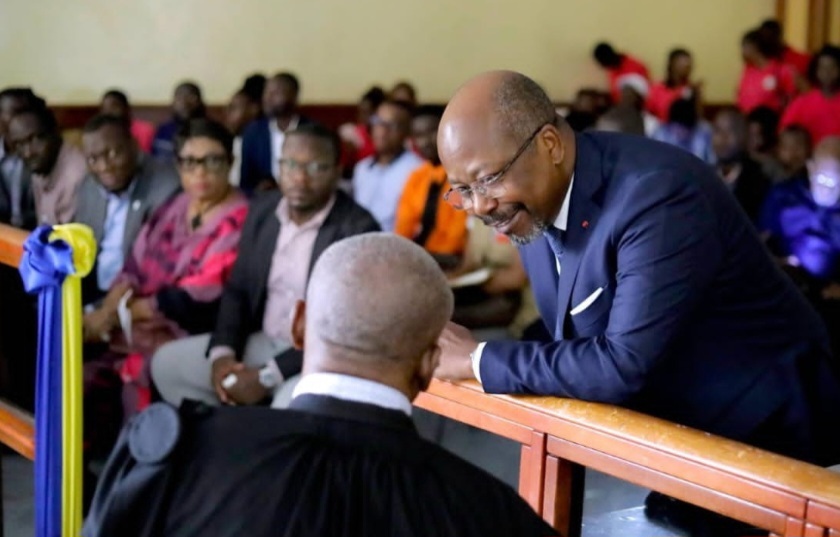
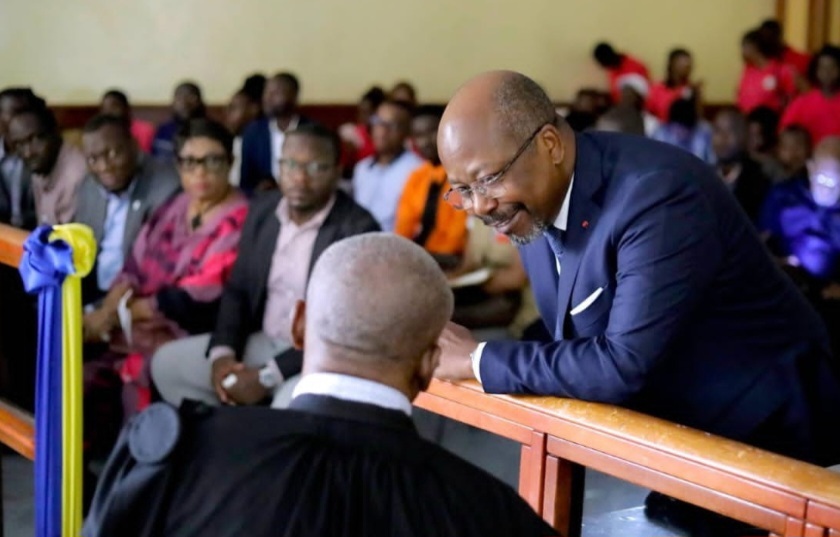
Libreville, June 3, 2026 — The continued detention of Alain-Claude Bilie By Nze, former Prime Minister and prominent Gabonese opposition leader, has intensified debates over judicial independence and fair trial guarantees in Gabon. On Tuesday, the Libreville Court of Appeal rejected a motion filed by his defense team to nullify the proceedings, thereby upholding his imprisonment at the central prison since April 16, 2026.
What appears to be a routine criminal case has evolved into a high-stakes institutional confrontation. At the heart of the matter lies a fundamental question: can justice be perceived as impartial when political figures are involved?
Controversial proceedings and accusations of statutory limitations
Bilie By Nze faces charges of alleged embezzlement and fraud dating back to 2008. His legal team argues that these offenses would have been time-barred by 2018, rendering the prosecution legally unfounded. The defense has also highlighted procedural irregularities, including contested legal classifications and insufficient evidence to justify prolonged detention.
Me Arthur Vercken, one of Bilie By Nze’s lawyers, has condemned what he describes as a severe breach of fair trial rights and international obligations regarding defense rights. The arrest reportedly included a 24-hour period during which he was denied access to legal counsel before being placed under pretrial detention—a violation that further fuels criticism of procedural lapses.
A politically charged judicial affair
Beyond the legal debate, this case unfolds against a backdrop of intense political polarization. Bilie By Nze, a former Prime Minister under former President Ali Bongo Ondimba, is now a leading figure in the opposition against the current administration of President Brice Clotaire Oligui Nguema, who took office in 2025.
The political dimension amplifies concerns over arbitrary detention and judicial irregularities. The opposition and segments of public opinion view the case as emblematic of the rule of law during the post-election transition. President Oligui Nguema has distanced himself from the matter, asserting that it falls entirely under the judiciary’s purview and stressing the principle of separation of powers.
A test for judicial independence and institutional stability
The Court of Appeal’s decision to uphold the detention and dismiss the nullity motion places Gabon’s judiciary under scrutiny, both domestically and internationally. The defense’s arguments—rooted in prescription and procedural flaws—highlight broader concerns about transparency and rigor in sensitive cases.
This case transcends the question of guilt or innocence. It probes the integrity of institutions responsible for delivering justice. The perception of an independent judiciary, free from political interference, has become central to the country’s democratic credibility.
As Gabon navigates a period of institutional restructuring, every judicial decision involving a major political figure is closely watched as a barometer of democratic maturity. The outcome of this case will weigh heavily on the trust between citizens and state institutions.
The Bilie By Nze affair is not just about one man—it is about whether Gabon’s justice system can guarantee fairness, transparency, and compliance with international standards. A delicate balance whose resolution will shape the nation’s future.