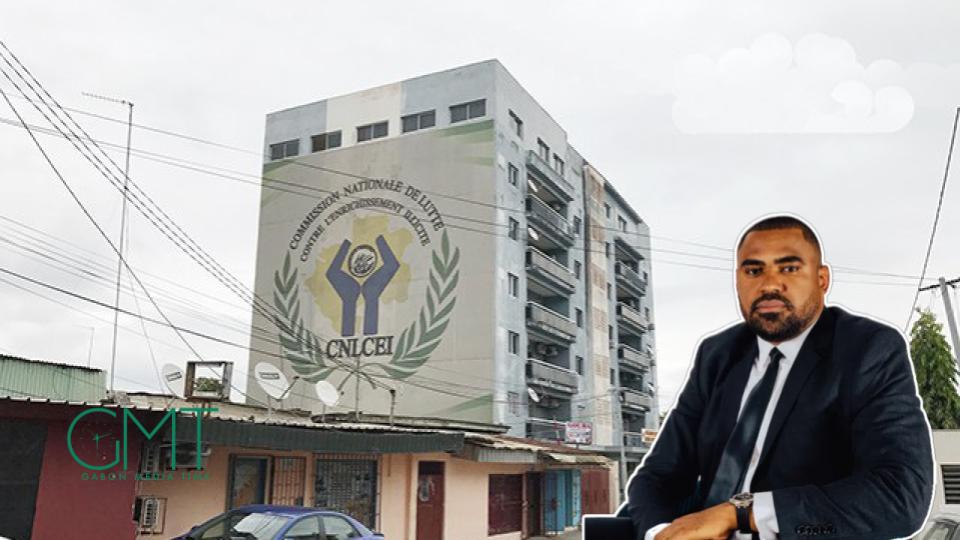

Jean-Pierre Antchoue Ayenoue, Vice-President for International Affairs and Diaspora, specializes in matters of corruption and anti-money laundering.
Assessing the true extent of corruption in Gabon
A significant event is on the horizon: from June 29 to July 1, 2026, Libreville will host a delegation of international experts dispatched by the United Nations Office on Drugs and Crime (UNODC). Their vital mission involves evaluating the measures Gabon has implemented to prevent corruption and recover illicit assets. This assessment is part of the second review cycle under the United Nations Convention Against Corruption (UNCAC).
While this event might slip under the radar, ignoring its importance or failing to engage in public discourse would be a grave oversight. The fight against corruption stands as a core principle for many, reflecting a deep personal commitment to integrity.
This upcoming evaluation thus presents a critical opportunity for citizens, patriots, and committed socialists to thoroughly examine this complex issue, especially as daily events underscore the urgent need for this battle. What exactly does this entail?
Understanding the second UNCAC review cycle
The United Nations Convention Against Corruption (UNCAC), which Gabon ratified in 2007, mandates specific commitments regarding transparency, institutional oversight, whistleblower protection, and the recovery of embezzled assets. The ongoing peer-review mechanism—an evaluation conducted by other signatory nations—involving Chad and Libya, assesses Gabon’s adherence to these obligations, identifies any shortcomings, and proposes actionable recommendations.
Following a first cycle from 2010 to 2015 that focused on criminalization and judicial cooperation, the second cycle places emphasis on two primary areas: corruption prevention and the retrieval of ill-gotten gains.
Concrete actions and their impact in this domain
The effectiveness of the National Commission for the Fight Against Corruption and Illicit Enrichment (CNLCEI) has frequently been questioned. Less than a year after the August 30, 2023, “Coup de la libération,” the body tasked with actively combating corruption and pursuing those who illicitly enriched themselves under the previous regime appeared largely ineffective—a perception that mirrored its performance under the old administration. The transitional period, it seemed, had not been enough to fundamentally transform the institution.
To this day, Gabonese citizens continue to ponder its purpose. What illicit assets have been recovered? Which individuals have faced prosecution?
On July 11, 2025, an ethics code dissemination workshop took place in Libreville, bringing together various institutions and partners to bolster public integrity in Gabon. The current status of this ethics code remains unclear: Is it operational? Is it consistently applied within and by administrative bodies?
On February 27, 2026, two new rapporteurs for the National Commission for the Fight Against Corruption and Illicit Enrichment (CNLCEI) took their oath before the Libreville Court of Cassation. This act complied with the requirements of Article 15 of Law No. 42/2020 of March 22, 2021, which amended certain provisions of Law No. 003/2003 of May 7, 2003, establishing and governing the institution.
This certainly indicates that the institution is functioning and undergoing renewal—a positive development. However, since their swearing-in, the impact of their actions has remained largely unseen, and tangible results are still awaited.
Finally, on May 13, 2026, the CNLCEI, supported by the International Organisation of La Francophonie (OIF), convened a meeting at its headquarters focused on « good governance, sharing best practices, and institutional strengthening in service of public integrity ». This initiative suggests a genuine desire to equip the CNLCEI with training tools and to align its operations with international standards.
Yet, does this create an impression that « good governance » is widely practiced within the public administration? Effective governance is not measured by the number of workshops held or the eloquence of official statements. It is assessed by the actual reduction of corruption, the punishment of abuses, the recovery of diverted funds sent abroad, and the level of trust citizens place in their institutions. It is on this critical ground that Gabon’s new authorities are truly expected to deliver.
A balanced yet clear-eyed perspective
It is fair to acknowledge that progress is being made, and it would be dishonest to deny it. Since the transition, the National Commission for the Fight Against Illicit Enrichment (CNLCEI) has seen its powers expanded; new constitutional provisions now enshrine transparency in the management of public resources; and mechanisms for asset declaration have been extended to a greater number of civil servants.
In Vienna, during the 17th session of the UNCAC Implementation Review Group, the Gabonese delegation, led by Séraphin Ondoumba, Gabon’s focal point for UNODC, presented the nation’s advancements. These included improved inter-administrative convergence, the adoption of UNODC instruments as levers for public accountability, and a stance of multilateral cooperation founded on mutual trust and technical dialogue.
However, a clear-eyed assessment reveals that these developments remain fragmented measures, lacking an overarching framework. This is the core issue: Gabon still lacks a comprehensive national anti-corruption plan worthy of the name. There is no integrated strategy, no quantified roadmap, and no independent monitoring and evaluation mechanism.
While instruments exist, they often operate in isolation, without coherence or central guidance. A public policy’s effectiveness is not measured by the accumulation of texts; it is measured by their coordinated implementation and their tangible results.
Therefore, while the evaluation mission commencing in Gabon sends a positive signal that should not be underestimated—especially in a regional context where several states decline external scrutiny of their systems—an open posture alone cannot substitute for a structured strategy.
What we must clearly recognize
Cooperating with evaluators and international organizations is a bare minimum. What is now expected is for Gabon to demonstrate frank and transparent cooperation, openly exposing the practices that plague its administration to ensure a fair evaluation and to receive pertinent recommendations.
International indicators remain concerning, and the Gabonese administrative culture—forged over decades of tolerance towards conflicts of interest, an excessive number of direct contracts in public procurement (as publicly acknowledged by the former Minister of Economy and Finance, stating that « 93.25% of contracts, by value, were awarded without tenders, meaning through direct agreement »), and the blurring lines between public assets and private interests—remains deeply entrenched.
Gabon continues to rank in the lower half of global indices for corruption perception (though it has seen a two-point increase in Transparency International’s index since 2024). Control institutions, despite their formal existence, still suffer from insufficient resources and an independence that is too often theoretical. Justice is slow in processing certain high-profile cases. Furthermore, illicitly transferred assets abroad are not subject to any effective and transparent recovery mechanism.
Should we conclude that, concerning the fight against corruption, Gabon is still lagging? The evaluation set to begin next week will provide that answer.