
- Society
- Tuesday 23 June 2026 – 12:15
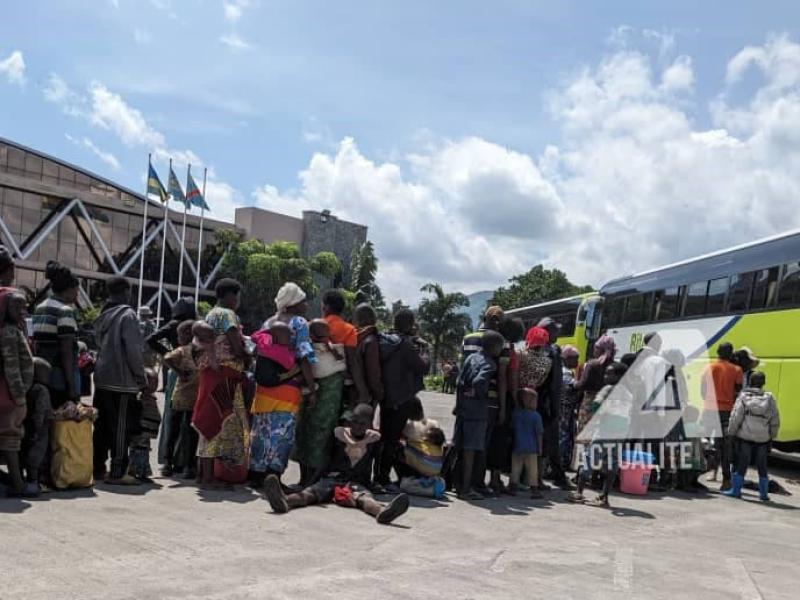
The Democratic Republic of Congo (DRC), Rwanda, and the United Nations High Commissioner for Refugees (UNHCR) are intensifying efforts to advance the voluntary repatriation process for refugees. Following a high-level tripartite ministerial meeting in Addis Ababa, Ethiopia, on Monday, June 22, 2026, the partners acknowledged significant progress since 2025 and agreed on new measures to expedite voluntary returns in the coming months.
A joint communiqué issued after the meeting confirmed that 8,394 Rwandan refugees residing in the DRC have successfully been repatriated to their homeland since January 2025. Of this total, 2,347 individuals have returned to Rwanda since the beginning of 2026.
The joint document noted, “The Parties recognized the progress made in the voluntary repatriation from the DRC to Rwanda, noting that 8,394 people have been repatriated safely and with dignity since January 2025, including 2,347 in 2026.”
Buoyed by these achievements, the participating parties have set more ambitious goals for the current year.
“The Parties encouraged the continuation of this positive momentum, observing that a target of 10,000 voluntary repatriations is planned for 2026,” the statement added.
The discussions also addressed the return of Congolese refugees living in Rwanda, a component of the agreement that has not yet been implemented. To move this forward, several preparatory actions were decided upon.
“The Parties agreed that starting in October 2026, the DRC will define priority return zones, based on return intention surveys and location information provided by Rwanda.”
To ensure consistent follow-up on these commitments, Kinshasa, Kigali, and the UNHCR have decided to institutionalize regular meetings.
“The Parties have agreed to organize formal quarterly cross-border meetings, either in person or by videoconference, with the first to be held in September 2026, to strengthen coordination and support the implementation of voluntary repatriation,” the communiqué stated.
A key operational decision was also made: “The Parties agreed to use the Kamanyola (South Kivu, DRC) – Bugarama (Rwanda) border crossing point to facilitate the voluntary, safe, and dignified return of more than 3,600 Rwandan refugees currently scattered over a vast geographical area in the south of South Kivu province.”
In support of this, the DRC has committed to developing transit routes that will allow return candidates from various locations in South Kivu to reach this crossing point.
For its part, “Rwanda has committed to continuing the voluntary repatriation of Rwandan refugees in the DRC, taking into account the current regional health context and public health guidelines related to the Ebola virus disease.”
All three parties reaffirmed their confidence in the UNHCR’s role in finding lasting solutions to forced displacement. They have agreed to continue this collaborative framework by organizing another tripartite ministerial meeting in June 2027, with the date and location to be confirmed through diplomatic channels.
The text highlights, “The Parties recognized the role of UNHCR as a neutral, impartial, and humanitarian actor, mandated by the international community to provide international protection and seek durable solutions for refugees.”
This meeting was held in line with the tripartite agreements on the voluntary repatriation of Congolese refugees in Rwanda and Rwandan refugees in the DRC, signed on February 17, 2010. It also adheres to the principles of the 1951 Refugee Convention, its 1967 Protocol, and the 1969 OAU Convention governing specific aspects of refugee problems in Africa.
The refugee issue has long been a major point of contention between Kinshasa and Kigali, as well as between the Congolese government and the AFC/M23 rebellion. This is why the problem was integrated into discussions within the Washington Peace Accord, signed by the DRC and Rwanda under the auspices of the United States. The matter is also central to the Doha process, which began after the signing of a declaration of principles between Kinshasa and the AFC/M23 rebellion, mediated by Qatar.
In both of these diplomatic initiatives, led by the United States and Qatar respectively, the refugee problem is a core component. However, the implementation of these broader commitments has seen significant delays. While these peace processes initially brought much hope to the people of eastern DRC, tangible results on the ground have been slow to materialize nearly a year after their launch.