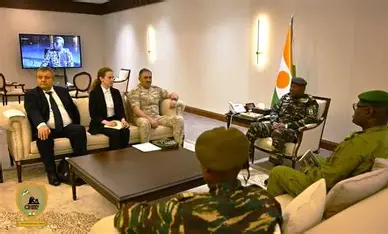

Three years following the military junta’s strategic pivot toward Russia after the July 2023 coup d’état, Niger continues to grapple with an escalating jihadist insurgency. Despite the new government’s justification for this realignment—citing the urgent need to restore security—the frequency and intensity of attacks have shown no signs of abating. Instead, the situation has deteriorated further, inflicting heavy losses on the country’s defense and security forces.
In a devastating series of coordinated strikes, at least 265 Nigerien soldiers were killed within a span of just three days. These attacks targeted multiple military positions, marking one of the deadliest assaults documented in recent years.
The integration of Russian military advisors and the gradual withdrawal of Western partners have yet to yield a sustainable improvement in the security landscape. In fact, observers have noted a marked surge in violence since the strategic shift in 2023. While 2023 saw approximately 225 documented attacks—comparable to the previous year—the human toll has risen significantly. Fatalities linked to these incidents increased by 27% during this period.
This alarming trend has only intensified in the months since. Data from ACAPS, as outlined in their 2026 report, reveals that civilian casualties reached an unprecedented high in 2025, with over 700 deaths recorded—a figure more than double that of 2023.
The military authorities had pledged to reclaim territorial control, yet the regions of Tillabéri, Tahoua, and the border areas with Mali and Burkina Faso remain hotspots for insurgent activity. Groups aligned with the Islamic State and the Jamaat Nusrat al-Islam wal Muslimin (JNIM) continue to operate with alarming regularity, perpetrating devastating assaults on military convoys, civilian settlements, and strategic installations. Notable incidents include the loss of over 60 soldiers in Tabatol in October 2023, the ambush that claimed 23 lives in Tillabéri in March 2024, and a relentless string of attacks on villages and military outposts.
These developments have sparked growing scrutiny over the efficacy of Niger’s revised security partnership. Three years after the diplomatic and military recalibration, the jihadist threat remains undiminished, placing immense strain on the nation’s defense capabilities.