Gabon’s new diplomatic doctrine: Africa, sovereignty and influence under Oligui Nguema
Libreville, Saturday 13 June 2026 – As geopolitical shifts reshape the African continent, Gabonese diplomacy is working to redefine its role and ambitions.
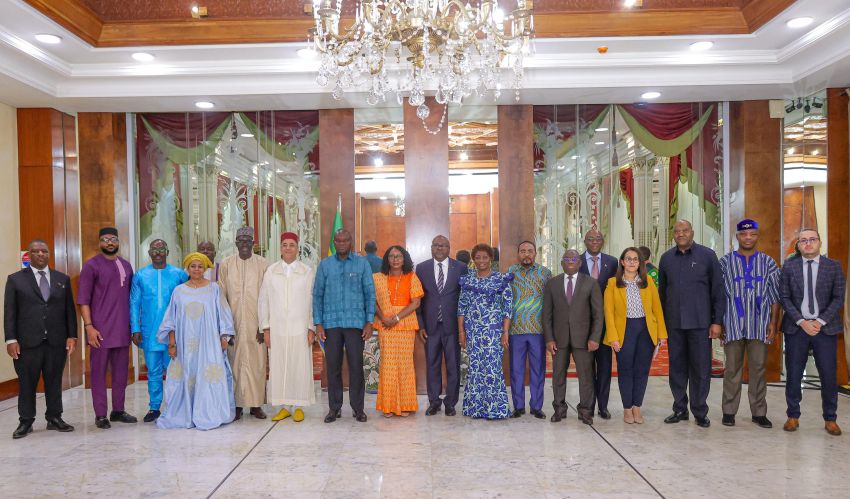
President Brice Clotaire Oligui Nguema hosted all African ambassadors accredited to Libreville on Friday for his first group meeting since taking office. This was not merely a protocol event. He outlined the contours of a political vision that aims to reposition Gabon in the continent’s major debates for the coming decade.
Through this highly symbolic audience, the head of state delivered a clear message. Gabon now wants to be seen as a pillar of stability, a facilitator of dialogue, and a champion of African integration driven by the continent’s own states. In an Africa facing security crises, influence rivalries, and questions about development models, Libreville clearly intends to make its voice heard.
The bet on an Africa built by Africans
At the core of the president’s remarks is a conviction echoing in many African capitals today. According to Brice Clotaire Oligui Nguema, the continent’s future can no longer rely solely on externally crafted solutions.
This assertion is part of a broader trend observed for several years. From the Sahel to Southern Africa, numerous leaders call for greater sovereignty in managing economic, security, and institutional issues. Libreville now wants to actively contribute to this continental reflection.
The Gabonese president structured his message around three major priorities. The first is accelerating regional integration to boost intra-African trade, still among the weakest in the world. The second aims to strengthen South-South cooperation, viewed as a key lever to share successful experiences and foster economic complementarities. The third focuses on building national capacities so each state can effectively address its own development challenges.
This direction reflects a desire to move beyond traditional rhetoric on African unity and adopt a more pragmatic, results-oriented approach.
Gabon wants to turn stability into influence
The exchanges with African diplomats also highlighted how the outside world perceives Gabon’s transition. Several ambassadors praised the transformations carried out over the past three years in infrastructure, urban planning, and public facilities.
Beyond diplomatic appreciation, these observations underscore a central issue for Libreville. The authorities aim to convert domestic progress into regional influence capital.
The announced revival of several joint commissions with African countries illustrates this strategy. The goal is to move from an essentially political diplomacy to a project-based one, capable of generating concrete partnerships in energy, transport, agriculture, digital technology, and training.
In this logic, Gabon is also multiplying initiatives to boost its international visibility. The country’s bid to host the ninth biannual African Union-Regional Economic Communities meeting in 2027 is part of this effort. Similarly, the ambition to organize the Francophonie Summit in 2030 shows Libreville’s desire to become a major diplomatic platform between Africa, the Francophone world, and the rest of the globe.
Between hospitality, firmness, and peace diplomacy
The meeting also addressed concrete issues related to the situation of African nationals living in Gabon. Ambassadors raised various administrative and consular concerns, to which the president responded by reaffirming his commitment to respecting international conventions and improving case processing.
This message came with an important reminder. While Gabon remains attached to its historic openness toward African populations, such hospitality must be exercised within the framework of the Republic’s laws. A stance seeking to balance regional attractiveness with governance requirements.
Finally, Brice Clotaire Oligui Nguema delivered a specific message to the Sahel states united in the Alliance of Sahel States. In a regional environment marked by political tensions and institutional fractures, he advocated for dialogue, mutual listening, and consultation as preferred instruments for settling disputes.
This posture is not insignificant. It signals Gabon’s willingness to position itself as a mediation actor capable of engaging with all African sensibilities.
After this first collective meeting with the continent’s ambassadors, a reality emerges. Libreville no longer wants to be seen only as a stable Central African capital. Gabon now aims to play a more visible role in African balances, making cooperation, peace, and regional integration the pillars of its influence.
The challenge remains to turn this diplomatic vision into tangible results. In today’s Africa, ambitions are judged only by the actions they produce.