Burkina Faso faces scrutiny over militarisation amid abuse allegations
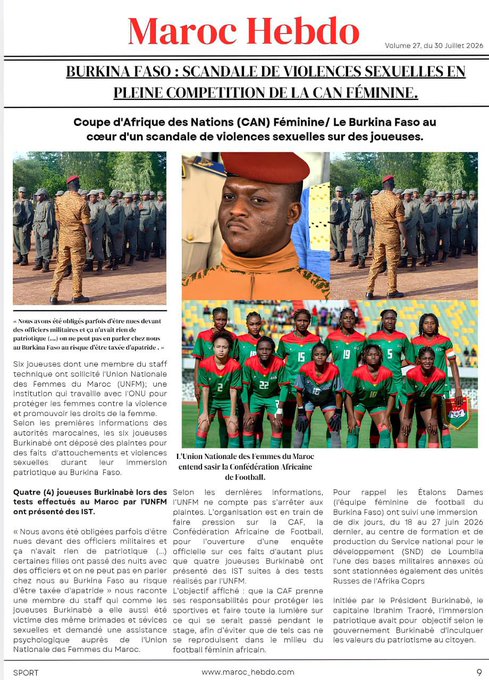
Patriotic initiatives under the microscope
The Burkina Faso government, led by Captain Ibrahim Traoré, has intensified its militarisation of society under the banner of patriotism and national reformation. However, allegations of sexual violence against members of the national women’s football team during a military-organised training camp have cast a harsh light on the unintended consequences of this policy.
Serious accusations emerge from a so-called patriotic program
The initiative was framed as a way to instil discipline and national pride before a continental competition. Players and coaching staff were sent to a military base for an “immersion program” intended to foster sacrifice and commitment to the nation.
Yet, six players and one technical staff member have filed a complaint in Morocco, alleging they were subjected to sexual violence by military officers during their stay. If substantiated by an independent investigation, these claims would represent severe violations of human rights and expose a troubling lack of oversight over military conduct in civilian spaces.
From defence to social control: the expanding role of the military
This controversy highlights a broader trend in Burkina Faso’s governance. Since taking power, Captain Traoré’s administration has increasingly relied on the military to oversee areas far removed from traditional defence roles, including education, youth engagement, cultural initiatives, and even sports.
By positioning the armed forces as the central pillar of national development, the government risks undermining the very institutions designed to safeguard civil liberties. The erosion of civilian oversight mechanisms—such as independent judiciary, media, and civil society—raises concerns about accountability and the protection of fundamental rights.
The absence of checks and balances allows for unchecked power, leaving victims of abuse with little recourse. Reports suggest the complainants only pursued legal action after leaving Burkina Faso, underscoring a deep-seated fear of retaliation within the country’s borders.
A climate of fear stifles dissent
Criticism of military-led initiatives is often framed as anti-patriotic, discouraging public debate. Journalists, activists, and civil society members face intimidation or coercive measures for speaking out, while restrictions on independent media further limit scrutiny.
The government’s prioritisation of security concerns has sidelined human rights protections, creating an environment where victims of abuse may choose silence over risking professional, social, or personal repercussions.
Beyond football: broader implications for Burkinabè society
This scandal extends far beyond the realm of sports. It raises critical questions about the military’s expanding influence over civil society and the state’s responsibility to protect citizens participating in government-sanctioned programs.
The case also challenges the justification that counter-terrorism efforts should override judicial guarantees and public freedoms. While security remains paramount, it cannot serve as a pretext for dismantling the very frameworks meant to prevent abuse and ensure justice.
International intervention signals distrust in domestic justice
The decision to file the complaint outside Burkina Faso’s borders underscores a profound crisis of confidence in national institutions. For the victims, seeking recourse abroad reflects a desperate attempt to find impartiality and protection.
This internationalisation of the case may intensify pressure on Burkina Faso to conduct a transparent, independent inquiry. Such an investigation would be essential not only to establish accountability but also to restore trust in the country’s ability to uphold justice and safeguard its citizens.
A cautionary tale for governance
This incident serves as a stark reminder that no political project, no matter how ambitious, can endure without adherence to the rule of law. Patriotism cannot justify the circumvention of oversight mechanisms, nor can it excuse the suppression of truth when grave human rights violations are alleged.
If the allegations are confirmed, this affair could mark a turning point in assessing Burkina Faso’s governance, exposing the dangers of unchecked power and the erosion of institutions meant to protect the people.