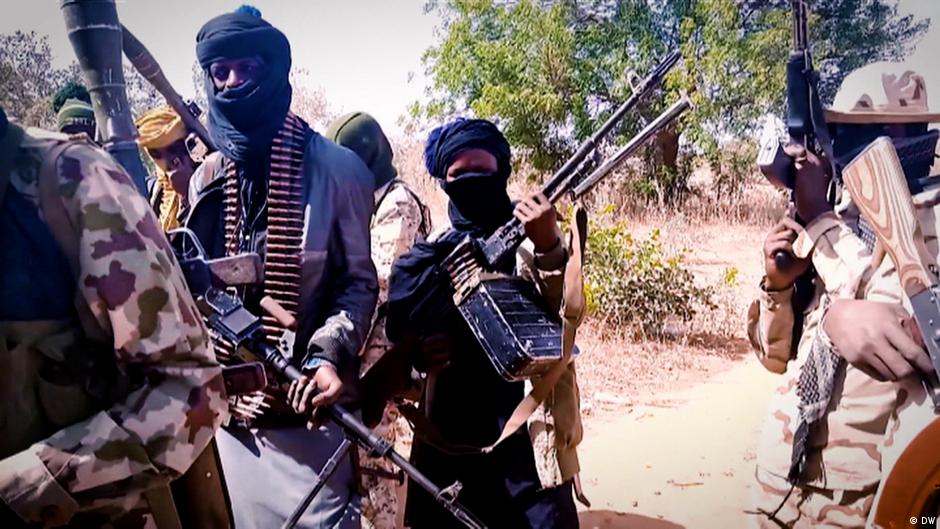

In the Sahel region, kidnappings have evolved into a structured and highly profitable industry, serving as a primary funding mechanism for armed groups. Among these, Boko Haram stands out as one of the most active, operating across Nigeria, Chad, Niger, and Cameroon. This ransom economy has grown into a multi-million-dollar business, with figures demonstrating just how lucrative it has become.
a lucrative industry: the scale of kidnappings
Nigeria, the worst-affected country, has seen alarming numbers. Between July 2024 and June 2025 alone, over 4,700 people were abducted in nearly 1,000 incidents, according to a report by SBM Intelligence, a Nigerian security risk assessment firm. These kidnappings often target schools, with hundreds of victims killed in the process. While the majority of these crimes occur in northern Nigeria, they are not confined to its borders.
The menace extends into neighboring countries. In Cameroon’s Far North region, Boko Haram claimed responsibility for abducting bus passengers in Ziguagè last year. More recently, in Niger, the group kidnapped seven Chadian nationals near the Chad-Niger border in late March, with one victim killed and the rest still held captive.
the dual purpose of mass abductions
According to Remadji Hoinathy, a researcher at the Institute for Security Studies (ISS), kidnappings serve a twofold purpose for jihadist groups like Boko Haram. First, they facilitate forced recruitment, targeting young men, women, and even entire communities to serve as fighters, laborers, or sex slaves. Second, they provide a significant financial boost through ransom demands.
In the case of the Chadian nationals abducted in Niger, Boko Haram demanded 50 million CFA francs ($75,000) for five hostages. However, for the sixth hostage—a doctor—the ransom skyrocketed to 500 million CFA francs ($750,000), as reported by the Chadian Human Rights League in the Lac region.
ransom payments: a controversial lifeline for terror groups
Despite official denials, evidence suggests that ransom payments are frequently made. In Nigeria alone, ransom demands over the past year totaled $35 million, with at least $1.8 million paid by either the state or victims’ families, according to SBM Intelligence. These payments represent a critical revenue stream for jihadist organizations.
Abuja has long maintained a policy against paying ransoms to avoid financing terrorism. In 2022, Nigeria passed a law criminalizing ransom payments, with violators facing up to 15 years in prison. Yet, this legislation appears to be inconsistently enforced. Many Nigerians continue to pay ransoms to secure the release of loved ones, and there are strong indications that the government itself has made such payments.
In November 2025, the Nigerian government was accused of paying a substantial ransom to secure the release of 230 students and staff from a Catholic school in Niger State, who had been abducted by Boko Haram. While the government denies these claims, sources suggest the payment ranged from €1.3 million to €6 million. The funds were allegedly delivered in cash via helicopter to a Boko Haram commander in Borno State.
Experts warn that acknowledging ransom payments could inadvertently bolster the propaganda efforts of these groups. As such, authorities often downplay the issue, emphasizing instead the role of intelligence and military operations in hostage rescues.
Boko Haram’s stronghold: the Lake Chad basin
Boko Haram originated in 2002 in Maiduguri, Borno State, in northeast Nigeria. Founded by preacher Mohammed Yusuf, the group sought to establish a radical Islamic state, rejecting Western education and cultural influences. Over time, its influence spread beyond Nigeria’s borders, extending into the Lake Chad basin—a region encompassing parts of Niger, Chad, and Cameroon.
This area is strategically vital to Boko Haram’s operations for several reasons, explains Remadji Hoinathy. First, it is a transborder space that links the Sahel with Libya, a key transit route for arms and fighters. Second, the region’s marginalized status—where state presence has historically been weak—provides fertile ground for insurgent activities. The Lake Chad basin is also economically significant, supporting vibrant agricultural and pastoral economies that facilitate cross-border trade.
Geographically, the basin’s marshes, forests, and islands offer natural cover, enabling jihadist groups to evade military pressure and regroup when necessary. This resilience has allowed Boko Haram to adapt and persist despite sustained counterinsurgency efforts.
a fractured insurgency: Boko Haram vs. ISWAP
In 2016, Boko Haram experienced a major split, giving rise to the Islamic State’s West Africa Province (ISWAP). The dissident faction opposed the group’s founder, Abubakar Shekau, whose indiscriminate violence—including attacks on Muslim civilians—alienated many members. ISWAP pledged allegiance to the Islamic State and adopted a more organized, strategic approach, prioritizing community engagement over sheer brutality.
What followed was a violent rivalry between Boko Haram and ISWAP, as both groups vied for control of territory and resources in the Lake Chad basin. This internal conflict has further destabilized the region, complicating efforts by regional governments to curb the insurgency.
regional responses: military and beyond
Governments in the Sahel have sought to coordinate their military responses, with the Multinational Joint Task Force (MNJTF)—comprising troops from Nigeria, Chad, Niger, and Cameroon—playing a central role. However, challenges persist. Remadji Hoinathy notes that while military responses have been the primary tool, they have not been enough to dismantle the insurgency.
“Each country initially relied on unilateral military strategies,” he explains. “But the MNJTF and regional stabilization efforts—including development initiatives and state-building in affected communities—have yet to yield decisive results. Boko Haram has repeatedly demonstrated its ability to adapt, regroup, and return to the battlefield.”
Since 2009, the insurgency led by Boko Haram and later ISWAP has claimed over 40,000 lives and displaced 2 million people in Nigeria alone, according to UN estimates. In response, the United States deployed approximately 200 troops to Nigeria last year to assist in training and logistical support for the Nigerian military.