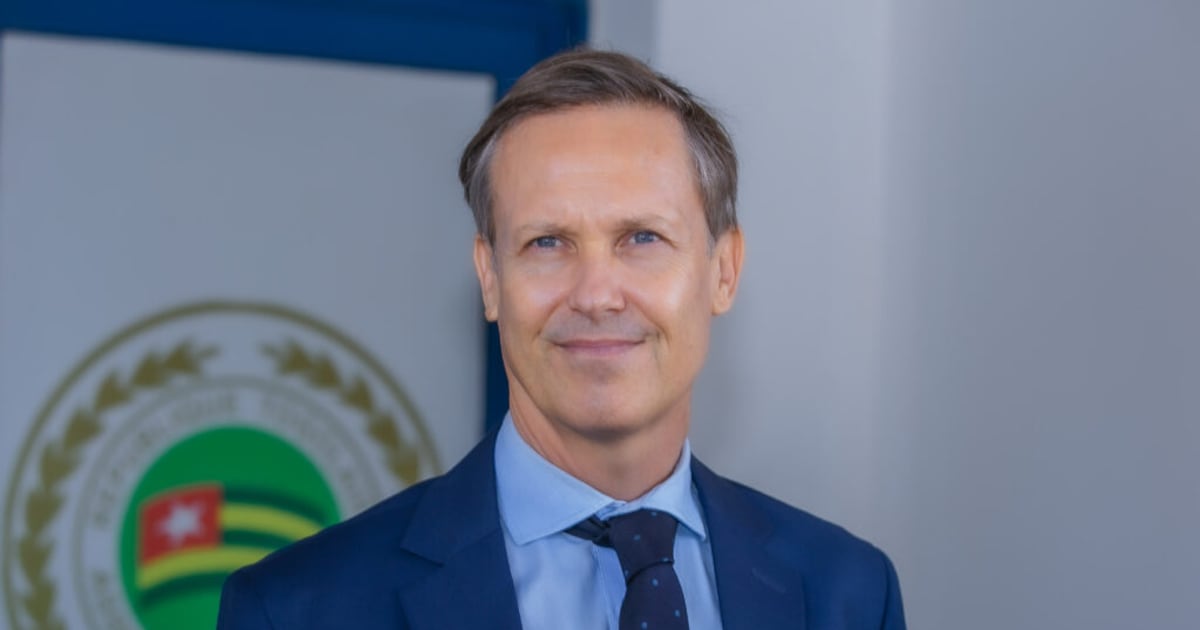

The European Union has once again emphasized its commitment to strengthening ties with Togo amid a global landscape riddled with geopolitical tensions. This pledge was reiterated by Gwilym Ceri Jones, Head of the EU Delegation to Togo, during a recent event in Lomé marking Europe Day. The gathering highlighted both the achievements of European integration and the pressing security challenges facing the world today.
In a context marked by rising conflicts, economic instability, and shifting power dynamics, the EU diplomat underscored Europe’s determination to remain a trusted partner for African nations, with a particular focus on Togo. «In these turbulent times, the EU stands as a steadfast and reliable ally, grounded in the principles of international law,» he stated.
The partnership between the EU and Togo has yielded tangible results, including development aid programs and initiatives supporting economic and social progress. Over 1.3 million Togolese now benefit from European-funded electrification projects, while more than 2.5 million people have access to improved waste collection and treatment systems. Additionally, the rehabilitation of the RN2 highway—connecting Lomé to Aného and the Bénin border—is underway, reinforcing regional connectivity.
Beyond infrastructure, the EU has pledged to support a 18% increase in Togo’s electricity production, leveraging renewable energy sources. The country’s role in hosting 60,000 refugees in its northern regions and acting as a mediator in the Sahel and Great Lakes regions has also been praised. Furthermore, Togo’s security forces have been recognized for their efforts in combating terrorism, further solidifying the nation’s strategic importance.
The timing of this partnership is deliberate. As neighboring Sahel countries grapple with instability and some governments distance themselves from Western influence, the EU is doubling down on its alliance with Togo. Brussels views Lomé not just as an ally but as a critical buffer against the spread of insecurity toward the Gulf of Guinea. The EU’s recognition of Togo’s contributions—whether in refugee management, mediation, or security—reflects a deeper strategy: securing a foothold in West Africa while outsourcing stability to a trusted partner.
The numbers speak volumes. Electrification for 1.3 million Togolese and waste management for 2.5 million are more than humanitarian gestures—they are tools for social pacification in a region where access to basic services can sway public sentiment. The commitment to a 18% boost in renewable energy production aligns with the EU’s carbon-neutral development goals. Meanwhile, the rehabilitation of the RN2 highway—an economic lifeline between Lomé, Aného, and the Bénin border—reveals a dual purpose: fostering local growth while ensuring uninterrupted trade flows for European markets.
Yet, the cornerstone of this relationship remains security. By acknowledging Togo’s role in hosting refugees and mediating regional conflicts, the EU is effectively outsourcing its geopolitical challenges. While Togo is not a frontline state in the fight against jihadism, it absorbs both the migrant and diplomatic pressures that might otherwise destabilize the Gulf of Guinea. The EU’s praise for Togo’s defense forces is more than diplomatic courtesy—it’s an acknowledgment of Lomé’s role as a regional gendarme. This is no ordinary partnership; it’s a calculated geopolitical maneuver where Brussels secures Togo’s loyalty while positioning the country as the linchpin of its containment strategy in the Sahel.