International Monetary Fund reaches agreement to release nearly 18 billion FCFA for Niger
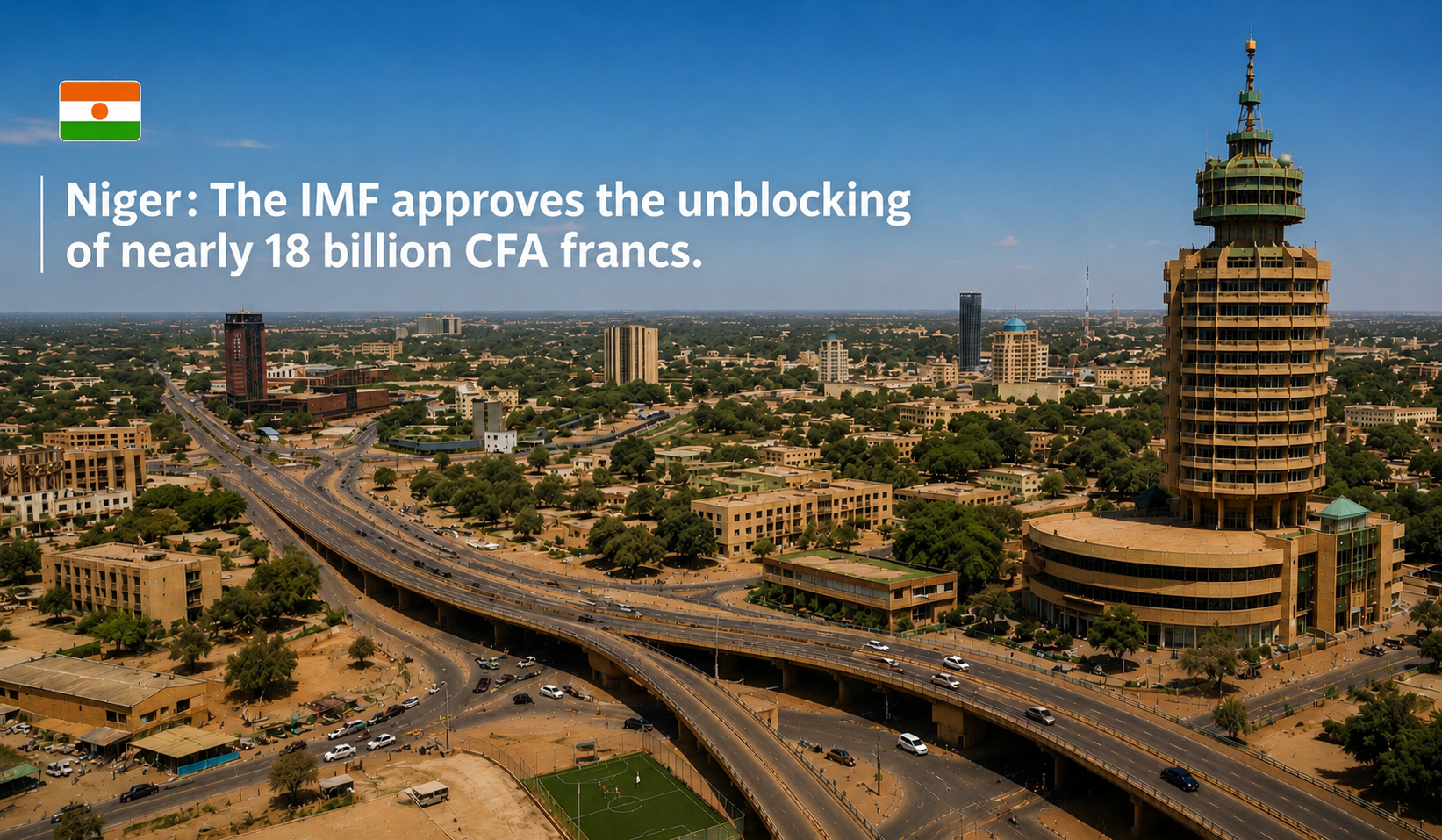
The International Monetary Fund (IMF) has finalized a staff-level agreement with the authorities in Niger, paving the way for a disbursement of approximately $26.3 million (nearly 17.8 billion FCFA). This financial support is designed to bolster macroeconomic stability and facilitate the implementation of essential structural reforms across the nation.
This development represents a significant boost for Niger‘s public finances. Following extensive consultations held in Niamey, the IMF technical team and the transition government reached a consensus within the frameworks of the Extended Credit Facility (ECF) and the Resilience and Sustainability Facility (RSF).
While this technical endorsement requires formal validation from the IMF Executive Board in Washington in the coming weeks, it signals a steady restoration of Niger‘s international financial standing.
Strategic allocation for economic resilience
The projected funding of 18 billion FCFA is structured around two primary strategic pillars:
- Direct budgetary support: This component focuses on strengthening state revenues, optimizing public expenditure, and ensuring the long-term sustainability of sovereign debt.
- Climate transition initiatives: A portion of the funds will be dedicated to institutional reforms aimed at mitigating environmental shocks, as Niger remains particularly susceptible to climate change within the Sahel region.
The agreement highlights the progress achieved by the Nigerien administration in public financial management, despite a regional and security landscape that continues to present significant challenges.
Growth prospects driven by the petroleum sector
This IMF intervention comes at a pivotal moment for the national economy. After navigating the impact of regional economic sanctions throughout 2023 and early 2024, Niger is now anticipating a period of accelerated growth. This trajectory is largely fueled by the expansion of crude oil exports facilitated by the major pipeline connecting the Agadem oil fields to the port of Sèmè-Kpodji.
Nevertheless, the international institution has emphasized that transparency in the management of extractive resources and robust anti-corruption measures are mandatory. These conditions are essential to ensure that oil revenues contribute effectively to human development and poverty reduction.
Future priorities for Niamey
To maximize the impact of this positive signal to the global investment community, the government in Niamey must prioritize several key areas of reform:
- Broadening the tax base: Reducing reliance on external aid by improving the efficiency of domestic tax collection.
- Safeguarding social expenditure: Ensuring that fiscal adjustments do not compromise essential funding for healthcare and education.
- Enhancing the business environment: Providing guarantees to both local and international private sectors to diversify an economy currently dominated by subsistence agriculture and informal trade.
- The upcoming release of these funds marks a vital step toward the financial normalization of Niger, providing the authorities with the necessary fiscal space to conclude the current budgetary year.