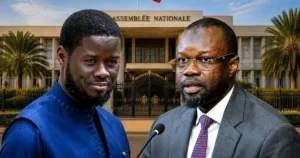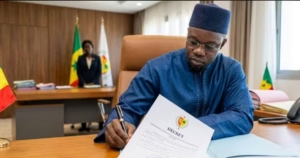

The discussion surrounding asset declarations has re-emerged in Senegal, with Khalifa Sall aiming to take a prominent stance. The former mayor of Dakar and leading figure of Taxawu Sénégal has publicly voiced his support for making the financial disclosures of high-ranking state officials accessible to the general public. This position aligns with a political climate heavily influenced by demands for transparency, a key promise from the new authorities who came to power following the March 2024 presidential election.
Khalifa Sall supports public disclosure of asset declarations
The former head of Senegal’s capital city has clearly advocated for the public release of asset declarations from public leaders. For him, financial transparency among elected officials and senior civil servants is more than just a legal requirement; it forms a cornerstone of trust between the government and its citizens. The leader of Taxawu Sénégal believes that publishing these documents would help purify public life and preempt suspicions of illicit enrichment that frequently plague the political class.
This statement holds significant weight. Khalifa Sall, a long-time opponent of the Macky Sall regime, now positions himself on an issue where the current administration, led by President Bassirou Diomaye Faye and Prime Minister Ousmane Sonko, has made accountability a central pillar of its political agenda. By joining the call for greater transparency, the former Dakar mayor avoids appearing out of step with the public’s desire for moralization in public life.
An established legal framework, but limited application
Asset declaration is not a novel concept within Senegal’s institutional structure. The 2014 law concerning asset declarations already mandates a number of public officials, including the head of state, to submit their declarations to the National Office for the Fight Against Fraud and Corruption (OFNAC). The President of the Republic, in particular, is required to do so at the beginning and end of their term. However, in practice, these documents have remained confidential and are not made public.
It is precisely this confidentiality that the current debate seeks to challenge. Various voices, from civil society to the political sphere, are advocating for a shift towards public disclosure, similar to systems in place in some European or Latin American democracies. The core issue is no longer merely the submission of declarations, but public access to this information, which is essential for effective citizen oversight.
A paramount political and institutional challenge
Beyond Khalifa Sall’s specific case, each political actor’s stance on this issue is becoming a defining characteristic. President Bassirou Diomaye Faye himself made his asset declaration public shortly after his inauguration in April 2024, a move widely praised as a symbolic break from past practices. Since then, pressure has intensified on other officials—ministers, deputies, institutional presidents, and general directors—to follow suit.
The embrace of this transparency requirement by opposition figures or former political stalwarts could reshape the political landscape. By publicly supporting the principle, Khalifa Sall adopts a responsible posture while preserving his freedom to critique how the government implements its own transparency agenda. This dual approach is characteristic of an experienced opposition figure seeking to avoid being confined to a purely confrontational role.
Ultimately, the concrete implementation of these intentions will depend on the legislative timetable. A reform of the 2014 law, or the adoption of new legislation mandating public asset declarations, requires parliamentary consensus. The Pastef majority, strengthened by the snap legislative elections in November 2024, is well-positioned to champion such a change. The question remains how far the government intends to push this logic, and under what conditions other political parties will agree to fully embrace transparency.