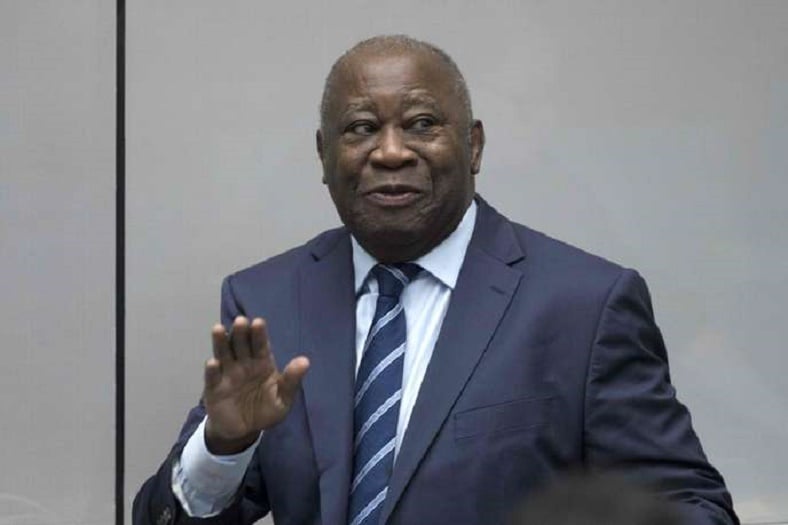

Laurent Gbagbo maintains grip on power as PPA-CI leader
The Ivorian political landscape shifted this week as Laurent Gbagbo, former President of Côte d’Ivoire (2000-2011), was re-elected as leader of the Parti des peuples africains – Côte d’Ivoire (PPA-CI) during its first ordinary congress. Despite previously hinting at retirement in late 2025, Gbagbo’s leadership continues to resonate strongly with supporters, even as the party faces mounting challenges following multiple election boycotts.
The recent presidential election in October 2025 saw Alassane Ouattara secure another term, while Gbagbo—disqualified due to a criminal conviction—was barred from running. The PPA-CI neither nominated nor endorsed any candidate, later boycotting the December legislative elections. This decision left the party without parliamentary representation, retaining only a handful of municipal council seats.
Congress confirms Gbagbo’s leadership
On Friday, delegates at the PPA-CI’s first ordinary congress formally re-elected Laurent Gbagbo as party president. The decision followed a day of enthusiastic acclamation from several thousand attendees. Gbagbo arrived to a warm ovation at the Palais des congrès in Abidjan’s Treichville district, where he addressed supporters with a brief statement: “I’m glad to be in this warm atmosphere. Thank you.” A more detailed speech is scheduled for Saturday in Songon, south of the capital.
Earlier in October 2025, as he approached his 81st birthday (on May 31), Gbagbo had indicated his intention to step away from political leadership and “refrain from holding political office.”
The congress also adopted a motion supporting the Alliance des États du Sahel (AES), a coalition comprising Burkina Faso, Mali, and Niger—three countries governed by military juntas with strained relations with Abidjan. Sanctions were imposed on party members accused of disobedience, including the expulsion of Ahoua Don Mello, who ran as an independent presidential candidate in 2025 against party directives. Stéphane Kipré, who participated in the legislative elections as an independent and won a seat, received a 18-month suspension.
Fragmentation weakens Gbagbo’s political base
The once-unified left-wing movement that Gbagbo led during his presidency now appears deeply divided. Key figures from his era—including his former wife and political ally Simone Ehivet Gbagbo, former ally Charles Blé Goudé, and former Prime Minister Pascal Affi N’Guessan—have distanced themselves from the PPA-CI.
Gbagbo’s political future hinges on his potential reinstatement on the electoral rolls, a move contingent upon a presidential pardon from Alassane Ouattara, who succeeded him after the violent 2010-2011 post-election crisis. The outcome of this legal and political process could redefine the opposition’s role in Côte d’Ivoire’s evolving democracy.



