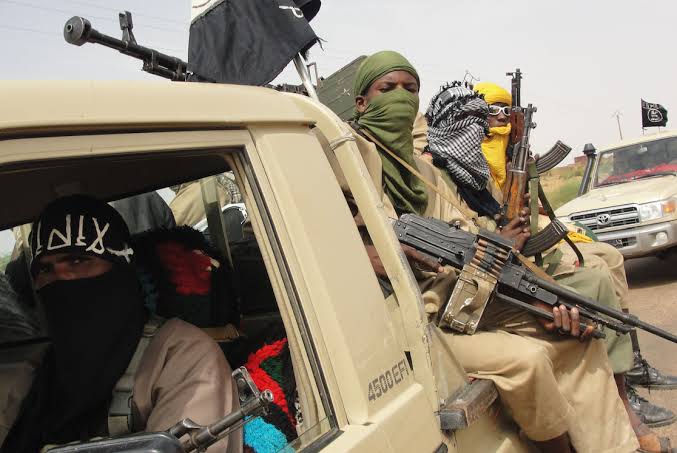

In the heart of Bamako, the air is thick with uncertainty as Mali’s military leadership confronts a dilemma no government should have to face. The resurgence of coordinated assaults by the Group for the Support of Islam and Muslims (JNIM), an Al-Qaeda affiliate, alongside the Azauad Liberation Front (FLA), has left citizens grappling with a grim reality. The National Committee for the Salvation of the People (CNSP), led by General Assimi Goïta, insists the situation is under control, yet the facts paint a starkly different picture.
Days after the April 25 attacks, General Goïta’s abrupt disappearance from public view went unexplained. In a later address, he reassured Malians that the state possesses the military might to defeat non-state armed groups. Yet, six years after seizing power, his administration remains on the defensive, reacting to the agenda set by militants who now dictate the pace of conflict across the country. The shifting military balance has forced many Malians to confront a chilling possibility: the eventual triumph of the JNIM and its allies in taking control of the state.

An impossible choice: military rule or extremist theocracy
Public statements from the JNIM leave little room for doubt about its intentions. A recent communiqué declared that establishing sharia law would be a top priority if the group were to gain power. In areas under its control, the JNIM has already imposed strict Islamic governance, leaving residents with no alternative but submission. Some opposition figures, desperate to end the junta’s grip, have floated the idea of a tactical alliance with the JNIM, hoping for a diluted version of Islamic law. Yet the group’s rhetoric offers no reassurance that its victory would bring anything but a rigid theocratic order.
For the people of Mali, caught between an authoritarian military regime and the looming shadow of jihadist rule, the path forward appears increasingly narrow. The CNSP’s relentless suppression of dissent—through arrests, exile, and silencing of political voices—has inadvertently paved the way for extremist factions to emerge as the dominant force challenging its authority.
How the junta’s repression fueled its own downfall
The CNSP’s refusal to tolerate any form of opposition has backfired spectacularly. By eliminating political rivals and stifling civil society, the junta has created a vacuum that armed groups like the JNIM are now rushing to fill. The group’s April 25 offensive, combined with the FLA’s reoccupation of Kidal, underscored the fragility of the military government’s position. Yet instead of addressing the root causes of instability, the regime has doubled down on repression, deepening public distrust.
Recent events, such as the abduction of prominent lawyer and political figure Mountaga Tall on May 2, have only exacerbated tensions. Reports of state security agents implicated in such acts of intimidation highlight the junta’s descent into authoritarian excess. The international community has repeatedly voiced concerns over these violations, yet the pattern of abuse continues unchecked, further eroding any remaining legitimacy the government might have once held.
The JNIM’s vision for a ‘new Mali’
In a pre-offensive statement, the JNIM called on all patriotic forces—including political parties, national armed forces, religious leaders, and traditional authorities—to unite against the junta. Their stated goal: a peaceful, inclusive transition. Yet their ultimate vision for Mali remains shrouded in ambiguity. Would their ‘new Mali’ be a nation governed by sharia, or a state where extremist ideology and political repression coexist? With no clear guarantees for a return to constitutional order, the group’s promises offer little comfort to a population already exhausted by years of instability.
The military’s reliance on brute force over diplomacy has only prolonged the crisis, leaving citizens to face a future where the choice may no longer be between two flawed systems, but between chaos and extremism. As the JNIM tightens its grip on Bamako through road blockades and economic pressure, the junta clings to hollow assurances of control. Meanwhile, the people of Mali are left to wonder: what comes next in a country where neither governance model seems capable of delivering security or justice?



