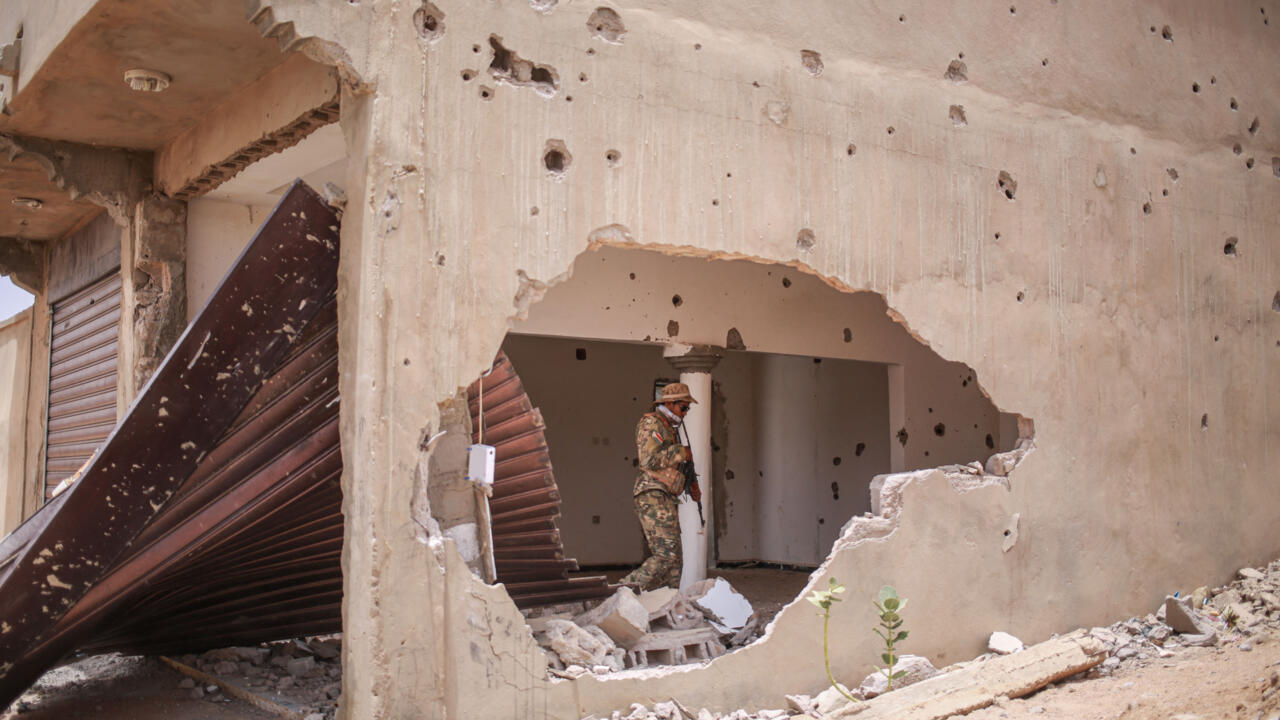

The Mali security landscape has been rocked by coordinated assaults on April 25, which resulted in the death of Defense Minister General Sadio Camara and the loss of Kidal to armed factions. These events have cast a harsh light on the country’s security strategy, particularly the reliance on external partnerships, and sparked intense debate about the nation’s political and military future.
Mali’s security strategy: a critical examination of external alliances
In a recent analysis titled « Mali: anatomy of a security earthquake », the Timbuktu Institute, a Dakar-based African research center for peace, dissects the implications of the April 25 attacks. The document questions the efficacy of Mali’s security partnerships, notably with Russia and the Alliance of Sahel States (AES), which includes Burkina Faso and Niger.
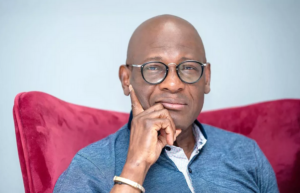
Bakary Sambe, Director of the Timbuktu Institute in Dakar, highlights the failure of security outsourcing in Mali. « The collapse of the Wagner-Africa Corps myth is evident, » he states. « The death of General Sadio Camara and the chaotic withdrawal of Africa Corps from Kidal symbolize the inadequacy of relying on external forces to secure the country. »
Sambe argues that after the departure of the Barkhane force, which included both military and civilian components, outsourcing security to Moscow has not delivered the promised results. « The strategy has fallen short against a locally entrenched insurgency, » he emphasizes. « The Goïta regime risks losing its main narrative strength—the promise of security—if immediate results are not achieved. »
Limits of the Alliance of Sahel States and shifting public opinion
The April 25 attacks also exposed the fragility of the AES, designed as a mutual defense pact. Sambe notes that despite the article 5 of the Liptako-Gourma Charter, which mirrors NATO’s collective defense clauses, neither Burkina Faso nor Niger provided military support to Mali during the crisis. While Burkinabe President Traoré labeled the attacks a « monstrous plot, » the alliance failed to mobilize effectively.
Sambe explains this lack of solidarity by pointing to the internal security challenges faced by Burkina Faso and Niger. « These countries were preoccupied with their own domestic threats, » he says. « The attacks in Bamako occurred just after Burkina Faso had dealt with several of its own security incidents. »
Surprisingly, the attacks may have paradoxically strengthened public support for the transitional government. Sambe observes a temporary « rally-around-the-flag » effect, where citizens unite behind the national flag despite unmet security promises. « The legitimacy of the Goïta regime now hinges almost entirely on its security pledge, » he notes. « This paradox is challenging for foreign analysts to grasp, but it reflects a uniquely Malian dynamic where perceived threats can temporarily consolidate political support. »
Jihadist-independentist alliance: a fleeting convergence?
The coordinated attacks also marked an unprecedented alliance between the Group for the Support of Islam and Muslims (JNIM), linked to al-Qaeda, and the National Liberation Front of Azawad (FLA). Sambe describes this partnership as a « tactical convergence » rather than a long-term marriage, driven by shared opposition to the Bamako regime and pragmatic interests such as trafficking.
He questions the durability of this alliance, citing divergent objectives: JNIM seeks to impose Sharia law, while the FLA demands autonomy for Azawad. « The alliance is fragile, » Sambe warns. « Without a shared political vision, it is unlikely to withstand the test of time. » He also highlights the influence of figures like Iyad Ag Ghaly in brokering this alliance, though uncertainties remain about the extent of JNIM’s commitment to FLA’s goals.
Dialogue as a path forward?
The escalating violence has reignited debates about whether dialogue with armed groups is a viable solution. Sambe believes it is inevitable. « The jihadists are no longer seen as foreign invaders, » he explains. « They are Malian citizens, and the public is increasingly calling for inclusive national dialogue. »
He points to the « endogenization » of jihadism, where local grievances and radicalization have taken root. « The Malian people are saying it is time for the country to talk to all its children, even those considered lost, » Sambe states. « This dialogue is no longer optional; it is a necessity to silence the guns. »
The transitional government, however, remains opposed to negotiations, insisting on a military solution. This stance contrasts with opposition figures like Imam Dicko, who advocate for dialogue as a means to end the suffering of civilians and address the root causes of the conflict.