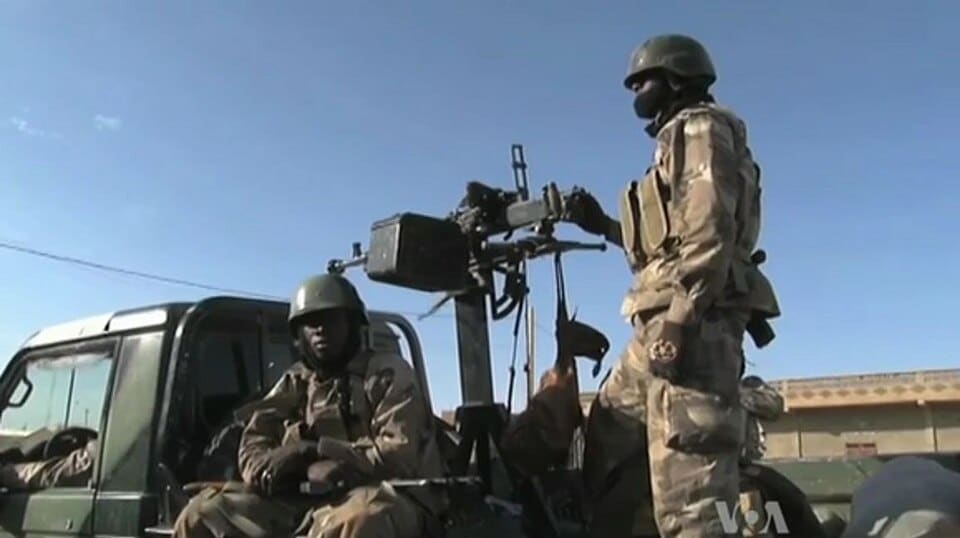

The Malian government’s bold gamble on Russian military support to reclaim control over its territory is showing cracks. After Wagner’s departure, the Africa Corps—Moscow’s official replacement—now faces mounting setbacks that are forcing a desperate shift in strategy. Reports of escalating civilian abuses further tarnish the alliance’s already fragile reputation, raising serious questions about both its military effectiveness and the human cost of this partnership.
Mali’s Africa Corps abandons failed northern strategy
Africa Corps, the Kremlin-backed force formally integrated into Mali’s security apparatus, is quietly rewriting its playbook. Intelligence assessments indicate a retreat from key northern strongholds as Moscow redirects its focus toward protecting Bamako, critical infrastructure, and the military junta’s grip on power.
This tactical pivot is no accident. Months of relentless assaults by GSIM-affiliated jihadists and Azauad Liberation Front fighters have left the Russia-backed coalition reeling. The devastating spring 2026 offensives culminated in the humiliating loss of Kidal—a symbolic blow to Bamako’s proclaimed goal of territorial restoration.
The original strategy was clear: after severing ties with Western allies, Mali bet its future on Russian firepower to swiftly regain control. But the financial burden has been staggering for a nation already straining under economic constraints. While exact contract figures remain classified, regional estimates suggest Bamako is spending tens of millions annually on Russian security services, with additional mining concessions and economic incentives ceded to Moscow in exchange.
Despite these heavy investments, military outcomes have fallen far short of expectations. Even during Wagner’s tenure, operations frequently collapsed against entrenched armed groups. The transition to Africa Corps has not reversed this trend. Analysts note that Russian fighters now prioritize protecting the junta and key urban centers over large-scale counterinsurgency campaigns.
Brutality escalates without military gains
As battlefield reversals mount, so do allegations of horrific civilian abuses. On June 24, 2026, local accounts reported a chilling incident near Timbuktu, where Malian troops and Africa Corps operatives allegedly executed civilians before arranging one victim’s dismembered body into a swastika formation. Two additional motorcyclists were reportedly killed in a drone strike during the same operation, with no armed confrontation preceding the violence.
Days earlier, testimonies described at least a dozen civilians killed in another joint operation in the Timbuktu region. Survivors recounted summary executions and looting of local markets, with no evidence of preemptive clashes with armed factions. These accusations join a growing catalog of human rights violations attributed to Wagner and now Africa Corps, from international watchdogs and investigative journalists alike.
The pattern suggests a reliance on terror rather than sustainable counterinsurgency tactics. Yet this brutality has failed to deliver the military breakthroughs Mali desperately needs. Armed groups continue to launch coordinated attacks across multiple cities, disrupt supply lines, and force Russian-backed forces into costly redeployments. The recent withdrawal from northern positions only underscores the coalition’s struggle to maintain control.
By shifting resources to Bamako’s defense and aerial support rather than maintaining a permanent presence in contested zones, Africa Corps tacitly admits the initial strategy’s failure. For Mali’s leadership, which gambled its political and economic future on Moscow’s promise of rapid stabilization, this evolution raises a critical dilemma. After years of alliance and substantial investments, the security returns remain elusive while the stain of atrocities grows harder to ignore. Russia’s tactical adjustments reflect less a strengthening of capacity than a desperate effort to salvage a campaign that has consistently fallen short of its stated ambitions.