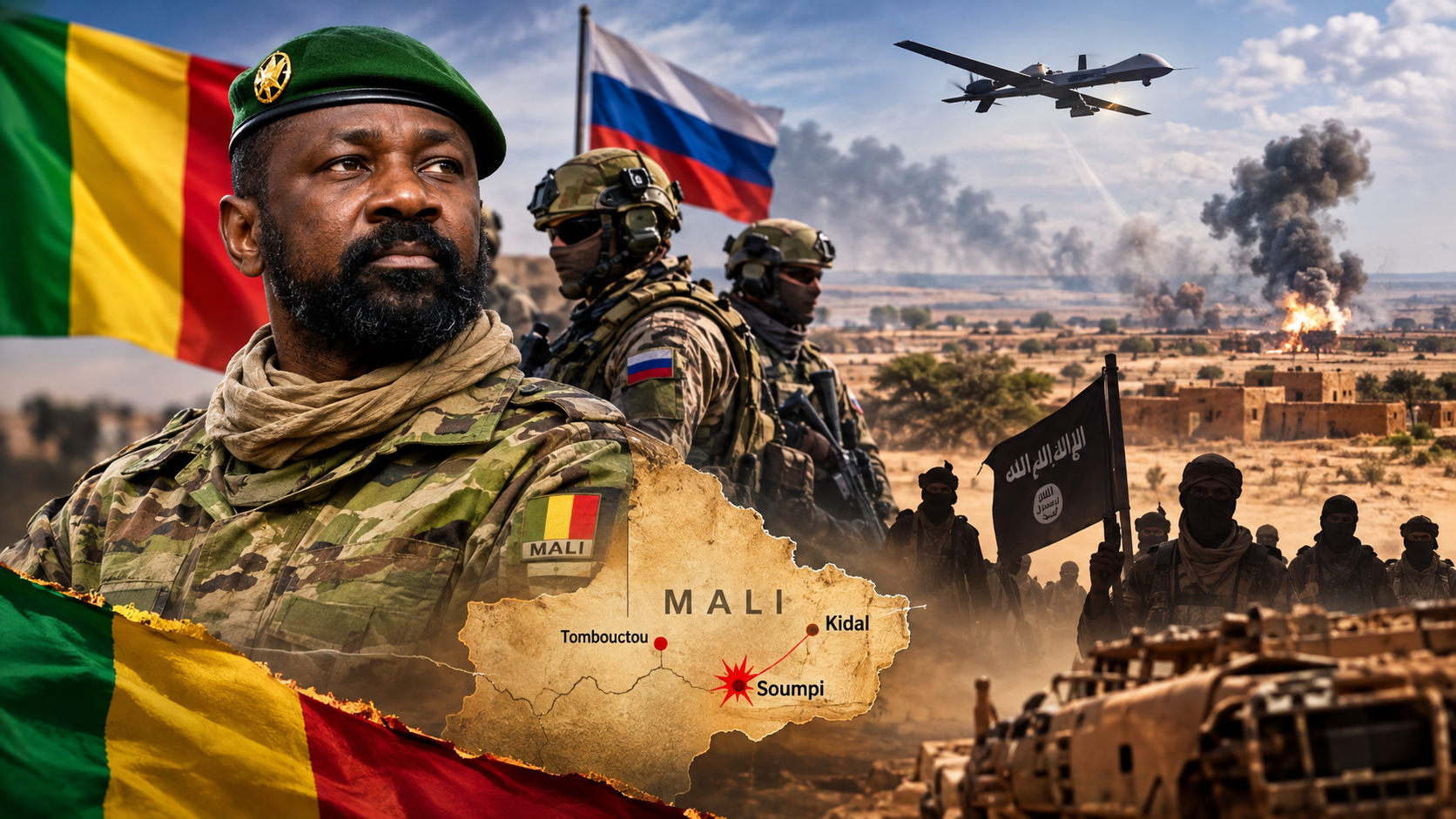

The recent escalation of violence in Mali marks a critical turning point for the nation’s security strategy. On October 10, 2026, reports emerged of an unmanned aerial vehicle strike targeting Mali’s Africa Corps and national military positions near Soumpi, Tombouctou region. This development not only underscores the persistent fragility of the security landscape but also forces Bamako to confront a pressing question: after four years of shifting military alliances, can Russian partnership alone deliver the stability needed to end the crisis?
From strategic shift to enduring vulnerability
Since seizing power, Assimi Goïta has positioned military reorientation as a cornerstone of Mali’s security doctrine. The withdrawal of French forces and the pivot toward Moscow were framed as bold steps toward asserting national sovereignty and reclaiming territorial integrity. Yet, the relentless cycle of attacks including the recent Soumpi strike challenges the narrative of progress, raising doubts about whether an external partner can single-handedly restore order.
Kidal’s recapture in early October 2026, achieved with Russian-backed military support, offered Bamako a symbolic triumph. However, analysts caution against conflating tactical advances with strategic resolution. The fragility of these gains was exposed mere days later when drone strikes demonstrated that even fortified positions remain perilously exposed.
The limits of foreign military reliance
Russian military cooperation has undeniably bolstered Mali’s operational capabilities, providing advanced equipment and on-the-ground expertise. Yet history demonstrates that foreign partnerships, while beneficial, cannot replace a robust, self-sustaining national security architecture. The persistent attacks in regions like Tombouctou reveal a troubling disconnect between military presence and civilian security.
For Assimi Goïta’s administration, the challenge is clear: Syrian-style victories here today, gone tomorrow do little to address the root causes of instability. A lasting solution demands more than a change of foreign allies; it requires a holistic strategy encompassing:
Strengthening Mali’s autonomous defense capabilities
Implementing sustainable local governance in recaptured areas
Ensuring the uninterrupted delivery of essential services
Addressing the underlying grievances driving insurgency
The opaque intersection of security and economic interests
While the focus remains on military outcomes, the relationship with Russian security contractors raises critical economic considerations. The presence of these firms introduces a layer of complexity where national security intersects with commercial interests particularly regarding natural resource exploitation.
Though allegations of deliberate prolonging of conflict for profit remain speculative without verifiable evidence, the lack of transparency around contracts, financial arrangements, and operational objectives is cause for concern. A security partnership must prioritize Malian interests above all. This means:
Publicly auditable agreements
Clear metrics for measuring success
Accountability for civilian protection failures
Assimi Goïta faces a pivotal decision: Will Mali’s security strategy continue to hinge on foreign partnerships, or will Bamako take decisive steps toward building a self-reliant and transparent national framework capable of delivering lasting peace?
Sovereignty beyond rhetoric
True sovereignty in Mali’s context transcends symbolic gestures it demands tangible capabilities. The Africa Corps’ operational support, while valuable, cannot substitute for Mali’s own intelligence networks, rapid-response forces, and community-based conflict resolution mechanisms.
Recent events in Soumpi serve as a stark reminder: military advances without civilian protection or governance are fleeting. For the Malian people, security is not measured in headlines or alliance shifts but in the ability to return to their homes without fear. Until Bamako addresses the fundamental pillars of stability security, governance, and economic opportunity the cycle of violence will persist.
The stakes could not be higher. The choice between temporary alliances and enduring solutions will determine whether Mali can finally emerge from the abyss or remain trapped in a protracted struggle where every tactical gain is an illusion of progress.
By Moussa Samuel Coulibaly — Journaliste / Rédacteur