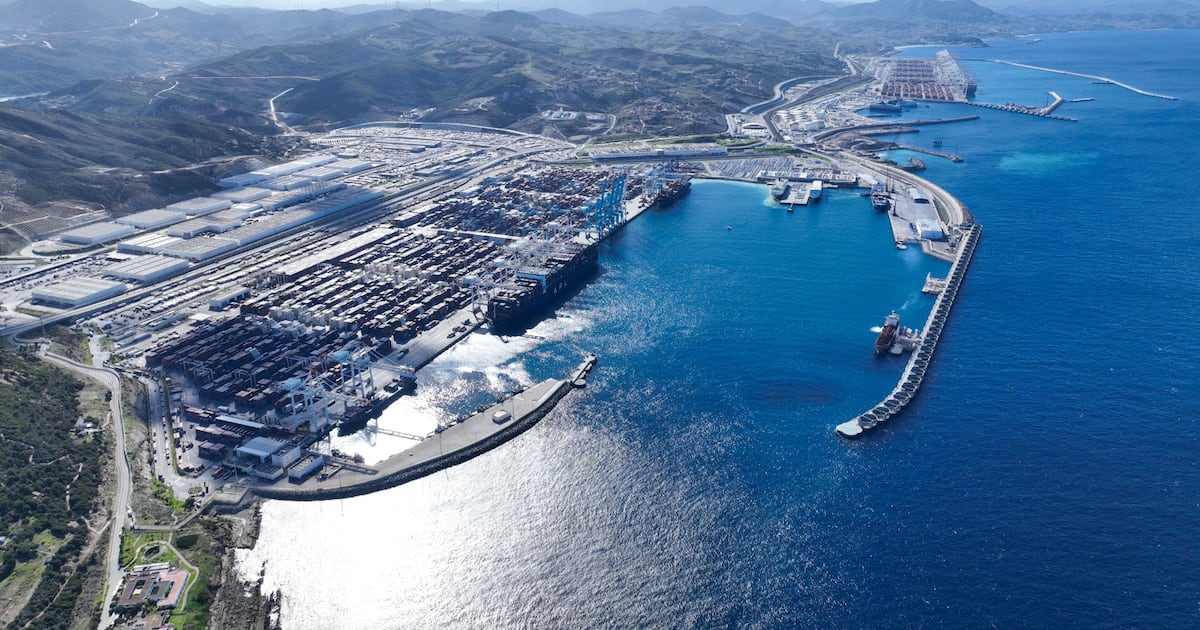

The Moroccan port system continues to attract global interest as key players explore opportunities to enhance its capabilities. The Japan International Cooperation Agency (JICA) has outlined a detailed roadmap for its upcoming mission, as revealed in its provisional consultancy market schedule. According to the official document, an assessment mission will be deployed from September 2, 2026, to February 26, 2027, following the launch of a tender on July 1, 2026. The goal is to evaluate the development potential of Tanger Med and Casablanca ports, as well as the broader national port infrastructure.
Strategic importance of Morocco’s leading ports
Tanger Med and Casablanca are recognized as Morocco’s primary maritime hubs, handling nearly 98% of the country’s foreign trade. Their strategic locations position them at the nexus of international logistics networks, bridging Europe, Africa, and global markets. This pivotal role underscores the critical importance of these ports in shaping Morocco’s economic future.
Beyond technical expertise: a vision for economic growth
The JICA mission’s scope extends beyond mere technical evaluation. The mandate reflects a commitment to supporting Morocco’s port system as it evolves to meet the demands of the next phase of economic development. The assessment will focus on several key pillars:
- Upgrading infrastructure to enhance competitiveness;
- Accelerating digital transformation across port operations;
- Advancing decarbonization initiatives to align with global environmental standards;
- Strengthening Morocco’s role as a logistical bridge between Europe and Africa.
Preparing for future trade dynamics
A significant portion of the mission will analyze anticipated shifts in global trade flows. Experts will forecast cargo traffic trends, assess expansion projects, and evaluate port management structures. The study will also examine the alignment between current infrastructure and the future needs of Morocco’s economy.
The mandate includes a thorough review of institutional frameworks, stakeholder responsibilities, and the connectivity between Moroccan ports and major European and African markets. The findings aim to guide a cohesive development strategy, ensuring investments, governance, and trade evolution remain in sync.
Prioritizing environmental sustainability
Environmental transition is a cornerstone of this initiative. Consultants will review existing green policies in Moroccan ports, assess carbon reduction measures, and evaluate energy efficiency improvements. The goal is to ensure the port system meets international sustainability benchmarks while supporting Morocco’s broader climate commitments.
Digital innovation for seamless operations
Digitalization will be scrutinized in depth, covering:
- Automated port management systems;
- Real-time vessel synchronization under Just-in-Time logistics;
- Cybersecurity frameworks to safeguard operations;
- Technologies enabling carbon neutrality.
By integrating these digital advancements, Morocco can streamline port operations, minimize vessel wait times, and enhance overall efficiency.
Japan-Morocco collaboration: a forward-looking partnership
The mission also includes a forward-looking dimension. Beyond diagnostics, JICA will identify opportunities for technological collaboration between Morocco and Japan. Potential projects may involve Japanese equipment, digital solutions, and decarbonization technologies to modernize Morocco’s ports.
A pilot phase will test select solutions before presenting them to Moroccan authorities in a dedicated workshop. The study will engage specialists in port planning, digital transformation, decarbonization, and cybersecurity, totaling 6.61 person-months of work. While still preliminary, this initiative highlights the strategic value placed on Morocco’s port system by international partners.
The JICA mission reflects a holistic approach, examining infrastructure, governance, digital adoption, environmental standards, and trade forecasts. By doing so, it positions Morocco’s ports at the forefront of global trade evolution, reinforcing the country’s role as a vital logistical hub connecting Europe and Africa.



