
N’Djamena hosts Sahel workshop to boost legal safety for environmental journalists
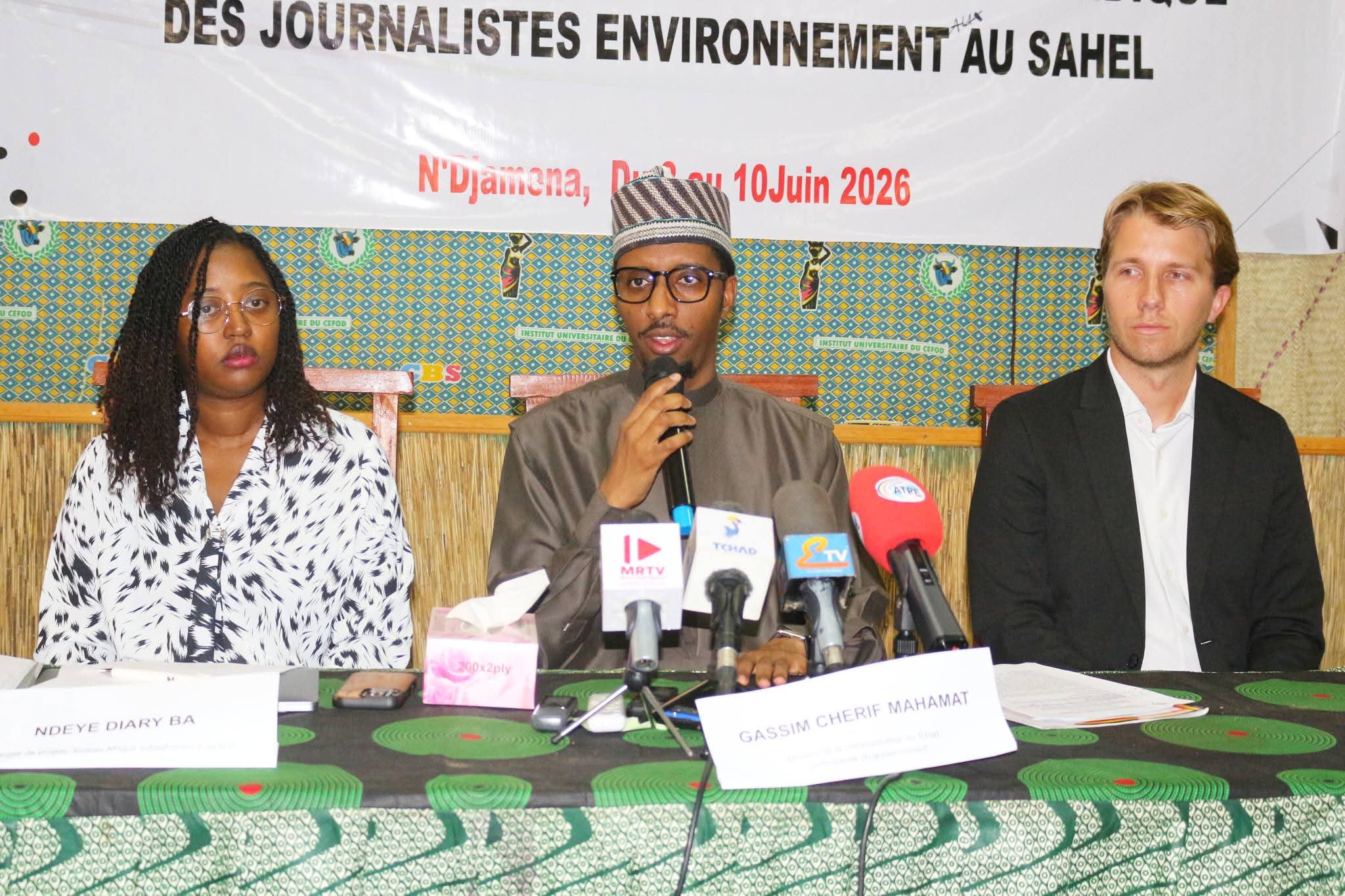
N’Djamena is currently hosting a regional workshop aimed at enhancing the legal protection of journalists who focus on environmental issues. The three-day event, which began on Monday, brings together media professionals from Chad, Burkina Faso, Mali, and Niger.
Organized in collaboration with government ministries responsible for Communication and Environment, this initiative is part of a broader project dedicated to defending and safeguarding environmental journalism across the Sahel region. The primary goal is to equip journalists with essential knowledge about their rights, existing protective mechanisms, and strategies to mitigate professional risks.
The sessions encourage stronger collaboration among journalists, legal experts, and human rights organizations to foster a safer and more informed media landscape.
Empowering journalists through legal and digital awareness
Ndeye Diary Ba, Project Lead for Sub-Saharan Africa at the organizing body, emphasized the importance of this training in improving working conditions for environmental journalists. “Participants will delve into critical topics, analyze national and regional legal frameworks, and strengthen their skills in digital security and risk management,” she stated.
Government commitment to press freedom and environmental reporting
Chad’s Minister of Communication and Government Spokesperson, Gassim Cherif Mahamat, highlighted the significance of hosting this regional gathering in N’Djamena. He acknowledged the pressing challenges faced by Sahelian countries in protecting journalists and upholding press freedom.
“Environmental journalists play a crucial role in raising public awareness about sustainability issues, but their safety and legal protections must be prioritized,” he noted. “This training provides practical tools to assess risks, interpret legal texts, and combat misinformation—key competencies for modern journalism.”
Over three intensive days, attendees will exchange insights, share best practices, and develop strategies to report on environmental challenges while minimizing risks to their profession.