Niger eliminates parallel structures at presidency and prime minister’s office to cut costs
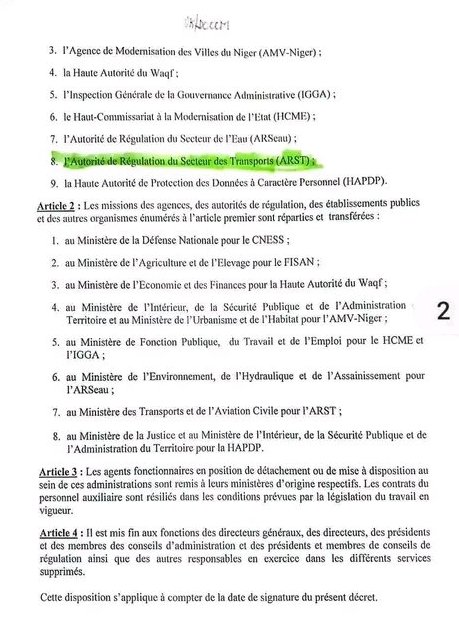
In a move to streamline public expenditure, Nigerien authorities have decided to dissolve several bodies attached to the presidency and the prime minister’s cabinet. The stated goal is to sharply reduce the state’s operating costs and eliminate administrative redundancies.
A major structural reorganisation
A sweeping overhaul is underway in the corridors of power in Niamey. The Nigerien government has formalised the dismantling of numerous services and structures that previously operated around the two heads of the executive. Far from being a mere cosmetic measure, this decision entails the immediate transfer of all their missions and responsibilities to the relevant sectoral ministries.
This restructuring aims to break with what is seen as excessive centralisation and restore to the ministries their full role in steering public policy. By eliminating these “parallel administrations,” the government intends to optimise the efficiency of the state apparatus.
Staff management and asset reallocation
The decree sets out clear procedures for the fate of personnel and assets affected by this dissolution:
- Civil servants and public agents: Detached staff are immediately reassigned to their original parent ministry.
- Auxiliary and contract workers: They are to be laid off, with the government undertaking to pay all their legal entitlements in full.
- Property and equipment: All movable and immovable assets of these bodies are transferred to the Ministry of Finance for reallocation or inventory.
Focus on rationalising public spending
This decision is at the heart of a broader strategy to reduce the state’s operating costs. By directly targeting the operating budgets of the presidency and the prime minister’s office—often criticised for their high cost—the authorities are sending a strong signal of fiscal discipline.
The key challenge: lighten the administrative burden of central government so that the financial resources saved can be redirected to priority social sectors and the country’s economic development.
This institutional austerity cure lays the foundation for a governance that the authorities wish to be more frugal, more transparent, and firmly focused on optimising public resources.