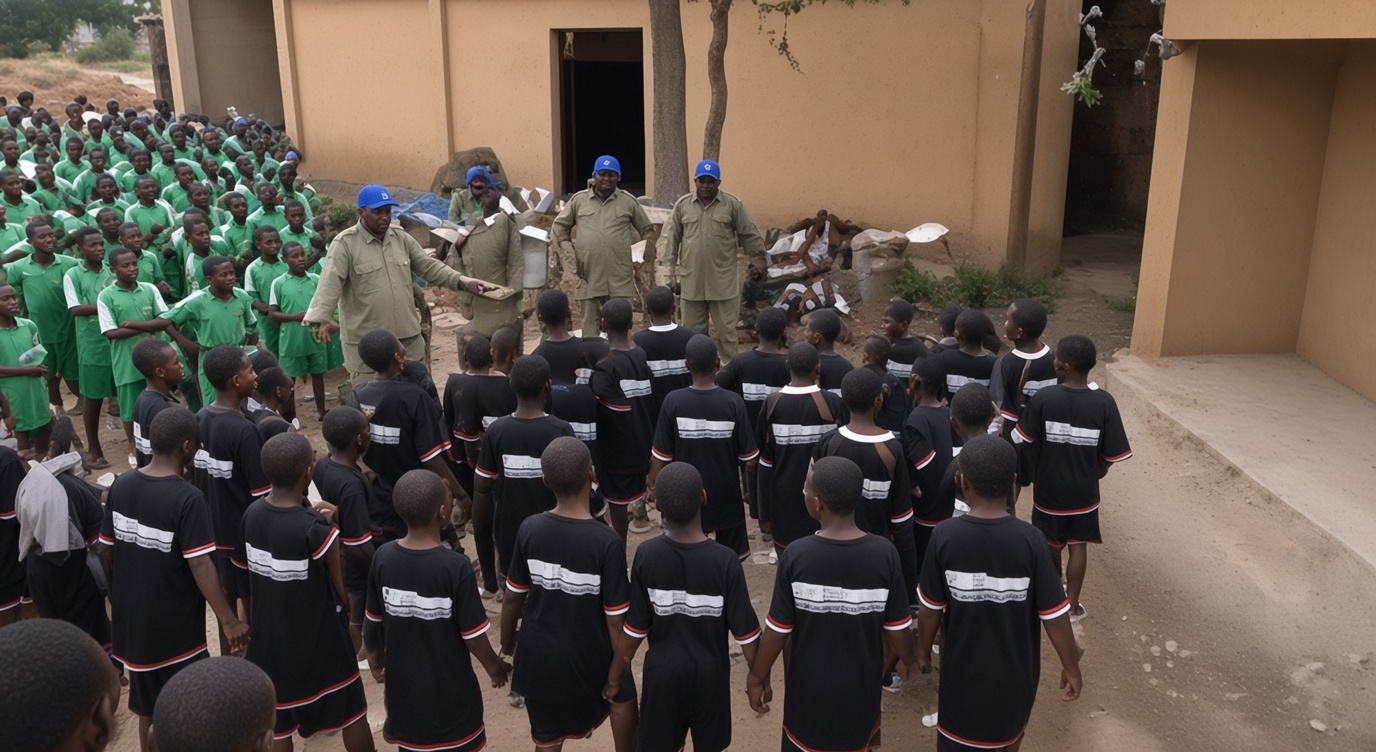

General Abdourahamane Tiani has recently inaugurated a training camp involving over 300 young Nigeriens. Posited as an appeal to civic duty, national awakening, and societal renewal, the initiative mirrors the model implemented in Burkina Faso by Captain Ibrahim Traoré. Yet, beneath the carefully crafted rhetoric extolling the virtues of an ‘engaged youth,’ a more unsettling reality may be unfolding: beneath the veneer of patriotism, the military-led administration appears to be laying the groundwork for premature militarization.
Protection of vulnerable groups in question
Children and adolescents have no legitimate place in militarized environments. At such a formative stage, priorities should include formal education, vocational training, sports, cultural activities, and the cultivation of civic responsibility. Shaping impressionable minds around military discipline, unquestioning obedience, and perpetual mobilization risks normalizing the notion that conflict and confrontation are inevitable potentially undermining the very essence of peace and stability.
A perilous shift in civic priorities
The crux of the issue lies not in the camp itself, but in the political message being delivered to an entire generation. When a military regime frames youth mobilization as a patriotic duty, it dangerously conflates national loyalty with blind allegiance to the authorities. True civic engagement, however, entails far more than compliance: it demands critical thinking, open debate, and a steadfast commitment to the public good.
The line between civic education and ideological indoctrination narrows dangerously when young individuals are constantly exposed to a narrative of struggle, self-sacrifice, and perpetual defense of the homeland. While a mobilized youth can contribute to national progress, it must never be reduced to a mere reservoir of human capital sustaining a military regime indefinitely.
Misplaced priorities and unfulfilled developmental needs
Such a concentrated investment in ideological mobilization raises pressing questions: why prioritize political indoctrination when countless young Nigeriens urgently require functional schools, accredited vocational programs, employment opportunities, infrastructure development, and genuine pathways to a dignified future? Patriotism cannot be an adequate substitute for sustenance, education, or job security.
The glorification of ‘mandatory civic duty’ often serves as a convenient political distraction. By promoting an image of an obedient, enthusiastic, and self-sacrificing youth, the authorities may be diverting attention from pressing challenges such as economic hardship, systemic educational deficiencies, widespread youth unemployment, and the social consequences of ongoing political instability.
The risk of institutionalized militarization
Equally concerning is the long-term trajectory of such initiatives. A generation conditioned to perpetual mobilization might come to accept militarization as a normal facet of society. What is today positioned as an exceptional initiative could, over time, evolve into a standardized model of political and paramilitary indoctrination within youth education systems.
The comparison with Burkina Faso warrants cautious reflection. The proliferation of youth-focused patriotic programs must not push Sahelian nations into a dangerous competition of militarizing their young populations. While insecurity remains a critical concern, the appropriate response cannot involve systematically transforming an entire generation into potential combatants.
The youth of Niger deserve far better than to be used as political instruments in a regime’s communication strategy. They are entitled to quality education, skill development, employment prospects, intellectual freedom, and the opportunity to participate meaningfully in public life without being conditioned to adhere to a singular political or military doctrine.
Redefining true patriotism
The enthusiasm of youth should never be weaponized to conceal governance failures. A resilient nation is not built by teaching children obedience and combat readiness. It is forged through equipping them with knowledge, liberties, and opportunities to shape the nation’s future through innovation, critical thought, and responsible leadership.
Genuine patriotism lies in fostering citizens who are capable of building, innovating, and defending the nation when required by law not in creating young minds habituated to the logic of war. Niger must ensure that its fight against insecurity does not become a pretext for the enduring militarization of its children and youth.