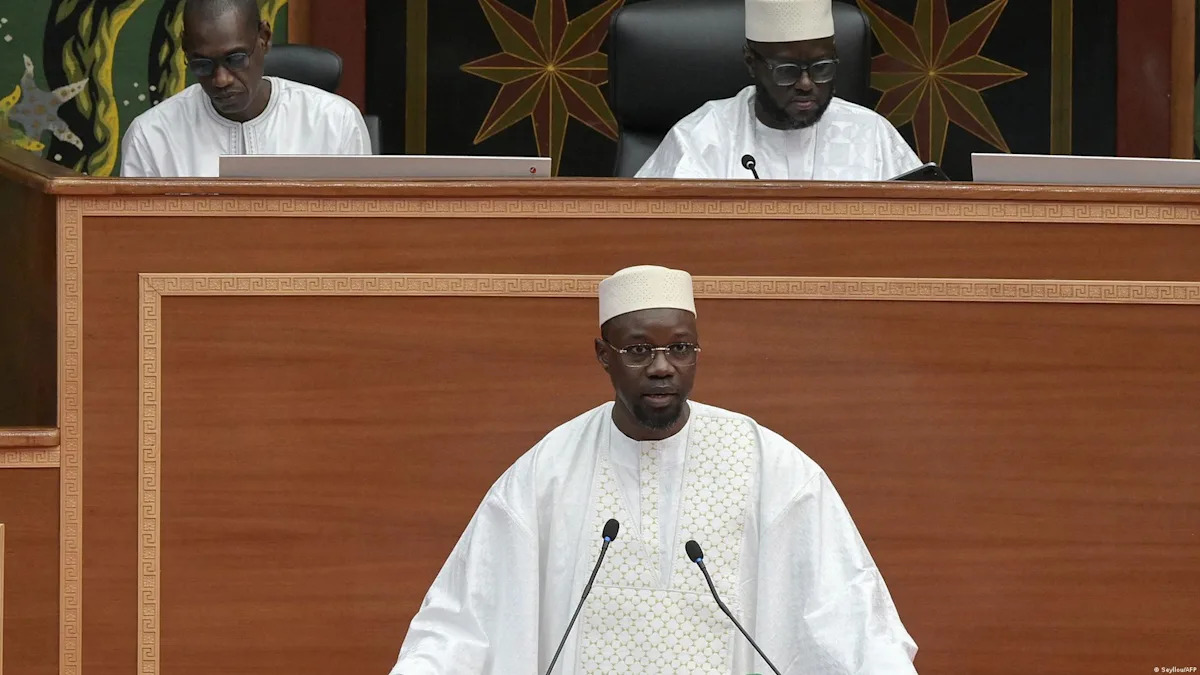

Ousmane Sonko becomes president of Senegal’s National Assembly
Ousmane Sonko has been elected as the new president of Senegal’s National Assembly, following a vote among members of his Pastef party. This comes despite his recent disagreements with President Bassirou Diomaye Faye, who is also from the same political party.
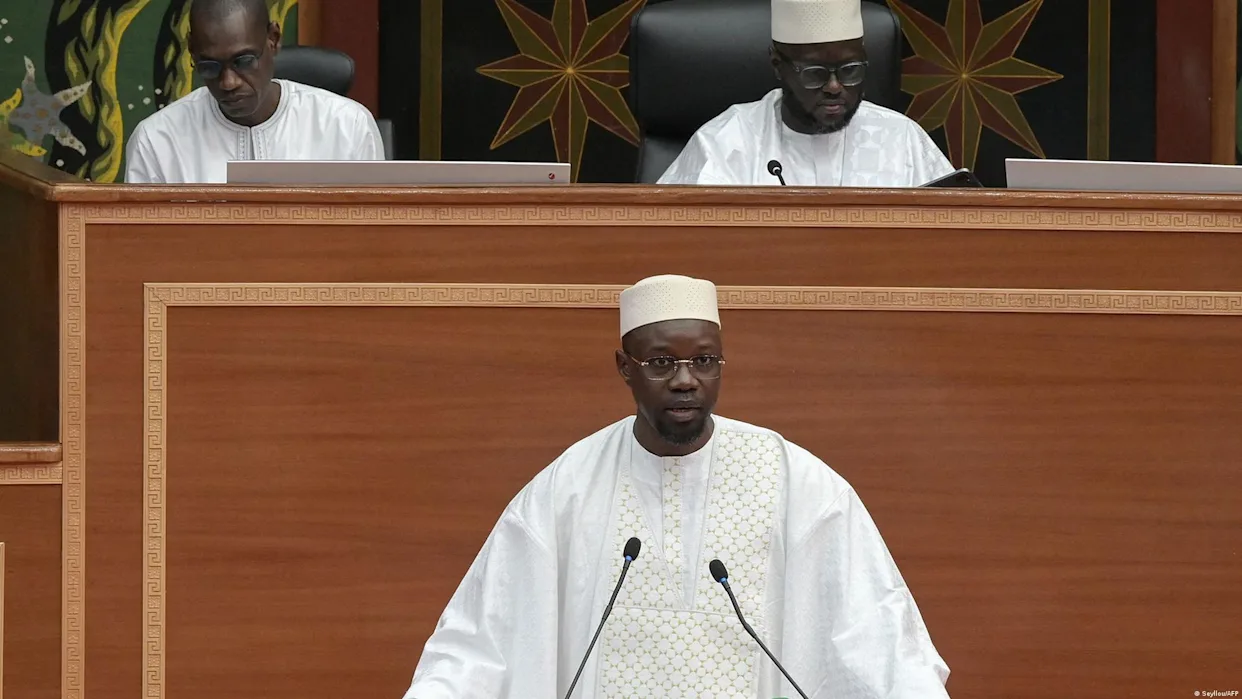
Sonko’s election follows the resignation of former assembly president El Malick Ndiaye, who stepped down on Sunday. The Pastef party holds a commanding majority with 130 out of 165 seats in the National Assembly, ensuring Sonko’s strong support.
Political tensions rise between Diomaye Faye and Sonko
Sonko’s return to the National Assembly comes after his removal as Prime Minister by President Faye. The move sparked significant backlash from party members, including Nourdine Diallo, a former campaign volunteer who expressed deep disappointment:
“We were devastated to learn that the president dismissed the Prime Minister. During the campaign, we chanted ‘Diomaye is Sonko—Sonko is Diomaye.’ That slogan was more than just words; it reflected a deep bond between them. We told Senegalese voters that Diomaye and Sonko are brothers—not just in party ties, but in spirit.”
Sonko had recently criticized certain government decisions during a parliamentary session, intensifying the rift between him and President Faye. A special session of the National Assembly is scheduled for Tuesday to address two key issues: Sonko’s reinstatement as a deputy and the election of a new assembly president to replace Ndiaye.
Sonko had temporarily suspended his parliamentary duties to serve as Prime Minister. If reinstated, he would become the second-highest-ranking official in the country, further complicating the political landscape.
Constitutional concerns and opposition reactions
Opposition figures, including Adama Fall of the Pastef party, have urged the nation to prioritize Senegal’s interests over personal disputes between Sonko and Faye. Fall emphasized the historical significance of this political moment:
“This situation echoes past conflicts in Africa, from Burkina Faso to the Democratic Republic of Congo. But today’s generation is different. We are more aware, and history will not repeat itself in the same destructive way. Instead, it will move forward positively.”
The opposition has also raised concerns about the legality of El Malick Ndiaye’s resignation, which they argue violates the National Assembly’s internal rules. Aïssata Tall Sall, leader of the opposition group Takuu Walu, has called on President Faye to challenge Sonko’s potential reinstatement before the Constitutional Council, warning of a potential constitutional crisis.
Meanwhile, Faye has appointed a new Prime Minister, Ahmadou Al Aminou Mohamed Lô, a former central bank executive and minister. Lô has stressed the need for national unity during this critical juncture in Senegal’s history.
Broader implications for Senegal
Political analyst Malao Kanté suggests that Sonko’s rise could redefine the opposition’s role in Senegal’s governance. However, the concentration of power within one party presents risks, including potential motions of no confidence against the new Prime Minister and institutional gridlock:
“Sonko may emerge as the new face of the opposition, but with his party controlling the majority in parliament, the situation is precarious. A motion of no confidence against the Prime Minister could destabilize the government and hinder the country’s progress.”
The political drama unfolding in Senegal highlights deeper tensions within the Pastef party and raises questions about the future stability of the country’s democratic institutions.