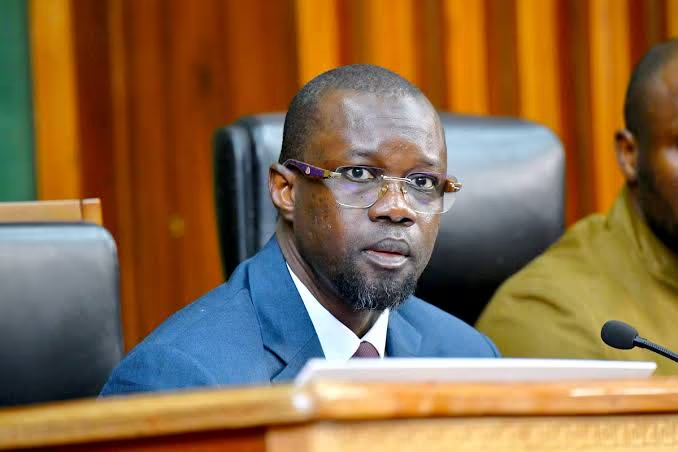
Senegal parliamentary session examines key reforms and investigations
Listen to this article
Senegal’s National Assembly to review pivotal legislation and probe financial irregularities
Senegal’s National Assembly is set to deliberate on groundbreaking reforms, including a new Labor Code, Social Security framework, and critical updates to digital security regulations. The session, convened under urgent procedures, will also scrutinize financial transparency and governance concerns.
The National Assembly’s extraordinary session commences this Monday, August 10, 2026, at 10:00 AM, following the release of the official decree signed by President Ousmane Sonko. The document, numbered 192, outlines a tightly structured agenda in strict alignment with Article 63 of the Constitution and Article 7 of the Assembly’s internal regulations.
Major legislative proposals take center stage
Deputies of the 15th Legislature will deliberate on five key legislative texts:
- Labor Code Reform (Bill No. 15/2026): A comprehensive overhaul of employment regulations aimed at modernizing labor practices.
- Social Security Code (Bill No. 16/2026): Reforms to expand coverage and enhance benefits for Senegalese citizens.
- Critical Infrastructure and Digital Security Act (Bill No. 25/2026): Strengthening national cybersecurity frameworks to protect sensitive digital assets.
- Constitutional Amendment (Proposal No. 33/2026): Modifying Article 37 to introduce new governance provisions.
- Special Credits Framework (Proposal No. 34/2026): Establishing legal parameters for emergency funding mechanisms.
Six high-stakes parliamentary commissions to be established
The extraordinary session will also ratify six parliamentary inquiry commissions, each tasked with investigating critical national issues:
- Irregularities in land management and public maritime domain allocations.
- Suspicious privatization of state-owned buildings under questionable circumstances.
- Government utilization of complex financial instruments (TRS mechanisms).
- Audit of the ‘One Student, One Laptop’ program, revealing potential financial mismanagement totaling approximately 48 billion West African CFA francs since 2017.
- Revenue losses and opaque tax exemption practices.
- Compliance issues in fishing license issuance and renewal processes.
As per Article 3 of Decree 192, the session will conclude immediately upon completion of the agenda, with no provisions for amendments once proceedings begin.