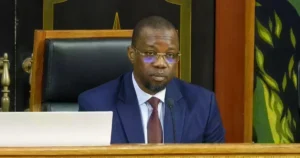

The long-anticipated political storm in Senegal has finally erupted in Dakar. President Bassirou Diomaye Faye has terminated the mandate of Prime Minister Ousmane Sonko, a move that definitively severs the fragile alliance at the heart of government. The former head of government, founder of the Pastef party, now shifts his focus to the National Assembly, where his party commands a comfortable majority following the snap legislative elections.
An unworkable cohabitation at the highest level
The Diomaye-Sonko partnership, forged in the aftermath of the March 2024 presidential election, was once hailed as a West African political innovation. The president-elect, stepping into power after his mentor’s disqualification, had pledged to govern in tandem. The arrangement rested on a delicate balance: institutional legitimacy for the head of state, partisan authority and grassroots support for the prime minister. While praised by supporters as a democratic breakthrough, this structure contained the seeds of its own collapse.
Over time, tensions mounted over reform implementation, the handling of judicial cases inherited from Macky Sall’s administration, economic policy, and the pace of campaign promises. As the president asserted his authority, the prime minister’s room for maneuver shrank. Senegal’s constitutional framework, which places the president above all other institutions, offered no viable path for a duumvirate where both leaders claimed a share of the popular mandate won in 2024.
Ousmane Sonko’s strategic pivot to parliament
Despite his removal from the premiership, Ousmane Sonko remains a key player. The Pastef leader retains a critical advantage: control of the parliamentary majority secured in the legislative vote. By positioning himself within the National Assembly, he transforms the legislative chamber into a political command center and a platform for institutional opposition to the presidential palace. This strategy mirrors the approach of other African leaders who, sidelined from executive power, leveraged parliament as a durable source of influence.
This new dynamic puts Bassirou Diomaye Faye in a precarious position. The president must now navigate a legislature still loyal to his former prime minister, severely limiting his legislative maneuverability. The appointment of a new government, passage of upcoming budgets, and advancement of major reforms promised to voters now hinge on an unprecedented power struggle within the ruling party itself.
What lies ahead for Senegal’s political trajectory
The rift between the two leaders extends beyond personalities. It calls into question the coherence of the sovereignist agenda championed by Pastef, including renegotiation of oil and gas contracts, reform of the CFA franc, audit of public finances, and migration policy. International partners, from the International Monetary Fund to investors in the Sangomar and Grand Tortue Ahmeyim fields, will closely monitor the country’s institutional stability—Senegal has long been regarded as a democratic showcase in Africa.
Regionally, this development comes at a pivotal moment for the Economic Community of West African States (ECOWAS), which is attempting to heal divisions after the withdrawal of Sahelian states in the Alliance of Sahel States. Dakar, which had taken on a mediating role under Bassirou Diomaye Faye’s leadership, may see its diplomatic influence weakened by domestic upheaval. Will the president succeed in forming a new cabinet capable of restoring stability, or will Sonko’s loyal base take to the streets to make its voice heard?
Senegal now enters a phase of political uncertainty whose outcome will shape the future of the country’s second democratic transition. The nation stands at a crossroads where every decision will reverberate through its institutions, economy, and regional standing.