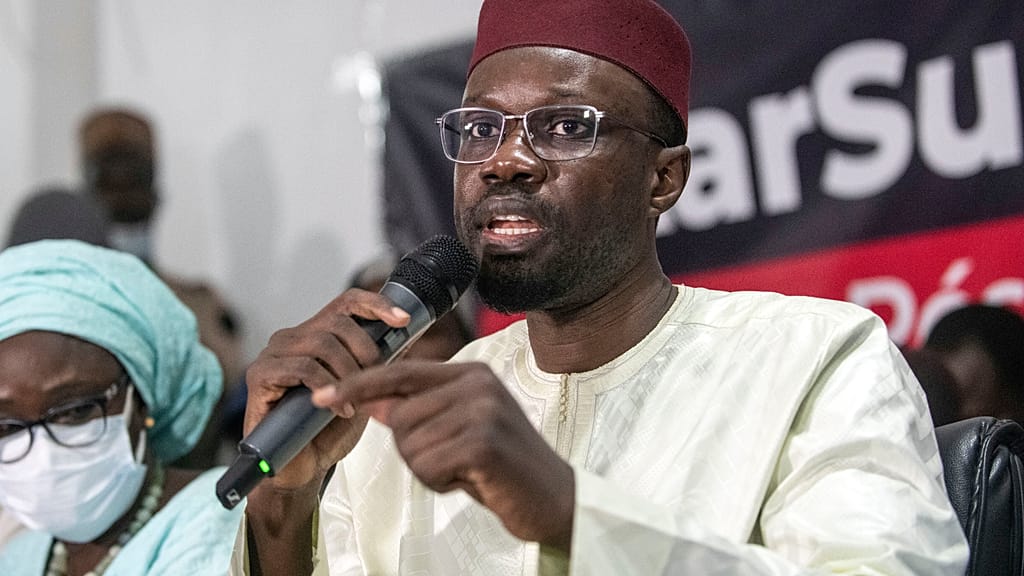

Dakar — Senegal’s Prime Minister Ousmane Sonko has sharply criticized what he terms Western “tyranny” in pushing LGBTQ+ rights, vowing to uphold a newly enacted law that doubles penalties for same-sex relations in the predominantly Muslim nation.
Controversial legislation draws global reaction
The law, signed by President Bassirou Diomaye Faye in late March, increases prison sentences for “unnatural acts”—a legal phrase widely interpreted as referring to same-sex intimacy—from one to five years to five to ten years. Additional clauses impose three- to seven-year sentences for anyone convicted of promoting or financing such relationships.
The Prime Minister, addressing lawmakers during a parliamentary session, condemned the international backlash over the measure, particularly from Western governments and advocacy groups, which he framed as an attempt to impose foreign cultural values on Senegal.
Local and global divisions over LGBTQ+ rights
Senegal’s stance reflects broader societal and religious norms in much of West Africa, where homosexuality remains widely stigmatized. Public opinion in the country has long opposed LGBTQ+ visibility, and political leaders have repeatedly framed the issue as incompatible with national values.
Sonko emphasized that Senegal would not yield to external pressure, stating, “Eight billion people inhabit this planet, yet a small bloc—call it the West—controls resources and media narratives, seeking to impose its standards on the rest of humanity.”
He dismissed criticisms from abroad, asserting, “If they choose these lifestyles, that is their concern. We need no lessons from them.”
Legal enforcement and political commitment
Since the law’s passage, authorities have initiated multiple arrests under its provisions, signaling a firm commitment to enforcement. Sonko urged the judiciary to apply the legislation without compromise, rejecting calls for a moratorium on prosecutions.
The Prime Minister’s remarks come amid a growing divide between African nations and Western partners over human rights, cultural sovereignty, and the interpretation of universal values. Senegal’s government has consistently rejected the idea that LGBTQ+ rights are a universal entitlement, instead positioning them as an imposition rather than a liberation.
The new legal framework not only criminalizes same-sex acts but also criminalizes advocacy, funding, or public promotion of such relationships, reflecting a broader hardening of attitudes toward LGBTQ+ issues in Senegal’s legal and political landscape.