
- Top Stories
- Politics
Senegal tightens border security amid Mali crisis
With over 400 kilometers of shared border and deep commercial ties, Senegal is deeply concerned about the escalating turmoil in neighboring Mali and across the wider Sahel region. In response, Dakar is quietly but firmly reinforcing its security posture along the eastern frontier, particularly in the regions of Tambacounda and Kédougou.
The government has remained tight-lipped about recent incidents, including attacks on Senegalese transporters stranded in Mali and vehicles set ablaze following clashes on April 25. “We are closely monitoring the situation, especially regarding transporters. So far, no repatriation requests have been received, and we continue to remain vigilant,” stated a foreign affairs official, highlighting the cautious approach adopted by authorities.
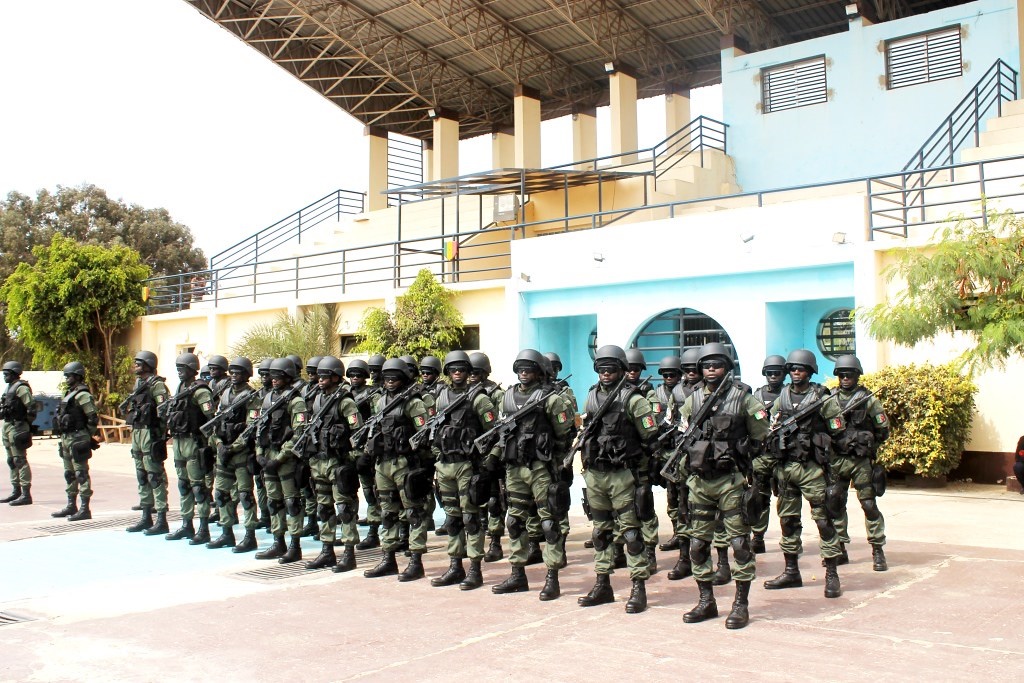
Despite this discretion, Senegal is taking the jihadist threat in West Africa very seriously. Over the past few years, significant investments have been made to bolster security infrastructure along the Malian border. The most recent developments include the inauguration of three new operational bases on April 8 and 9, 2026, as part of the Groupe d’Action et de Recherche des Sécurités Intérieures (GARSI 2) in Saraya. These bases were funded by the European Union and are designed to enhance rapid response capabilities.
The GARSI and CICO: pillars of Senegal’s defense strategy
According to national gendarmerie reports, the new bases are integral to the country’s counter-terrorism framework. “They will reduce response times, strengthen operational readiness in the GARSI 2 zone, and improve proximity to local communities,” explained a military spokesperson. These bases serve as the frontline of Senegal’s efforts to combat terrorism and cross-border crime.
A high-ranking army officer emphasized the strategic importance of these infrastructures: “We have 420 kilometers of border with Mali. It’s impossible to station troops every few hundred meters, so we focus on key transit points. These bases allow us to react swiftly in emergencies.” The officer went on to describe the GARSI units as highly effective, well-equipped, and operationally versatile. Currently, there are two such units: one in Kidira and another in Kédougou, specifically in Saraya. These units conduct joint patrols to monitor the frontier effectively.
Coordinated patrols along the border
In addition to the GARSI, Senegal relies on the Interministerial Coordination and Intervention Framework (CICO), a dedicated body tasked with orchestrating the state’s response to terrorist threats. This includes mobilizing medical teams, ambulances, police, gendarmes, and military assets to secure crime scenes and evacuate casualties. “Coordinating all these elements is complex. The CICO ensures seamless integration of actions to address terrorist threats,” noted a security analyst. Recent months have seen further enhancements, including the establishment of a regional headquarters in Kédougou, the deployment of investigative units, and the creation of specialized technical facilities.
Senegal ranks among the top defense spenders in Sub-Saharan Africa. Between 2020 and 2025, the country ranked second in arms imports in the region, accounting for 8.8% of total regional purchases, according to Stockholm International Peace Research Institute data. Notable acquisitions include the Puma M36 armored personnel carriers from South Africa, designed to withstand improvised explosive devices—lessons drawn from Sahel conflicts. Major defense contracts were also signed with Turkey in 2025.
Cultural and social resilience: a unique shield
Military investments alone do not explain Senegal’s relative resilience to jihadist advances. Experts point to strong social cohesion as a critical factor. Professor Bakary Sambe of the Timbuktu Institute highlights the harmonious coexistence of ethnic and religious communities in Senegal, which acts as a barrier against divisive tactics employed by groups like the Jama’at Nusrat al-Islam wal-Muslimin (JNIM). In Kédougou, a key border region, this cohesion is reinforced by interethnic marriages and mutual respect among groups such as the Bassari, Bédik, and Fulani. “This creates a cultural shield that prevents extremist narratives from taking root,” Sambe explains.
A cultural and religious bulwark
Unlike neighboring countries where the JNIM has exploited tensions between herders and sedentary groups, Senegal’s intercommunal harmony makes it difficult for such groups to gain ground. Sambe also underscores the pivotal role of religious leaders and Sufi brotherhoods in preventing radicalization, particularly in eastern border areas. Despite the less pronounced influence of Sufism in these regions, collaboration between religious figures, government officials, and community leaders strengthens resilience against extremism.
Addressing the media in early May, President Bassirou Diomaye Faye stressed the continent-wide nature of the terrorism threat. “Even Nigeria, the largest country in ECOWAS, has faced years of attacks. The U.S. has also experienced unimaginable assaults. No nation is spared. This underscores the need for synergies, intelligence sharing, and collaborative action,” he remarked, praising the establishment of ECOWAS’s standby force, albeit one that remains to be activated.
The President lamented the withdrawal of Sahel states from ECOWAS, emphasizing the need for regional organizations to work together. “Senegal cannot remain indifferent to the challenges facing Mali. We share a common history, a shared national motto, and a unified destiny at independence. What affects Mali affects Senegal, as we are one people,” he asserted, reaffirming the country’s unwavering solidarity with Mali. “The Malian people can always count on the active support of the Senegalese government and people, as we have demonstrated time and again. Dialogue is essential to restore peace, and we are prepared to facilitate this process.” He concluded by affirming that patrols and intelligence exchanges with Mali continue unabated.