
Senegal’s debt strategy: exploring alternatives to IMF support
Senegal’s rising debt levels have once again thrust the country’s economic challenges into the spotlight. In Dakar, policymakers, economists, and financial experts are actively exploring financing and restructuring options that extend beyond traditional reliance on the International Monetary Fund (IMF), particularly amid tightening budget constraints and the urgent need for economic recovery.
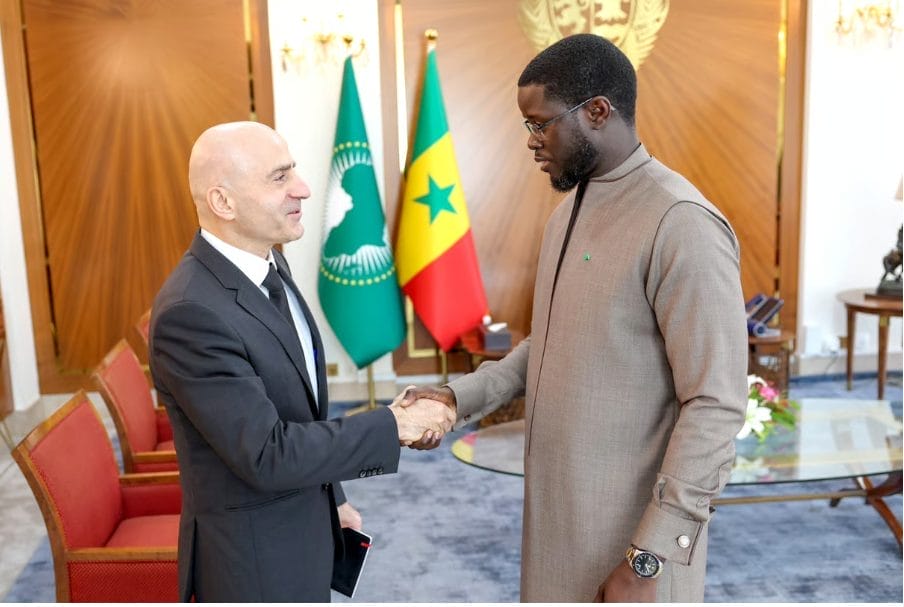
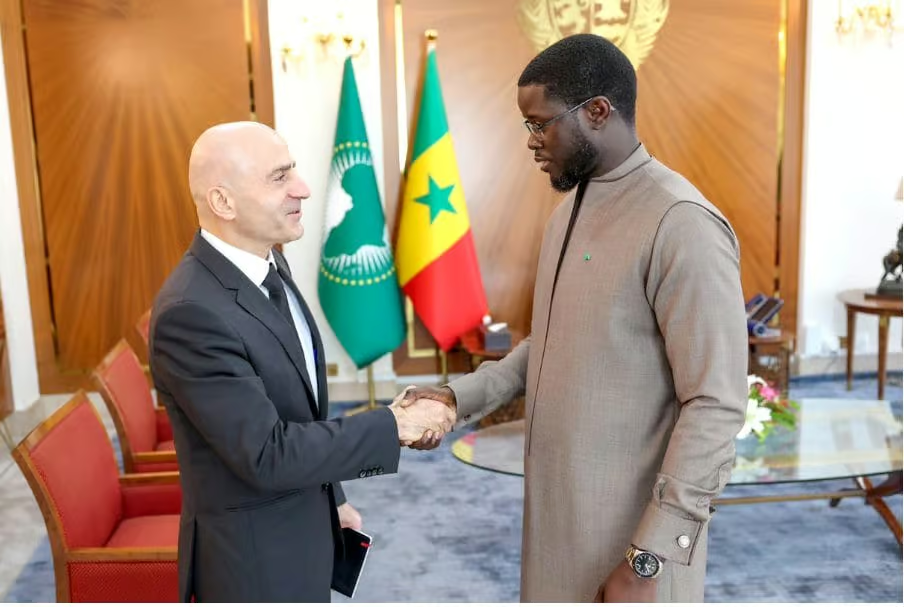 President Bassirou Diomaye Faye meets with IMF mission chief Edward Gemayel in Dakar on August 28, 2025 © DR
The discussions come as Senegal seeks to maintain financial flexibility while reassuring international markets, regional partners, and investors. As part of the West African Economic and Monetary Union (WAEMU), Senegal operates within a shared monetary framework where debt sustainability and fiscal discipline are closely monitored across the subregion, guided by the policies of the Economic Community of West African States (ECOWAS), the African Union, and the African Development Bank.
What options does Senegal have for managing its debt?
Key proposals include diversifying financing sources to reduce dependency on external institutions. Among the most discussed solutions are:
- Increased borrowing from the WAEMU regional market
- Enhancing domestic savings mobilization
- Developing thematic bonds tailored to specific development goals
- Leveraging concessional financing—loans offered on more favorable terms than commercial rates
The overarching aim is to lower the cost of debt servicing, which currently strains public expenditure, while avoiding abrupt economic adjustments that could negatively impact households and businesses. Experts emphasize the importance of expanding tax revenues without stifling economic activity, improving fiscal transparency, and prioritizing public investments more strategically.
In many African nations, escalating debt repayments have diminished governments’ ability to fund essential sectors such as infrastructure, education, and healthcare. The situation in Senegal is being closely watched beyond its borders, as it reflects a broader regional challenge: how can African economies restore liquidity and fund sustainable growth without over-reliance on multilateral assistance programs?
Balancing fiscal responsibility with economic resilience
Senegal’s approach reflects a delicate balance between meeting international obligations and protecting domestic priorities. While multilateral institutions like the IMF provide critical support, Dakar is determined to explore pathways that preserve policy autonomy and foster long-term economic resilience.
As regional and global financial conditions evolve, the decisions made in Dakar will not only shape Senegal’s economic trajectory but also serve as a case study for neighboring countries facing similar pressures.